


Five Branch Candelabrum
A five branch candelabrum brings commanding presence and layered illumination to a dining table or sideboard, offering both grandeur and practicality.
Five Branch Candelabrum
A five branch candelabrum serves as a substantial focal point for domestic lighting, designed to hold multiple candles simultaneously across its branching arms. When you search for a five branch candelabrum, you encounter pieces intended for prominent placement on dining tables, mantelpieces, or sideboards.
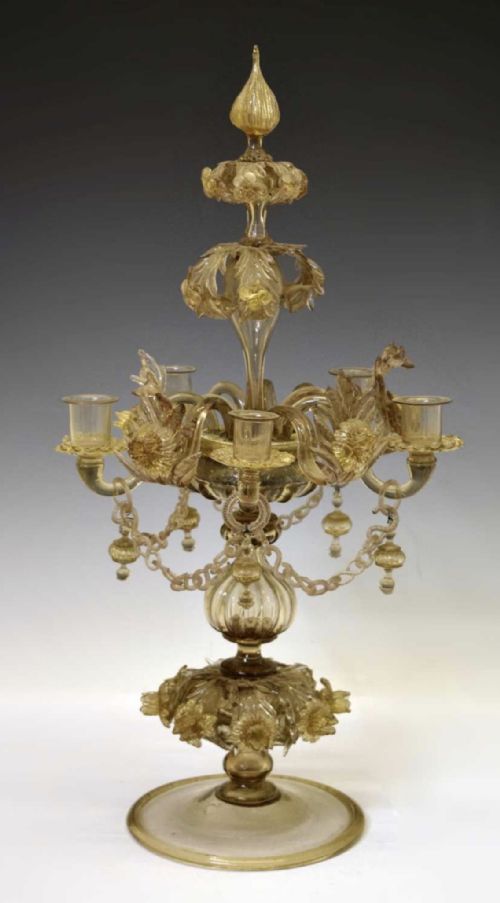
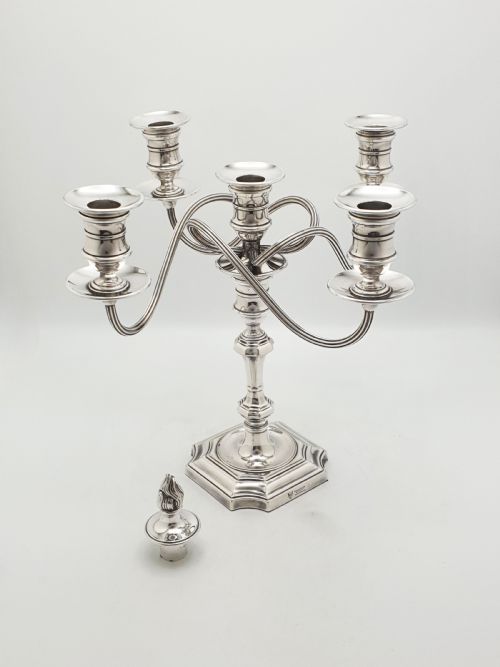
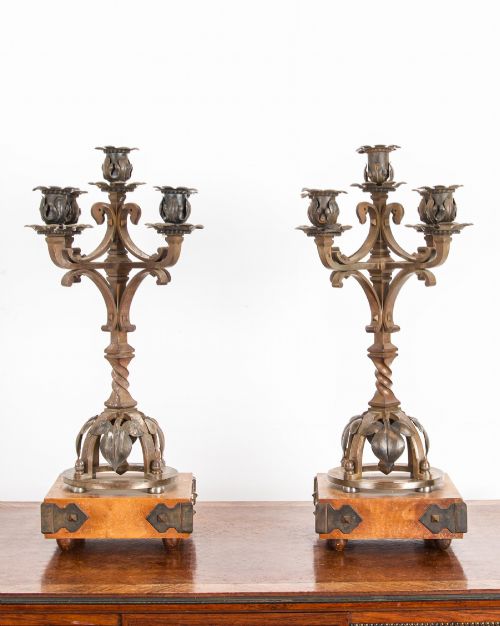
Forms range from classical revival candelabras with detachable sconces to wall lighting and Venetian glass creations. These items reflect distinct periods of production including Victorian, Edwardian, and Gothic Revival aesthetics.
Materials and Construction
Makers utilised metals such as silver plate, EPNS, brass, bronze, and gilt bronze alongside contrasting elements like green marble, crystal, and Murano glass. Metal components were cast, forged, or plated to achieve both structural rigidity and decorative surface finish.
Glass elements, particularly in Venetian and Murano pieces, involve specialist blowing and manipulation techniques, occasionally incorporating gold leaf inclusions. Detachable sconces and articulated branches demonstrate the precision required in assembling multiple metal parts.
Listings feature items from the 1860s through to the 1950s, demonstrating enduring demand for multi-branch domestic lighting across a century.
Assessing Quality and Execution
Quality rests in the crispness of casting detail, the weight of the metal, and the structural integrity of the branching arms. Heavier gauge silver plate and solid cast bronze or brass indicate superior manufacturing standards.
The refinement of decorative motifs, such as Gothic revival tracery or rococo scrolls, distinguishes master craftsmanship from routine production. Original components, including matching detachable sconces, elevate the integrity of the piece.
Clarke's Cricklite
The Five Branch Candelabrum Glossary
- Sconce
- A removable dish or pan fitted beneath the candle nozzle to catch melting wax. Detachable versions facilitate easier cleaning and maintenance.
- EPNS
- Electroplated nickel silver, a common base metal method utilised to give a silver finish to a durable core. It became widespread during the Victorian period.
- Ormolu
- Gilt bronze ornamentation applied to decorative objects and furniture, popular in French revival pieces. The technique involves coating bronze with a finely ground mercury and gold amalgam.
- Murano Glass
- Art glass produced on the Venetian island of Murano, known for intense colour and intricate manipulation. Pieces often include gold leaf inclusions for added luminosity.
Five Branch Candelabrum: Frequently Asked Questions
How do I clean a silver plated candelabrum?
Use a soft cloth and a specialised silver polish designed to protect plated surfaces from excessive abrasion. Avoid harsh chemical dips that strip away the underlying silver layer.
Take care around delicate soldered joints and detachable sconces during the cleaning process to preserve the structural stability of the branches.
Were these candelabra wired for electricity?
Most examples from the nineteenth and early twentieth centuries were produced exclusively for wax candles. Their sockets and arms retain the traditional dimensions for standard taper candles.
Some owners choose to convert them, though many collectors prefer to keep them in their original candle-lit configuration.
Can I use mismatched candles safely?
Candles should fit snugly into the nozzle or sconce to prevent leaning or dripping wax onto the metal and glass arms. Tapered candles of the correct diameter ensure stability during use.
Using proper sizing protects both the antique material and your furniture from accidental damage.
How do I date a brass candelabrum?
Examine the construction marks, casting seams, and the style of ornamentation such as Gothic revival or French rococo motifs. Heavier construction and hand-finished details often point towards nineteenth-century production.
Compare the base design and mounting screws with known period pieces to narrow down the decade of manufacture.