

Fitted Wooden Desk
A fitted wooden desk brings order to paper and ink through compartments, drawers and secret catches.
Fitted Wooden Desk
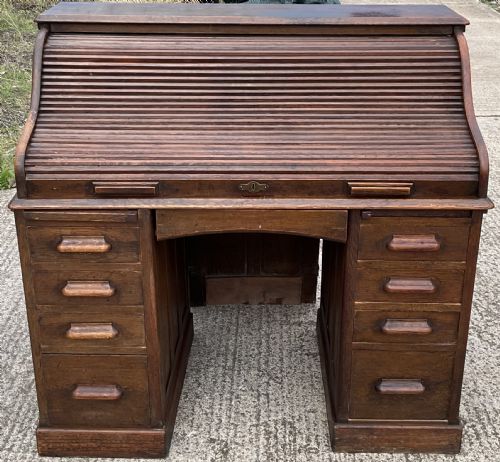
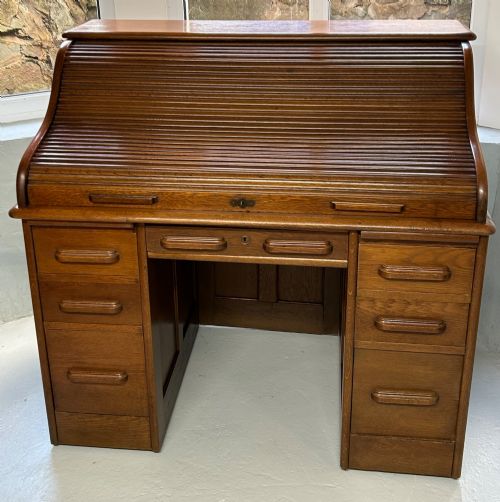
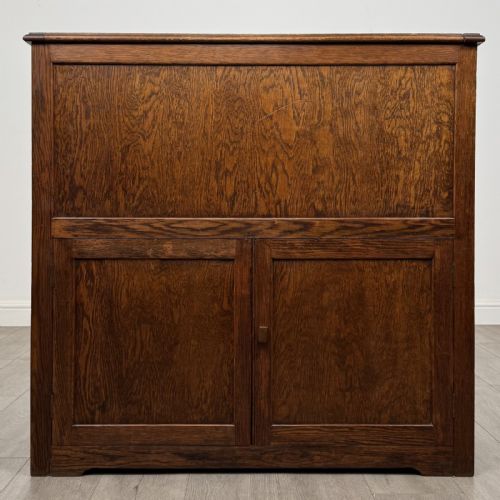
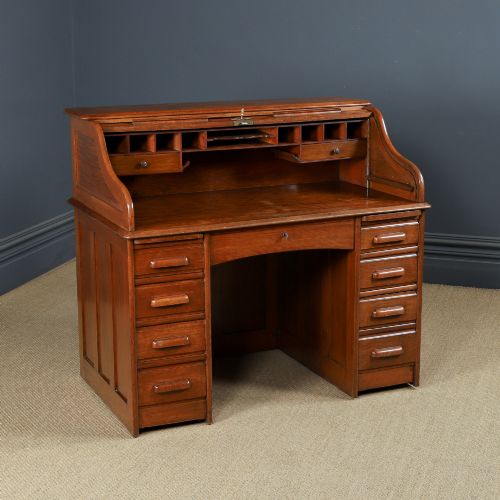
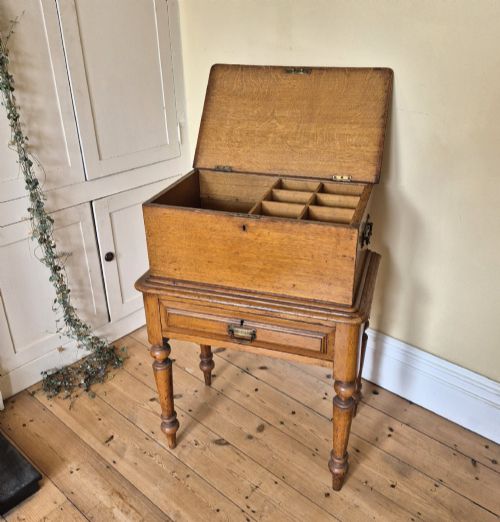
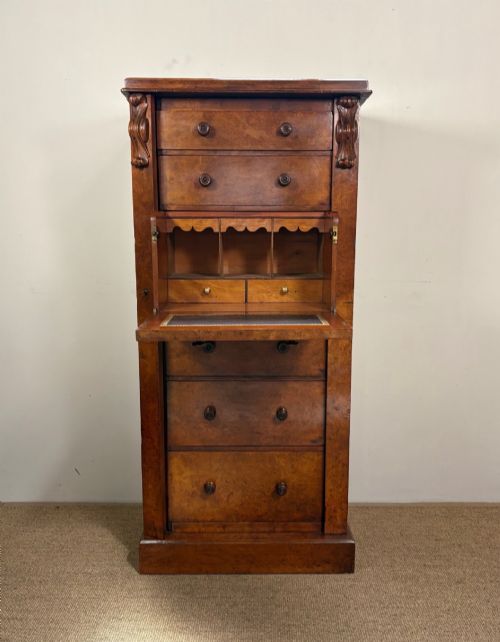
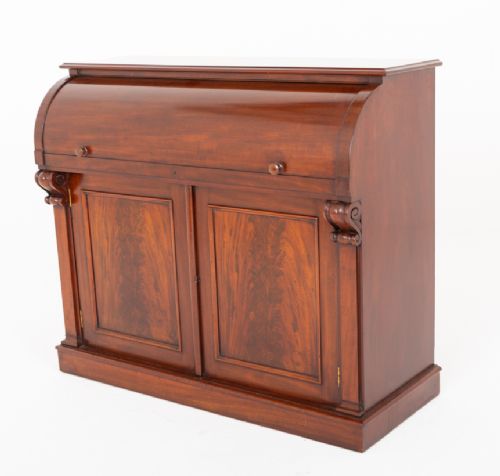
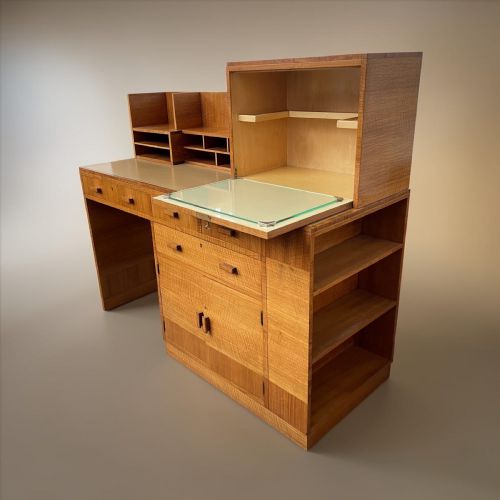
A fitted wooden desk takes many forms across the evidence, appearing as kneehole pedestals, cylinder desks, bureau bookcases, and compact writing slopes designed for portable use or stationary study. These pieces span Georgian, Victorian, Edwardian, and Art Deco periods, capturing centuries of evolving workspace design.
Buyers seeking a fitted wooden desk most commonly encounter Victorian and 19th-century examples alongside Edwardian and Georgian pieces. The selection includes walnut, mahogany, oak, and rosewood items fitted with internal stationery drawers, secret compartments, and leather writing surfaces.
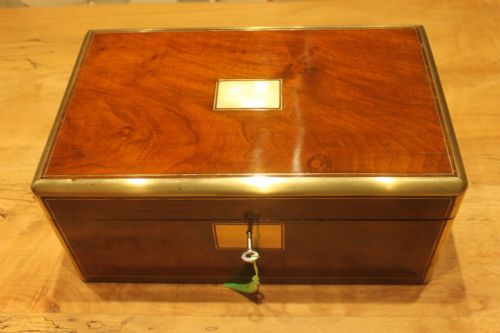
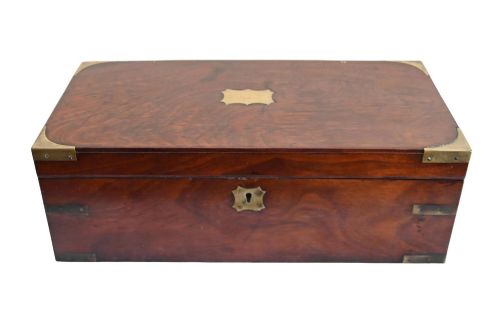
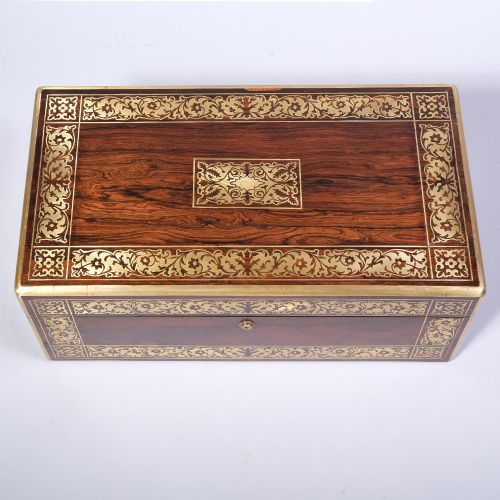
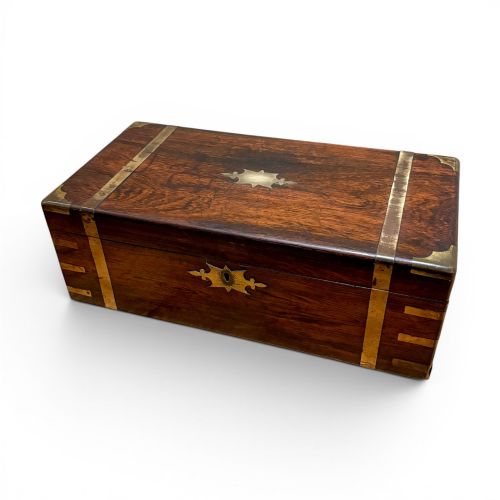
Objects range from large freestanding pedestal desks to table-top writing boxes and portable campaign slopes equipped with brass bindings. Each piece demonstrates internal organisation intended to house correspondence, documents, and writing instruments securely.
How they were made
Cabinet makers utilised dense hardwoods such as mahogany, walnut, rosewood, and oak to construct the carcasses and drawer linings of each fitted wooden desk. Finer examples employ burr walnut veneers or elaborate brass mounts, inlays of bone and mother of pearl, and ivory details.
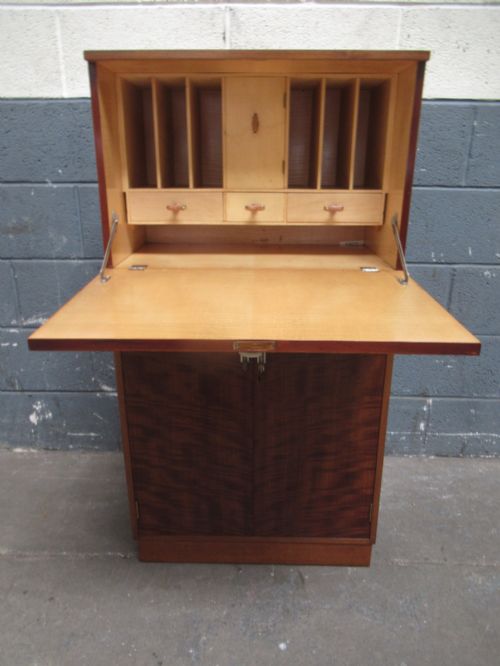
Internal engineering focuses on fitted stationery compartments, concealed secret drawers, and drop-down writing slopes supported by brass hinges and working locks. Dovetail jointing secures the drawer structures, while fitted leather panels provide a suitable surface for writing.
Listings feature mahogany, oak, walnut, rosewood, burr walnut, pine, and coromandel across Victorian, Georgian, Edwardian, and Art Deco periods.
What varies in quality
Quality in a fitted wooden desk rests on the selection of timber veneers, the complexity of the internal arrangement, and the integration of secret compartments or locking mechanisms. Finer execution shows in the precision of the brass binding, flush-fitting drawers, and the depth of figured grain in walnut or mahogany.
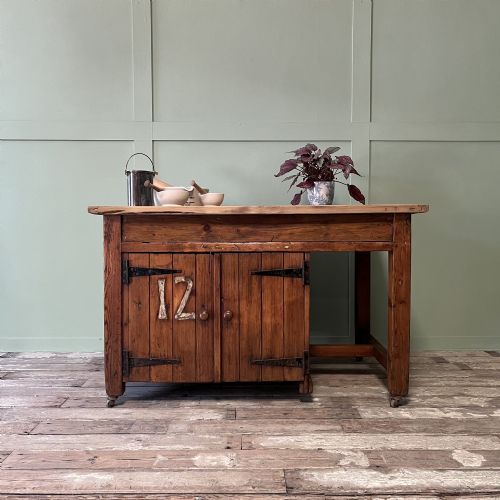
Secondary elements such as original working keys, Bramah locks, and undamaged interior leather inserts distinguish superior examples. Simpler pine or utility pieces contrast with elaborate campaign and pedestal desks that incorporate candle sconces and bespoke stationery cases.
Heal's
The Fitted Wooden Desk Glossary
- Writing slope
- A portable box with a hinged sloping lid that opens to reveal compartments for paper, pens, and inkwells. Many incorporate leather-lined writing surfaces and secret drawers beneath the primary storage tray.
- Kneehole desk
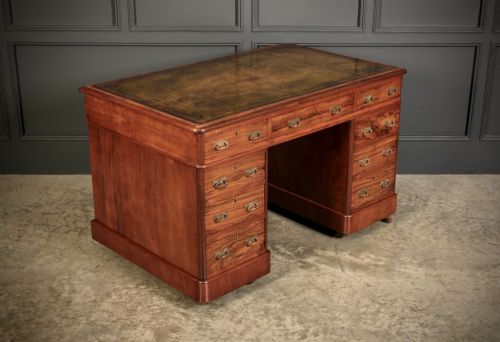
- A freestanding office table featuring pedestals of drawers on both sides with an open space in the centre for the user's legs. These often include inset leather writing surfaces and upper stationery drawers.
- Campaign style
- Furniture constructed for military transport, typically featuring recessed brass carrying handles, reinforced corners, and durable hardwoods. Pieces often dismantle or include multiple secret compartments for secure travel.
- Bramah lock
- A high-security patented lock mechanism invented in the late eighteenth century, commonly found on superior quality writing boxes and desks. It requires a cylindrical key with precise longitudinal slots.
- Secretaire
- A cabinet or chest incorporating a pull-down or sliding writing panel that conceals a fitted interior of small drawers and pigeonholes. It merges storage capacity with a dedicated workspace.
Fitted Wooden Desk: Frequently Asked Questions
What is the difference between a writing slope and a pedestal desk?
A writing slope is a portable box with a hinged slanted lid designed to sit on a table for writing. A pedestal desk is a large freestanding piece of furniture with built-in drawers resting on the floor.
Pendulum desks offer permanent workspace storage, whereas writing slopes provide a transportable desk surface that folds shut to contain stationery.
How do I find secret drawers in these desks?
Secret compartments in older desks are typically accessed by removing specific small interior drawers to release spring-loaded catches or hidden panels. Sliding partitions and false bottoms frequently conceal these secondary spaces.
Cabinet makers used these concealed sections in writing boxes and pedestal desks to store valuables, sensitive correspondence, and currency securely.
What woods were commonly used for these desks?
Makers relied on durable hardwoods including mahogany, oak, walnut, burr walnut, and rosewood. Lighter secondary timbers such as pine appear in drawer linings and interior framing.
Exotic accents like coromandel, satin birch, and ebony were also utilised for decorative impact on high-status nineteenth-century pieces.
How do I care for the leather writing surface?
Leather writing inserts require gentle dusting with a dry cloth and occasional treatment with appropriate leather dressings to prevent drying. Avoid using excessive moisture or household cleaning chemicals near the wood.
Preserving the original leather maintains the character and historical integrity of the writing surface.