
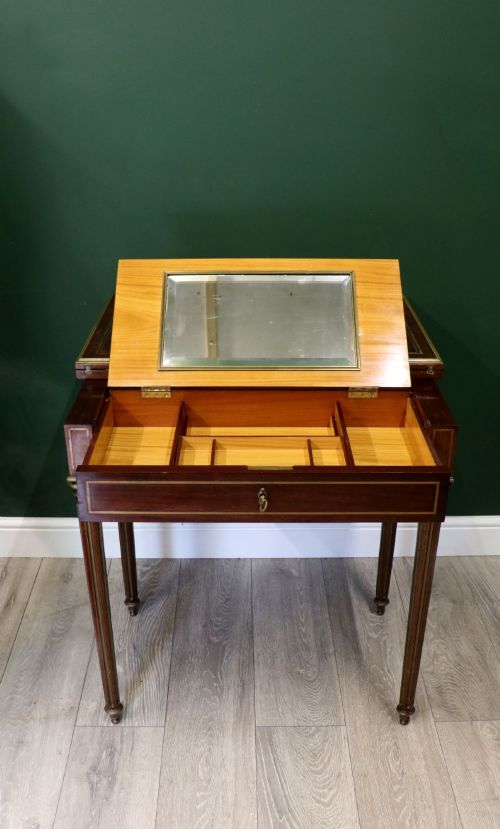

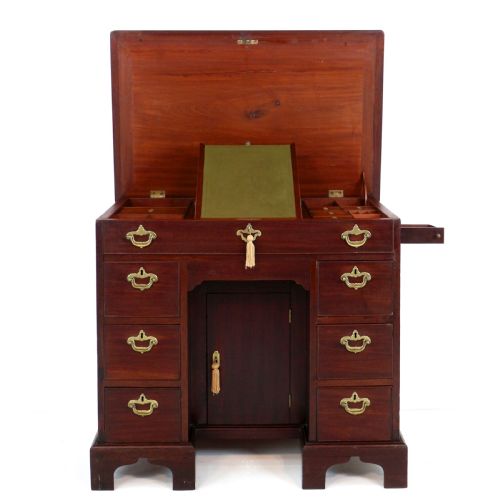


Fitted Vanity Desk
These fitted vanity desk pieces are practical combinations of writing surfaces and grooming stations that bring period woodwork into daily use.
Fitted Vanity Desk
A fitted vanity desk combines the functions of a dressing table and a writing desk, often featuring compartments or drawers tailored for grooming and correspondence. When exploring a fitted vanity desk, buyers encounter forms that range from Georgian kneehole desks to Victorian campaign chests and early twentieth-century inlaid pieces.
The materials recorded in these examples span solid mahogany, red walnut, and satinwood, occasionally accented with brass fittings, mirror glass, and velvet linings. Origins vary across English cabinet-making traditions, French revival workshops, Viennese studios, and Chinese export pieces.
Objects on the market include dressing tables, writing desks, travelling boxes, and combined washstands. These versatile tables serve both utilitarian and display purposes within a traditional or modern interior.
Materials and construction
Cabinet-makers relied heavily on dense timbers such as mahogany, walnut, and teak, which provided structural stability for complex internal compartments and swing-out mechanisms. Satinwood was frequently employed for contrasting inlay work and decorative veneer panels.
Hardware details such as brass handles, hinges, and ormolu mounts were cast and fitted by hand to secure movable flaps, mirrors, and drawers. Glass components, including mirror glass and tabletop protections, were integrated directly into the upper sections.
Cleric's swing-out cases offer hidden compartments that make everyday desk organisation feel like a secret espionage mission.
Markers of quality
Superior examples display precise joinery in their internal dividers and concealed drawers, ensuring that mechanisms operate smoothly without binding. The selection of timber grain, particularly matched mahogany or figured walnut veneers, indicates the original maker's investment in the piece.
The integrity of original brass hardware, fitted glass, and interior linings distinguishes well-preserved specimens from those with replacement components. Finer items retain their original surface patination, reflecting decades of careful maintenance rather than aggressive modern refinishing.
The Fitted Vanity Desk Glossary
- Kneehole desk
- A writing or dressing table featuring a recessed central cupboard flanked by pedestals of small drawers. This configuration allows a seated user comfortable legroom.
- Campaign chest
- A portable case split into modular sections with recessed brass handles, designed for military transport. These pieces often incorporate fitted drawers and fold-out writing surfaces.
- Ormolu
- Gilded bronze or brass applied as decorative mounts on furniture. It adds metallic contrast to dark woods, particularly in revival styles.
- Satinwood
- A durable, light yellow timber with a lustrous sheen, used extensively for banding and inlay work. It contrasts sharply with darker woods like mahogany.
- Washstand
- A piece of furniture designed to hold a basin and washing equipment, occasionally combined with storage compartments. Some variants incorporate fold-down panels to conceal the plumbing or surfaces.
Fitted Vanity Desk: Frequently Asked Questions
What is a fitted vanity desk?
A fitted vanity desk is a dual-purpose piece of furniture that integrates a grooming table with a writing surface. These items typically include internal compartments, mirrors, and small drawers designed for personal items and stationery.
They appear in various forms, from eighteenth-century kneehole tables to nineteenth-century campaign boxes, reflecting the domestic and travel needs of their original owners.
How do I date a mahogany vanity table?
Dating relies on examining the construction methods, timber choice, and hardware styles. Pieces from the eighteenth century often feature hand-cut dovetails and solid timber carcases, while later nineteenth-century versions may use machine-sawn elements and different veneer techniques.
Style indicators, such as George II proportions or Victorian campaign brasses, also help narrow the manufacturing period.
Where were these desks made?
The pieces originate primarily from British cabinet workshops, though the selection includes French revival items, Viennese inlaid tables, and Chinese export travelling cases. Regional styles often dictate the choice of wood and decorative motifs.
English makers favoured mahogany and walnut, whereas continental makers frequently utilised satinwood and distinct marquetry patterns.
How do I care for antique wood surfaces?
Maintenance involves keeping wooden surfaces away from direct sunlight and extreme humidity fluctuations to prevent warping or splitting. Regular dusting with a soft cloth preserves the wax finish and natural patination.
Avoid using silicone-based polishes, as they can degrade the historic finish over time.