

Fitted Mahogany Desk
A fitted mahogany desk brings together disciplined cabinet work and clever internal compartments designed to keep correspondence and ledgers in order.
Fitted Mahogany Desk
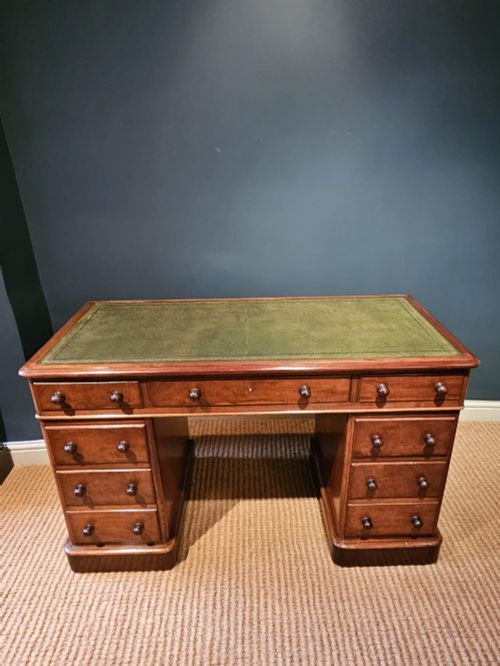
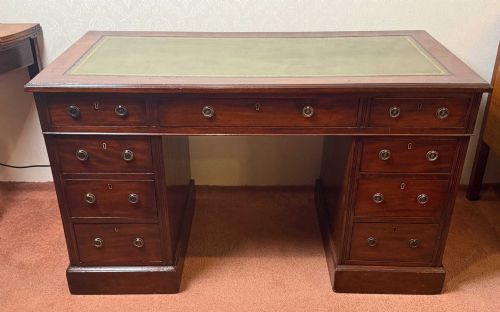
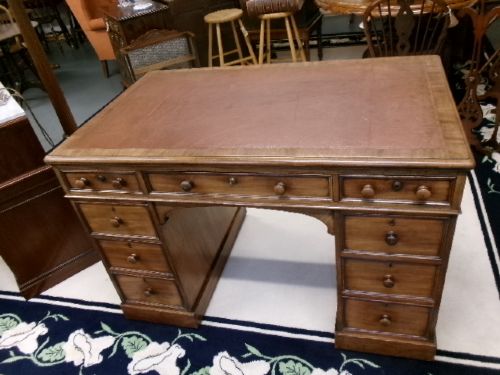
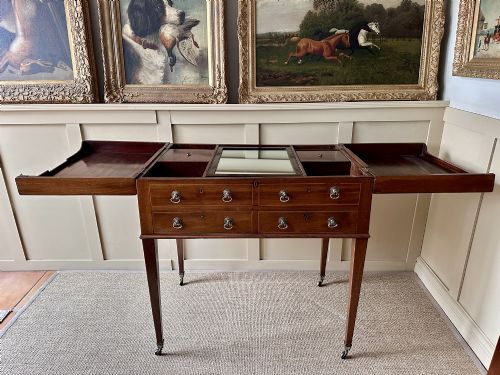
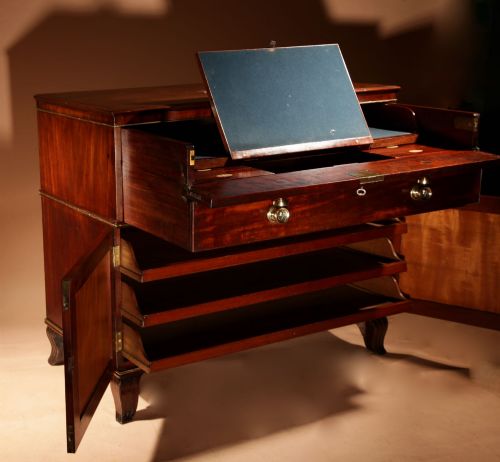
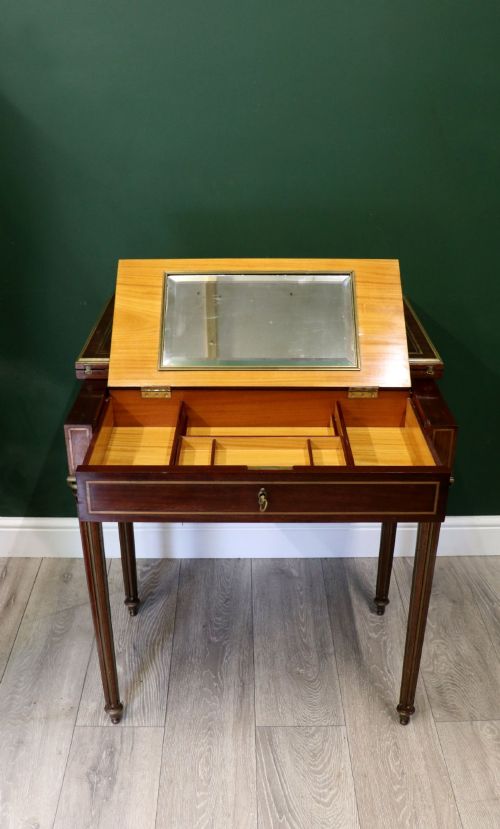
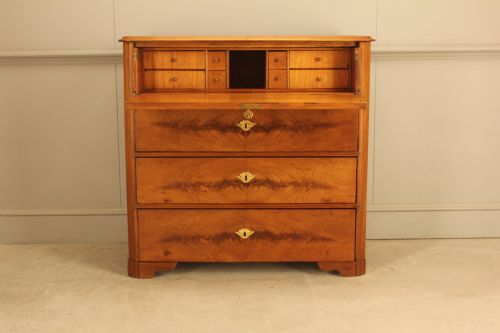
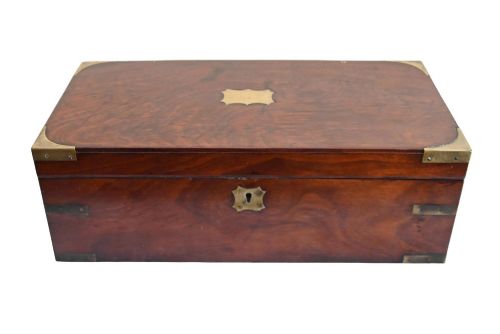
A fitted mahogany desk encompasses various formats across the Georgian, Victorian, and Edwardian eras, ranging from compact bureaus and writing slopes to large pedestal and partners desks. The items appearing under this phrase frequently combine standard writing surfaces with internal pigeonholes, small drawers, and secret compartments designed for paperwork.
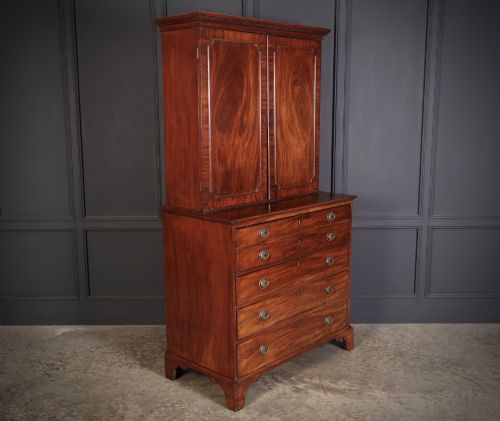
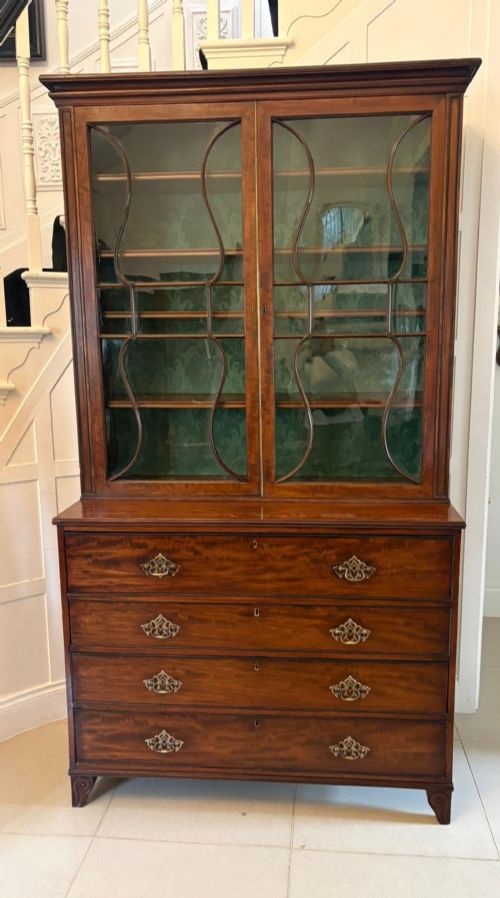
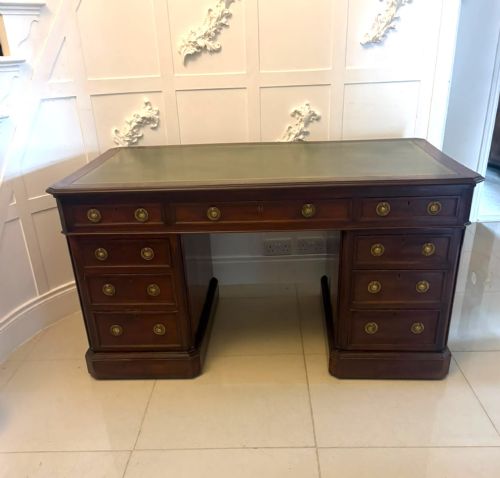
Pedestal desks and secretaire bookcases dominate the choices, often utilising figured or curl timber to add visual depth to the primary mahogany structure. Pieces span from the eighteenth century through to the early twentieth century, reflecting shifting domestic requirements for private study and correspondence.
Materials and construction
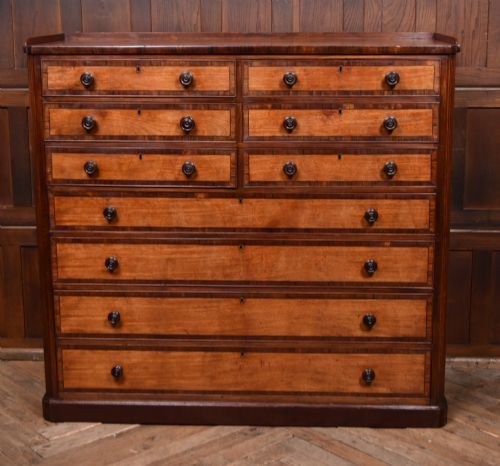
Makers utilised solid mahogany and applied veneers over secondary timbers, often selecting figured, fiddleback, or flame varieties for primary visibility on drawer fronts and fall fronts. Structural stability relied on tight dovetail joints for drawer construction and secondary woods such as oak or pine for internal elements.
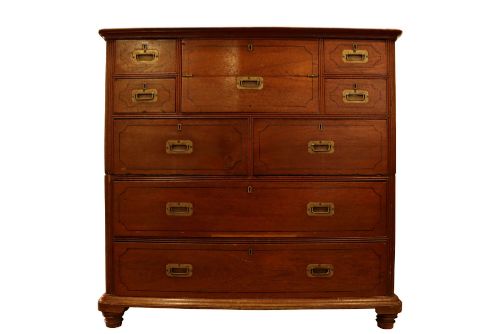
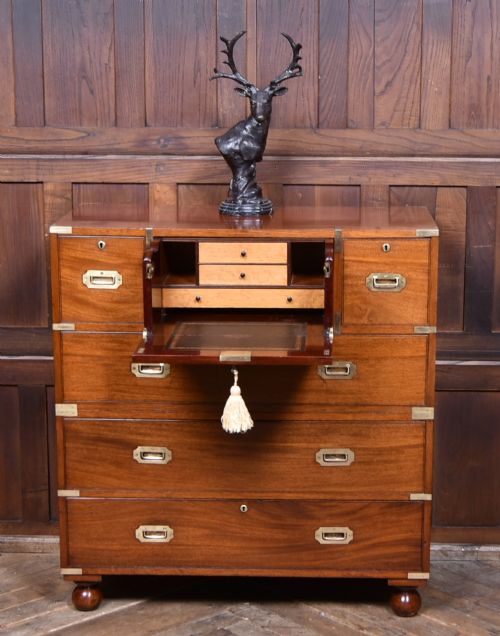
Secondary materials including brass hardware, leather writing inserts, baize linings, and glass doors complement the wood. Campaign iterations integrate recessed brass handles and corner brackets to withstand travel, while finer domestic examples incorporate satinwood stringing and inlaid details.
Fitted Mahogany Desk Retail Price Guide 2026
Typical asking prices for fitted mahogany desk among the pieces listed under this phrase on Sellingantiques today, from the lower quarter to the upper quarter. They describe what is for sale here now, not the wider market.
Listings feature mahogany, brass, leather, glass, satinwood, baize, oak, and walnut across Georgian, Victorian, and Edwardian periods.
Distinctions in craftsmanship
Quality separates ordinary utility pieces from works by notable makers through the selection of timber and the precision of internal joinery. Finer examples display meticulously matched flame or curl mahogany veneers across entire expanses, alongside smooth drawer actions and complex pigeonhole configurations.
Simpler pieces rely on plain stock timber with basic secondary woods and straightforward drawer divisions. The sophistication of the internal mechanism, whether a spring-loaded release or a sequence of secret drawers, dictates the grade of the piece.
Gillows of Lancaster·Tudor & Burrey Shrewsbury
The Fitted Mahogany Desk Glossary
- Secretaire
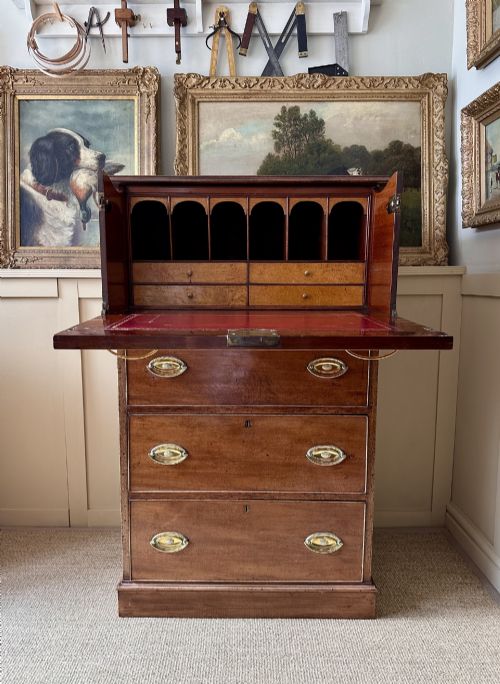
- A desk or chest containing a pull-out or drop-front writing drawer with a fitted interior. This format conceals functional workspace inside a standard case piece.
- Pedestal desk
- A heavy freestanding writing table supported by two banks of drawers. These units provide extensive storage beneath the primary writing surface.
- Campaign
- Portable furniture built in sections with recessed brass fittings for military transport. Pieces designed in this manner break down easily for travel.
- Bureau
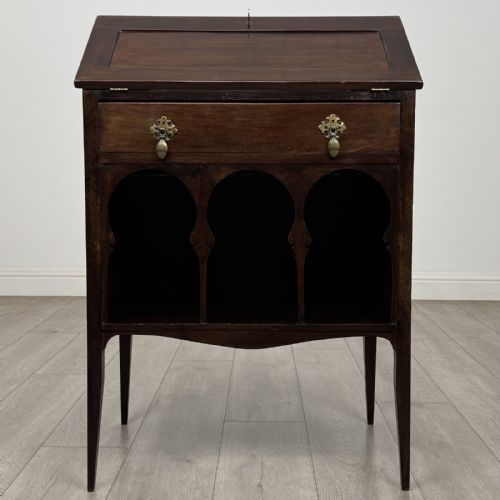
- A writing cabinet featuring a sloping fall-front that opens to reveal internal compartments and small drawers. This form allows correspondence to be concealed when not in use.
- Fiddleback
- Mahogany timber displaying a wavy cross-grain pattern resembling the back of a violin. This figure adds distinct visual movement to the surface.
Fitted Mahogany Desk: Frequently Asked Questions
What is a fitted mahogany desk?
A fitted mahogany desk is a wooden writing surface equipped with internal compartments, pigeonholes, and small drawers for stationery. These pieces range from small portable slopes to large pedestal tables.
The inclusion of specialised interior fittings distinguishes them from plain writing tables, offering dedicated storage for letters, inkwells, and documents.
How do I date a mahogany desk?
Dating relies on observing structural characteristics, timber selection, and hardware styles across periods like the Georgian and Victorian eras. Earlier pieces often display hand-cut dovetails and solid timber construction.
Later Victorian and Edwardian examples may utilise machine-sawn components and veneered surfaces over different secondary woods, matching the prevailing manufacturing techniques of their decade.
Where were campaign desks used?
Campaign desks served officers and officials on military campaigns or colonial postings where frequent relocation was necessary. Their modular construction allowed safe transport.
Recessed brass mounts protected corners from impact during transit, preventing structural damage while maintaining a neat exterior appearance.
How do I care for mahogany?
Mahogany surfaces respond best to stable indoor humidity levels and regular dusting with a soft, dry cloth. Avoiding direct sunlight prevents the rich reddish-brown tone from fading.
Occasional application of appropriate wax maintains the sheen of the timber without building up heavy residues that dull the grain.