


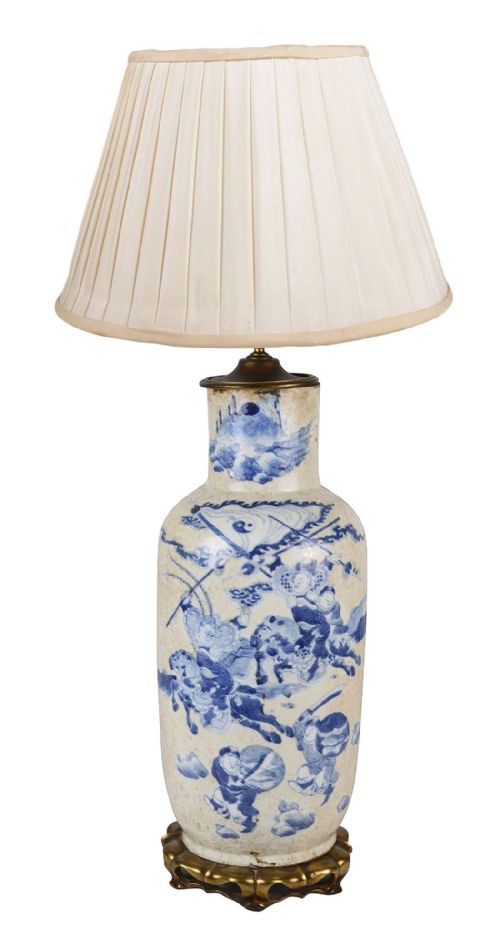


Fitted Chinese Porcelain Vase
A fitted chinese porcelain vase brings hand-painted colour and sculptural presence into a room, serving as a striking focal point with centuries of history.
Fitted Chinese Porcelain Vase
When you search for a fitted chinese porcelain vase, you encounter items that have been adapted to serve as table lamps, bringing traditional ceramic artistry into domestic lighting. These pieces originate from the Qing Dynasty, Chinese Export traditions, and the later Chinoiserie style, primarily dating from the nineteenth century up to nineteen-twenty.
The most common form on this page is the table lamp conversion, where traditional vessels are paired with mounts in brass, ormolu, gilt bronze, metal, wood, and hardwood. Many examples arrive in pairs, featuring prominent decorative schemes such as Famille Rose, Famille Verte, Canton, Rose Medallion, and blue and white designs.
Vessels range from large matched pairs standing over a metre tall to individual vases wired for illumination. Alongside authentic period pieces, the selection includes nineteenth-century revival work such as Samson porcelain produced in the Famille Rose style.
How they were made
Makers utilised high-fired ceramic bodies painted by hand with mineral pigments before applying clear glazes and undergoing secondary firing. Blue and white pieces relied on cobalt underglaze, whilst Famille Rose and Famille Verte vessels incorporated opaque overglaze enamel colours applied in detailed pictorial scenes.
Adaptation into lamps involved mounting the porcelain onto bases and fitting necks with metal hardware, utilising brass, gilt bronze, ormolu, and turned hardwood. These mounts were secured to support electrical components while preserving the structural integrity of the antique ceramic body.
Several vases started life holding flowers in a Qing Dynasty courtyard before spending their retirement lighting a Victorian reading nook.
What varies in quality
Quality rests in the precision and vibrancy of the hand-painted brushwork across the porcelain surface, where finer examples display intricate detail and rich tonal variation in enamels like Famille Rose or cobalt blue. The crispness of floral, figural, or geometric motifs distinguishes masterwork production from standard commercial output.
The sophistication of the secondary mounts also defines the tier of the piece, with heavy cast brass, gilt bronze, ormolu, and carved hardwood fittings indicating superior craftsmanship compared to simpler metal or plain wood bases.
The Fitted Chinese Porcelain Vase Glossary
- Famille Rose
- A palette of opaque overglaze enamels dominated by pink or rose colours, introduced during the Qing Dynasty. This technique allowed for delicate shading and detailed rendering of florals and figures.
- Famille Verte
- A translucent green-dominant overglaze enamel palette used extensively on porcelain. It relies on iron red, yellow, blue, and black to create vibrant pictorial compositions.
- Rose Medallion
- A distinct style of Canton porcelain featuring segmented panels filled with birds, butterflies, and figures, arranged around a central medallion. The decoration is densely applied and richly coloured.
- Ormolu
- Gilt brass or bronze applied as decorative mounts on furniture and ceramics. It provides a warm, golden contrast to the porcelain bodies.
- Flambe
- A rich, streaked glaze achieved through metallic oxide reactions in the kiln. The resulting finish displays deep red and purple tones with mottled variations.
Fitted Chinese Porcelain Vase: Frequently Asked Questions
What is a fitted chinese porcelain vase lamp?
These items are antique Chinese ceramic vessels that have been adapted with mounts and electrical wiring to function as table lamps. They combine traditional Qing Dynasty or Chinese Export pottery with structural fittings in brass, ormolu, and hardwood.
Most examples date from the nineteenth century and retain hand-painted surface decoration such as blue and white designs or Famille Rose enamels, making them practical decorative objects for modern interiors.
How do I identify a Qing Dynasty vase?
Identification relies on examining the characteristics of the porcelain body, the handling of the hand-painted pigments, and the style of the glaze. Nineteenth-century pieces often display specific palettes like Famille Verte or Canton Rose Medallion.
The presence of period mountings in materials like gilt bronze, brass, or carved wood also points to the era of conversion and domestic use.
Are these vases sold as pairs?
Many listings feature large matched pairs of lamp conversions, particularly those originating from the nineteenth century. These balanced sets were typically created for symmetry in formal interior schemes.
Single vessels also appear across the selection, offering standalone options for smaller spaces or accent lighting.
How should I live with an antique lamp?
Position these lamps on sturdy console tables, sideboards, or desks where their height and hand-painted details can be appreciated. Ensure they are placed away from heavy traffic areas to protect the fitted mounts and ceramic bodies.
Pairing them with appropriate fabric shades allows the painted motifs and coloured glazes to remain the visual centrepiece of the room.