




Oriental Vase Lamp Bases
Oriental vase lamp bases bring decorative ceramics and bronzes into daily interiors, offering height, colour and converted utility.
Oriental Vase Lamp Bases
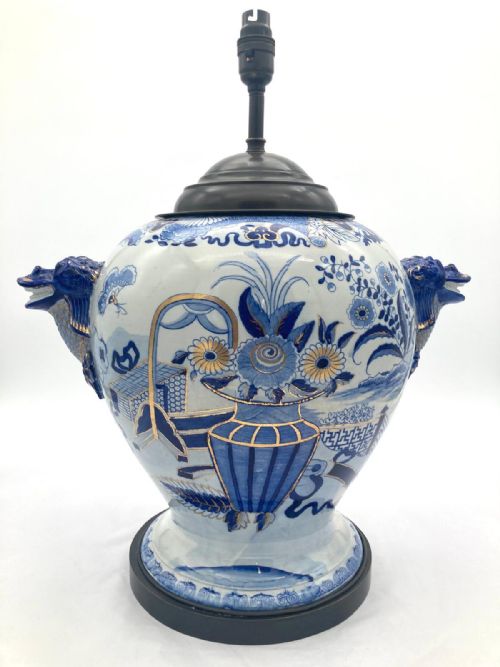
Oriental vase lamp bases are vessels adapted to hold electrical fittings, turning ceramic and bronze objects into household lighting. These pieces take forms such as baluster vessels, ginger jars and twin-handled shapes.
The selections available here rely heavily on nineteenth-century examples alongside eighteenth-century works. Chinese porcelain and Japanese bronze dominate the physical evidence.
Buyers encounter styles ranging from Qing dynasty blue and white to Meiji period Satsuma ware. Many pieces carry mounts in brass, gilt bronze or ormolu.
How oriental vase lamp bases were made
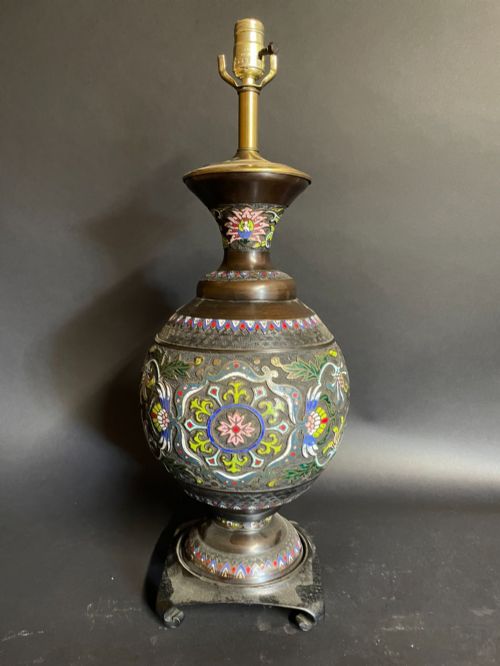
Makers utilised porcelain, ceramic and ironstone, shaping vessels on the wheel or casting them in bronze and brass. Surface decoration involved hand-painted enamels, famille rose palettes, celadon glazes and intricate cloisonné wirework.
Conversion into lamps involved drilling ceramic bodies or fitting metal mounts to secure electrical hardware. Wood, fabric and silk elements often complete the upper structures.
Dragons twist around heavy bronze pillars while delicate ginger jars hold modern bulbs aloft.
What varies in quality
The standard of painting and glaze depth distinguishes finer vessels from simpler production. Hand-painted enamels and rich celadon or sang de boeuf finishes show distinct artisanal control.
The integration of metal mounts, whether brass, gilt bronze or ormolu, dictates the visual harmony of the conversion. Workmanship in mounting hardware reflects the care taken during adaptation.
Hicks and Meigh
The Oriental Vase Lamp Bases Glossary
- Celadon
- A pale green jade-like glaze originating in East Asia. This finish appears frequently on nineteenth-century vessels.
- Cloisonne
- Enamelling technique where thin metal wires form compartments on a metal base. Artisans fill these cells with coloured paste before firing.
- Famille Rose
- A palette of opaque enamels dominated by pink hues. This decorative style gained prominence during the Qing dynasty.
- Imari
- Japanese porcelain decorated in underglaze blue and overglaze red, gold and black. Eighteenth-century examples demonstrate this traditional aesthetic.
- Satsuma
- Japanese earthenware featuring ivory crackle glazes and detailed polychrome painting. Meiji period pieces display this specific finish.
Oriental Vase Lamp Bases: Frequently Asked Questions
What are oriental vase lamp bases?
These items are antique vessels converted into functional table lighting.
They combine historic ceramic or bronze bodies with electrical fittings.
How were these lamps used?
Converted vessels provided ambient illumination in period drawing rooms and parlours.
Their decorative surfaces added colour and height to interior schemes.
How do I live with them?
Place them on sturdy side tables where their scale can be appreciated safely.
Pair them with simple fabric shades to balance ornate ceramic bodies.
How do I tell periods apart?
Examine the glaze characteristics, decorative motifs and mounting metals carefully.
Eighteenth-century pieces often show distinct paste qualities compared to nineteenth-century wares.