



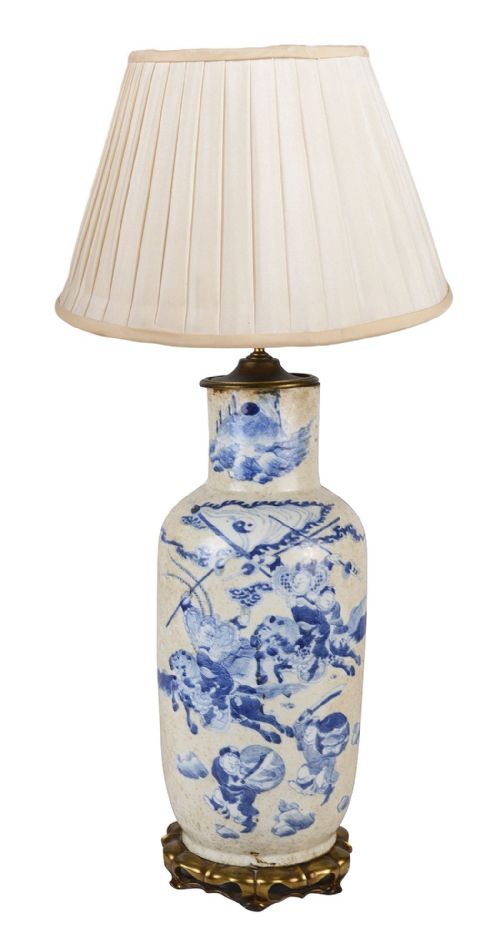


Fitted Ceramic Table Lamps
Fitted ceramic table lamps bring character to a room through converted antique vases and jars.
Fitted Ceramic Table Lamps
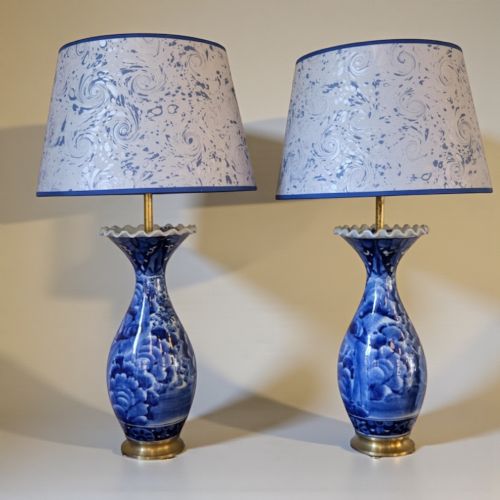
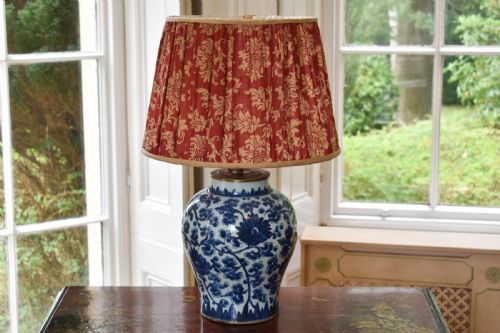
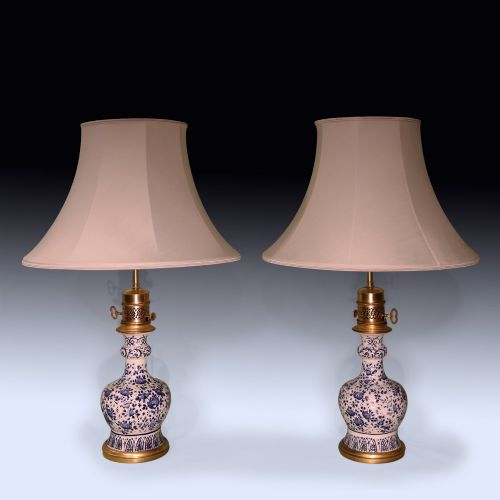
Fitted ceramic table lamps comprise antique and vintage vessels transformed into lighting with mounted electrical fittings. You encounter these most frequently as pairs of porcelain vases or jars originating from 19th Century China and Japan, alongside English factories.
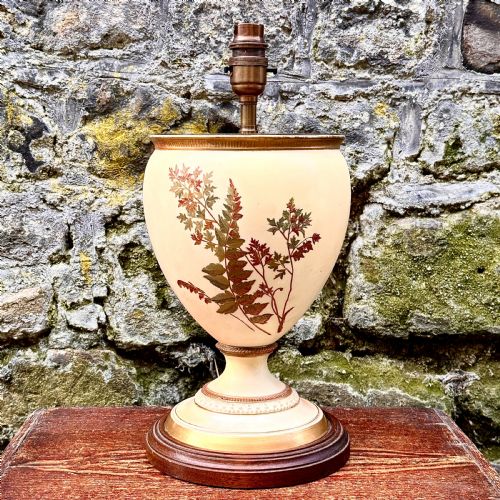
The selection here draws heavily on 19th Century craftsmanship, featuring Imari and Famille Rose palettes alongside Chinese blue and white. Makers from Edwardian workshops such as Royal Doulton and Royal Worcester also appear in glazed earthenware and porcelain forms.
Vessels range from tobacco jars to turquoise glaze figural pieces and flambe vases, each adapted to sit on a tabletop. These items combine historic ceramic production with functional domestic lighting.
How they were made
Potters shaped these bodies from porcelain, stoneware and earthenware, applying cobalt blue, Famille Verte and polychrome enamels before high-temperature firing. Artisans then mounted brass and other metal fittings to secure electrical components through the top or base.
Shades constructed from fabric and paper complete the assembly, resting on fitted hardware designed to hold the bulb and diffuser securely in place. Hardwood bases frequently support the ceramic weight.
Fitted Ceramic Table Lamps Retail Price Guide 2026
Typical asking prices for fitted ceramic table lamps among the pieces listed under this phrase on Sellingantiques today, from the lower quarter to the upper quarter. They describe what is for sale here now, not the wider market.
The listings show ceramic table lamps spanning the 18th Century, 19th Century, and Edwardian periods, utilising porcelain, stoneware, brass, and hardwood.
What varies in quality
Quality depends upon the artistic merit of the hand-painted ceramic decoration and the clarity of the glaze, such as the depth of a turquoise or flambe finish. Intricate hand-painted detail on porcelain demands skilled brushwork that elevates the visual impact.
The integration of the electrical conversion matters greatly, specifically how cleanly the brass mountings respect the antique ceramic body. Matched pairs with uniform proportions command stronger presence than single adapted vessels.
Royal Worcester·Sitzendorf·Royal Doulton
The Fitted Ceramic Table Lamps Glossary
- Famille Rose
- A palette of opaque enamel colours dominated by pink, introduced in Chinese ceramics during the Qing Dynasty. It allows for soft tonal gradations in floral and figural scenes.
- Imari
- A style of Japanese porcelain featuring underglaze blue and overglaze red, gold and green. It originates from the town of Arita and was widely exported to Europe.
- Flambe
- A streaky, variegated glaze developed through reduction firing, producing rich red and purple tones. The technique creates unpredictable patterns on the ceramic surface.
- Tobacco Jar
- A ceramic container traditionally used for storing leaf tobacco, featuring a fitted lid. These sturdy vessels frequently undergo conversion into heavy table lamps.
- Chinoiserie
- European artistic style reflecting Chinese motifs and decorative techniques. It appears across various 18th and 19th Century furnishings.
Fitted Ceramic Table Lamps: Frequently Asked Questions
Are these antique lamps recently converted?
Many vessels were adapted from earlier vases and jars during the late 19th or early 20th centuries. Conversion dates often align with the electrification of period homes.
Electrical wiring and brass fittings may be updated for modern safety standards while retaining the original ceramic body.
How do I identify Chinese export porcelain?
Chinese export pieces typically display decorative palettes tailored for Western tastes, including Famille Rose and blue and white designs. These items frequently date from the 18th and 19th centuries.
Form and glaze characteristics help distinguish them from later reproductions or domestic European wares.
Can I find matching pairs easily?
Several listings feature matched pairs of vases or jars converted simultaneously into lamps. Pairs offer symmetrical balance for sideboards and larger tables.
Single lamps also appear, often representing distinct forms such as flambe or figural vases.
What styles are common in these lamps?
Styles span Qing Dynasty Chinese porcelain, Japanese Meiji wares, and Edwardian English pottery. Rococo Revival and Victorian influences also shape the mounting and decorative context.
Each style brings specific colour palettes and ornamental motifs to the tabletop.