



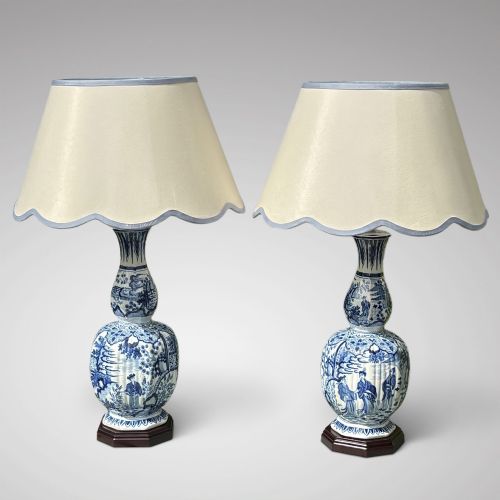


Blue Porcelain Bedside Lamps
Blue porcelain bedside lamps bring rich cobalt depth and historic form to a room, turning antique vases and jars into practical evening light.
Blue Porcelain Bedside Lamps
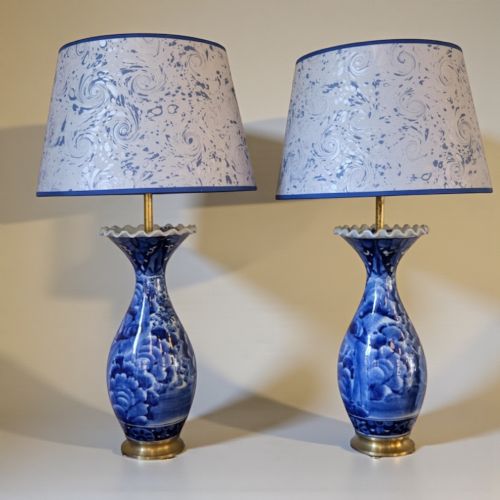
Blue porcelain bedside lamps repurpose historic ceramic vessels, predominantly Chinese ginger jars and vases alongside Japanese Satsuma and European earthenware, into functional table lighting. These pieces span the nineteenth century and the early decades of the twentieth century, bringing traditional ceramic forms into domestic interiors.
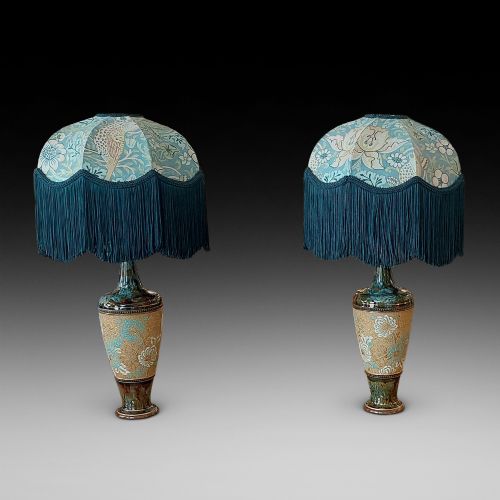
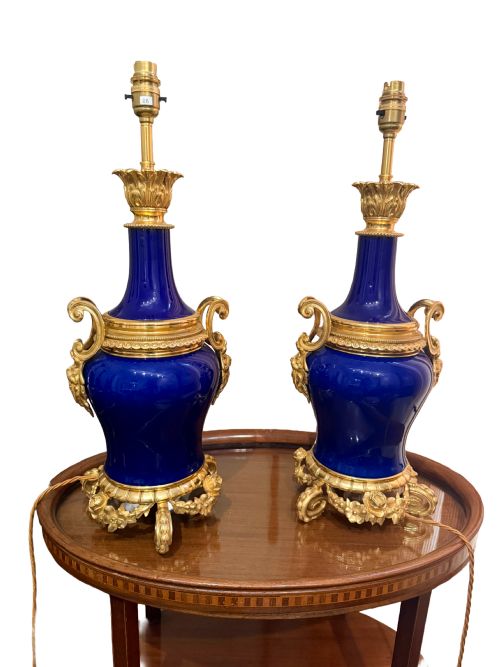
The most common examples on this page are pairs of nineteenth-century Chinese blue and white vases and ginger jars mounted with electrical fittings. Buyers also encounter Japanese Meiji period Satsuma pieces, French Sevres style porcelain, and Royal Doulton stonewares adapted for the bedside table.
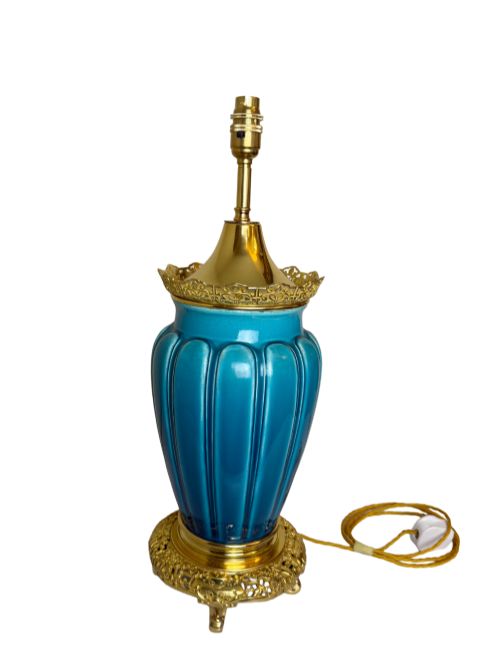
The underlying ceramic bodies range from crackleware and prunus blossom designs to hand-painted cobalt decorations on white grounds. Many sit upon cast metal bases, utilising brass, gilt bronze, or ormolu mounts that complement the blue glaze.
How they were made
The core material is fired ceramic, encompassing porcelain, earthenware, and stoneware, shaped into baluster vases, ginger jars, and twin-handled vessels. Potters applied cobalt pigments beneath clear glazes or painted directly onto fired surfaces before secondary firings.
Metalwork components such as brass, gilt bronze, and ormolu were cast and chased to form mounts, collars, and weighted bases that secure the ceramic body. Fabric elements including silk and handmade shades complete the assembly, paired with electrical wiring added during conversion.
Blue Porcelain Bedside Lamps Retail Price Guide 2026
Typical asking prices for blue porcelain bedside lamps among the pieces listed under this phrase on Sellingantiques today, from the lower quarter to the upper quarter. They describe what is for sale here now, not the wider market.
Listings feature periods spanning from the 1870s through the 1920s, combining porcelain, earthenware, and stoneware with ormolu, brass, and silk.
What varies in quality
Quality rests in the harmony between the ceramic vessel and its metal mounts, where precision in the brass or ormolu framing elevates the piece. Superior examples feature crisp hand-painted cobalt detail on the porcelain and integrated mounts that respect the historic ceramic body without intrusive drilling.
The depth and clarity of the blue glaze distinguish finer productions, alongside the refinement of the secondary materials like silk shades and carved wood bases. Balance and proportion determine how successfully a historic vase translates into a bedside lamp.
The Blue Porcelain Bedside Lamps Glossary
- Ormolu
- Gilded bronze mounts applied to furniture and porcelain, popular in nineteenth-century French decorative arts. It provides a bright metallic contrast to deep blue glazes.
- Ginger jar
- A ceramic vessel with a broad body and rounded shoulders, originally used for storing spices and later converted into popular lamp bases. These often feature blue and white prunus blossom patterns.
- Satsuma
- A type of Japanese earthenware featuring a crackled ivory or blue glaze decorated with intricate painted designs. These appear frequently in nineteenth-century export pieces.
- Cloisonné
- Enamelwork created by soldering wire compartments onto a metal base before filling them with coloured paste. Examples occasionally incorporate blue tones alongside traditional metalwork.
- Famille Verte
- A ceramic palette dominated by green enamels, though often found alongside blue and white elements in nineteenth-century Chinese export vases.
Blue Porcelain Bedside Lamps: Frequently Asked Questions
Are these original antique vases?
Most pieces start as historic nineteenth or early twentieth-century ceramic vessels, including Chinese ginger jars and Japanese Satsuma vases, which were subsequently converted into lamps with electrical fittings.
This conversion process preserves the decorative ceramic body while adapting the object for modern domestic use.
How do I date a blue porcelain lamp?
Dating relies on examining the characteristics of the ceramic body, glaze style, and any associated metal mounts. Nineteenth-century examples often display specific cobalt tones and potting techniques typical of the Qing Dynasty or Meiji period.
Additional clues come from the style of the ormolu or brass mounts and the wiring infrastructure added during conversion.
Do these lamps come with shades?
Several listings include handmade fabric or silk shades designed to complement the proportions of the ceramic base. Other pieces are sold as bases alone, allowing owners to select shades that suit their interior colour scheme.
How do I clean antique porcelain lamps?
Dust the ceramic body gently with a soft, dry cloth to protect the glaze and any delicate hand-painted details. Metal mounts like ormolu or brass require minimal intervention, avoiding harsh chemical polishes that might damage adjacent porcelain surfaces.