

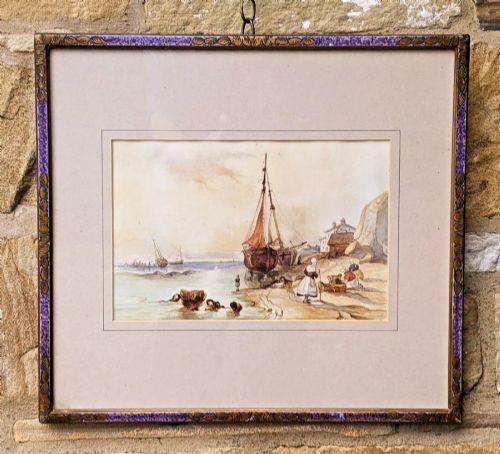
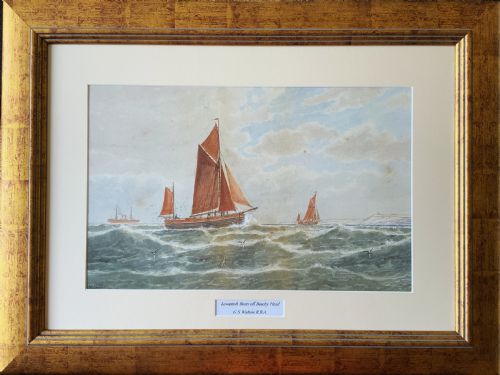
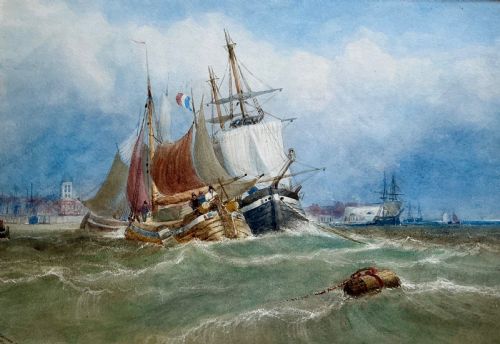


Fishing Boat Watercolour
A fishing boat watercolour captures the motion of coastal working vessels on paper using fluid pigments.
Fishing Boat Watercolour
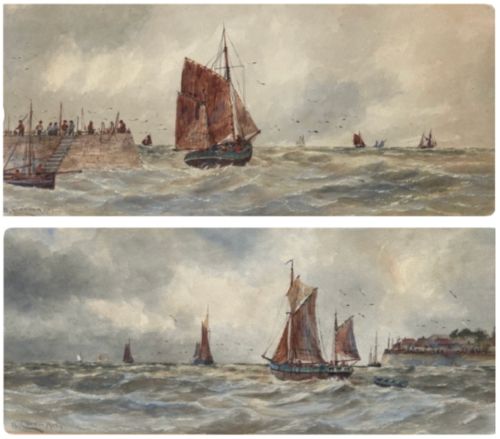
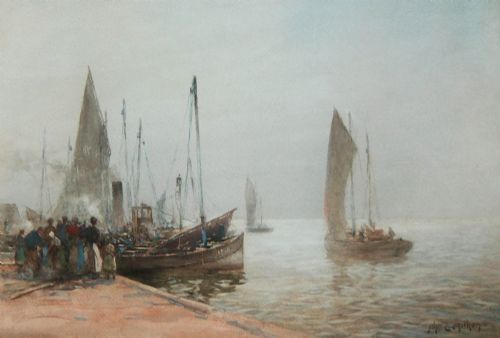
A fishing boat watercolour records working maritime scenes along British and European shores from the nineteenth and twentieth centuries. These paintings typically depict cobles, luggers and coastal vessels at work in harbours, on beaches or navigating coastal waters.
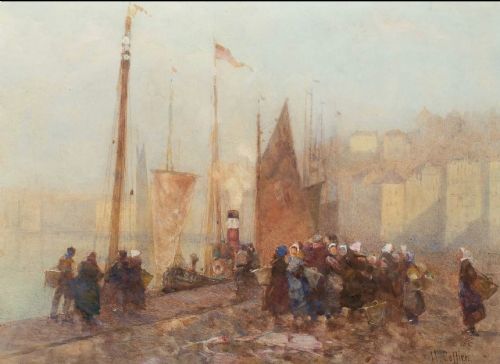
The selections available here range from Victorian period marine art to British impressionist interpretations of fishing communities. Collectors encounter works set in familiar coastal locations such as Whitby, St Ives, Mousehole and various continental ports.
Most examples originate from the Victorian era through to the mid-twentieth century, executed on paper and housed in wood and glass frames. The works vary from detailed topographical harbour records to looser impressionistic coastal studies.
Materials and technique
These works rely primarily on watercolour pigment applied to paper sheets, occasionally supplemented with gouache to build opaque highlights on foam, sails or breaking waves. Artists utilised the natural white of the unpainted paper surface to denote light on water and sky.
Finishing materials typically include gilt frames paired with protective glass to shield the delicate paper surfaces from atmospheric moisture and handling damage.
Listings feature paper supports predominantly from the nineteenth and twentieth centuries, employing watercolour and gouache.
Separating the best from the ordinary
Quality rests upon the artist's command of medium and atmospheric perspective, distinguishing confident brushwork from rigid architectural rendering. The finest examples convey movement in the sea and the specific rigging of working vessels with economy and precision.
Condition also dictates standing, particularly the preservation of paper tone without excessive foxing or fading from sunlight. Original framing and clear provenance to known marine painters elevate individual works.
James Orrock·William Cannon·James E Aitken·Hector Caffieri·Alfred G Morgan·George Stanfield Walters·Henry Barlow Carter·William Lee Hankey·Tom Clough·Thomas Bush Hardy·Frederick William Hattersley·Ernest F Hill·Fred Mayor·Walter Sweet·Frank Rousse·Robert Leslie Howey·George Marks·Louis Van Staaten·Jan Van Couver·Martin Snape·Hilda Mary Sides·Thomas Mortimer·R Thomas·Harry Wanless·William Roxby Beverly
The Fishing Boat Watercolour Glossary
- Watercolour pigment
- Finely ground colour particles suspended in a water-soluble binder, forming the primary medium for these marine paintings. This medium allows for transparent washes that simulate the translucency of water.
- Gouache
- An opaque watercolour paint containing white pigment added to the mixture, utilised by artists to create solid highlights on sails and cresting waves. It provides a dense contrast against transparent washes.
- Coble
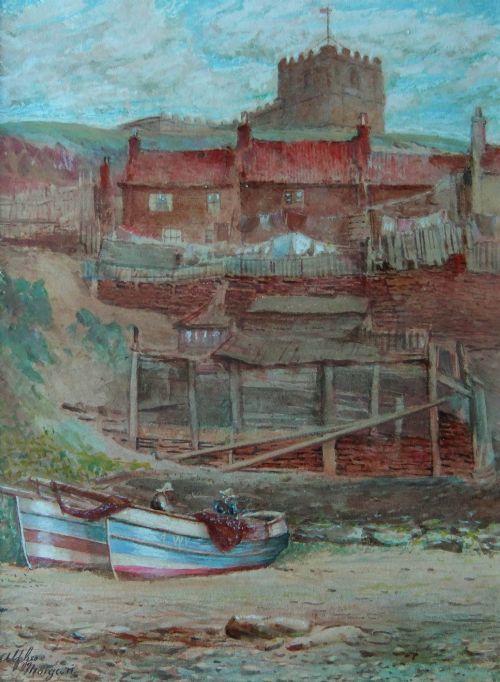
- A traditional type of open fishing boat native to the north-east coast of England, frequently featured in Yorkshire coastal watercolours. These vessels possess distinctive flat floors and high bows.
- Foxing
- Brown or yellowish spots caused by chemical reactions in ageing paper, often appearing in nineteenth-century sheets stored in damp conditions. Proper framing behind glass helps mitigate further deterioration.
- Marine art
- Artistic representations that focus on ships, harbours, coastal scenes and the sea, encompassing the primary subject matter of these watercolours. This genre ranges from topographical records to impressionistic interpretations.
Fishing Boat Watercolour: Frequently Asked Questions
What subjects appear in these watercolours?
These watercolours primarily depict working fishing vessels, harbour scenes, beached boats and coastal cliffs along British and European shores. Common settings include Yorkshire fishing ports, Cornish villages and Dutch coastal harbours.
Artists focused on the daily labour of fishermen, capturing boats navigating rough seas, landing catches or resting at low tide against a backdrop of coastal cottages and piers.
How should I frame and display them?
Watercolours require careful framing behind glass with acid-free mounts to prevent the paper from touching the glazing directly. This separation protects the delicate pigments from condensation and environmental damage.
Display the paintings away from direct sunlight and strong artificial heat sources to prevent the watercolour pigments and paper supports from fading over time.
How do I distinguish Victorian from later pieces?
Victorian watercolours often exhibit tight, detailed brushwork and a focus on topographical accuracy in recording marine architecture and rigging. The framing, paper weights and handwritten signatures on nineteenth-century pieces also provide chronological indicators.
Later twentieth-century examples, particularly those influenced by British Impressionism, show looser brushstrokes, broader washes of colour and an emphasis on atmospheric light rather than precise topographical detail.
Were these painted outdoors or in studios?
Many marine artists created quick observational sketches and watercolours en plein air on the beach or harbour side to capture transient light and weather conditions. These direct studies often served as reference material for larger finished works completed in the studio.
Works completed directly on site frequently retain an immediacy of brushwork and a freshness in capturing coastal spray and changing skies.