
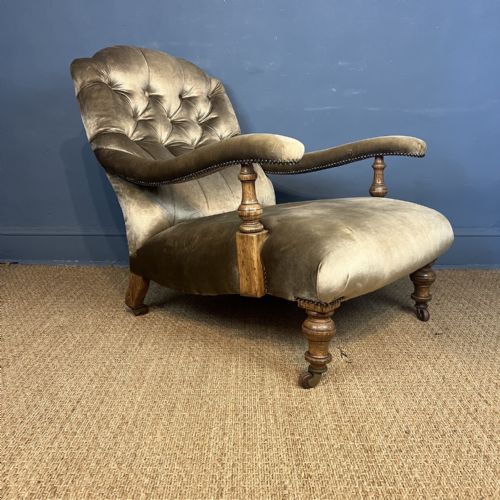
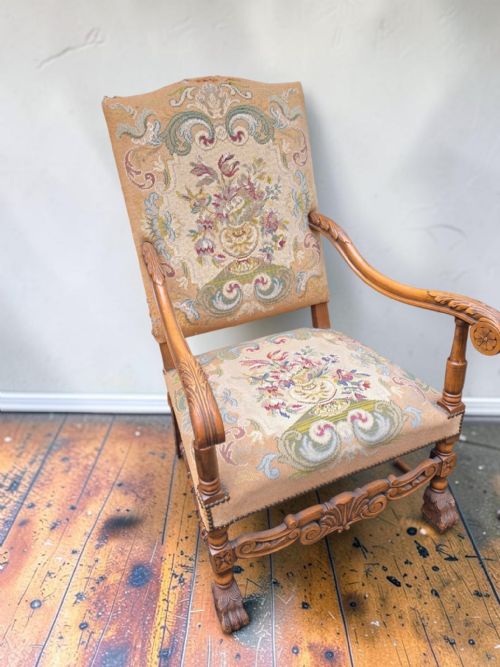
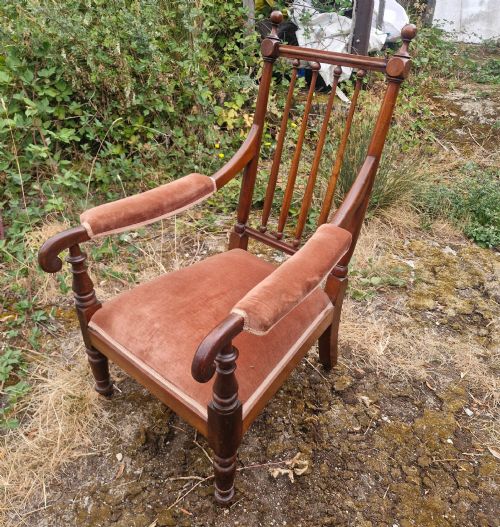
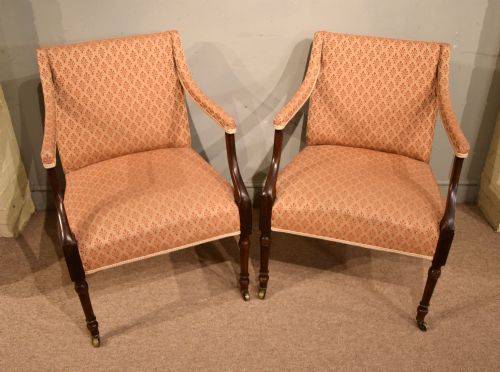
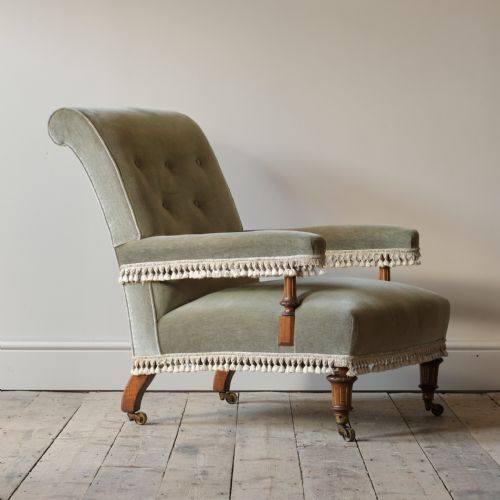
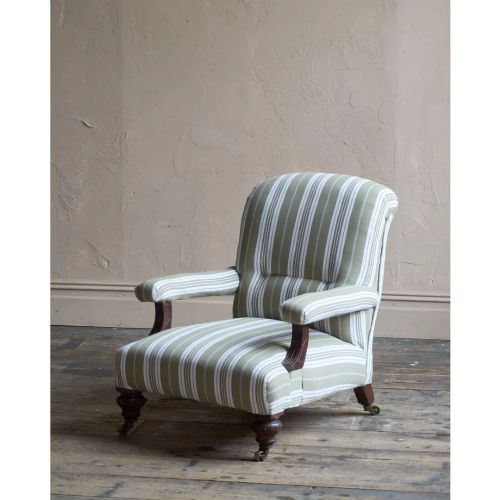
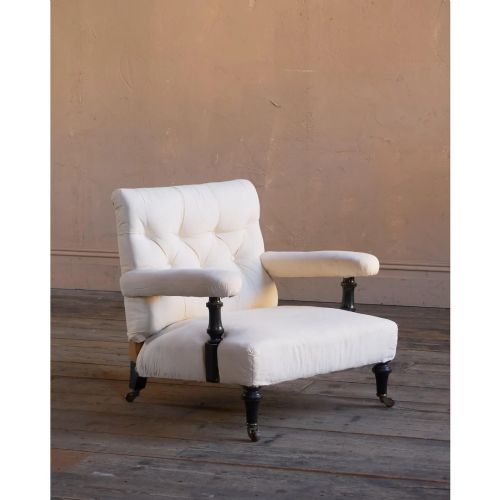
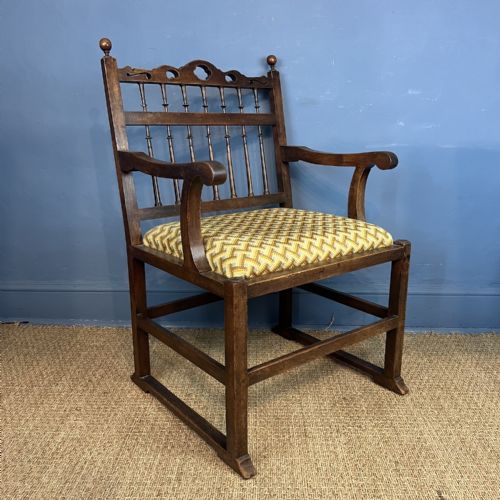
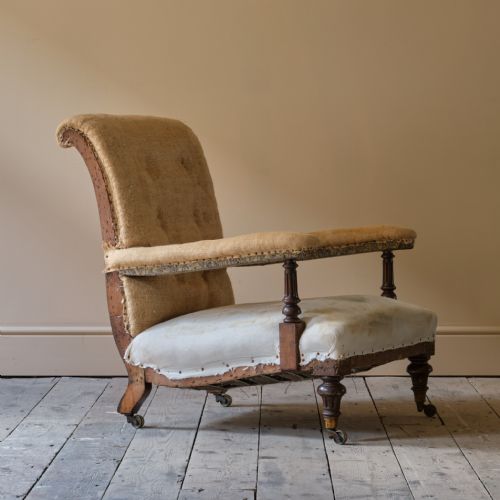


Fireside Open Armchair
These fireside open armchair examples are sturdy wooden seats designed for comfort by the hearth, drawing buyers who want period character and traditional craftsmanship.
Fireside Open Armchair
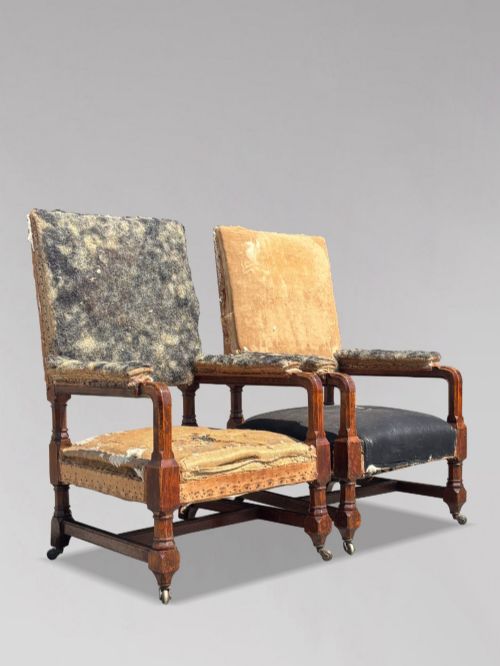
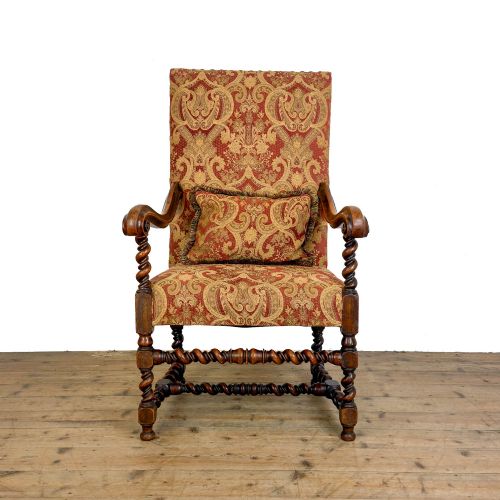
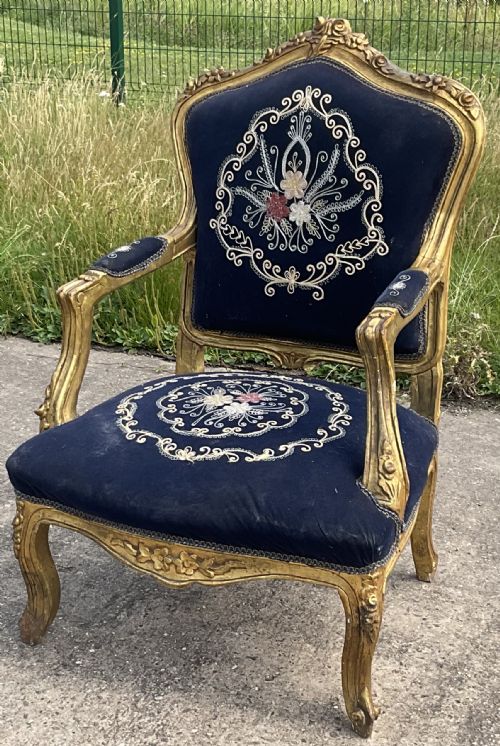
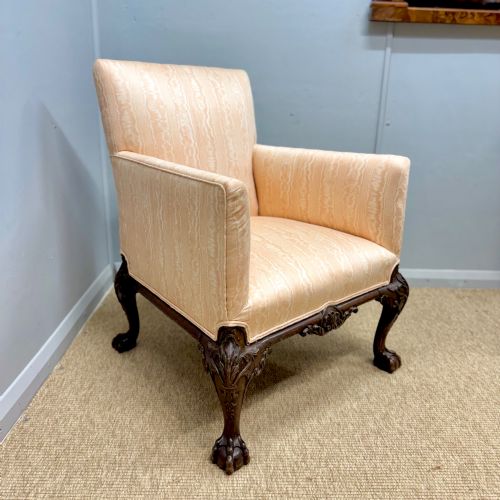
When you search for a fireside open armchair, you encounter robust wooden seating designed for warmth and comfort by the hearth. The examples gathered here span from the eighteenth century through the Victorian era, showing varied proportions and timber frames.
You are most likely to meet nineteenth-century walnut, mahogany, and oak frames on this page. These pieces often feature open arms and substantial upholstery upholstered in fabric, velvet, or leather, reflecting the domestic habits of earlier centuries.
What varies in quality
Quality in these seats rests upon the integrity of the timber frame and the skill of its initial construction. Heavier hardwoods and robust joinery distinguish superior examples from lighter utility seating.
The sophistication of the carving and the fidelity of revival styles also set pieces apart. Refined proportions and well-executed details elevate an item above standard regional work.
Listings feature oak, mahogany, walnut, and rosewood frames spanning the eighteenth and nineteenth centuries.
Gillows·Mellier and Co·Howard and Sons
The Fireside Open Armchair Glossary
- Cabriole leg
- A furniture leg that curves outward at the knee and tapers inward toward the foot, often ending in a pad or claw.
- Spindle back
- A chair back constructed with a series of slender, vertical turned wooden rods.
- Show-wood
- Exposed polished timber framing on an upholstered chair, designed to display the grain and carving.
- Bobbin turned
- A style of furniture turning where the wood is shaped into a series of rounded spheres resembling bobbins on a thread.
- Wainscot
- A heavy wooden chair type with panelled construction, commonly associated with early English seating.
Fireside Open Armchair: Frequently Asked Questions
What is a fireside open armchair?
A fireside open armchair is a traditional wooden seat with exposed arms, designed to be placed near a hearth for warmth and reading.
These pieces typically date from the eighteenth and nineteenth centuries, combining sturdy hardwood frames with comfortable upholstered pads.
How do I identify a Victorian armchair?
Victorian armchairs often feature dark timbers like walnut and mahogany, combined with deep buttoning or heavy show-wood frames.
Stylistic revivals such as Gothic, Jacobean, and Carolean elements frequently appear on chairs from this period.
What woods were used for these chairs?
Cabinet makers utilised dense native and imported hardwoods including mahogany, oak, walnut, and rosewood for strength and appearance.
Oak and walnut frequently appeared in earlier or revival pieces, while mahogany remained popular throughout the Georgian and Victorian eras.
How should I live with an antique armchair?
Position your chair away from direct heat sources and strong sunlight to protect the timber frame and historic textiles.
Regular gentle dusting and professional care for delicate fabrics will help preserve the chair for daily use.