


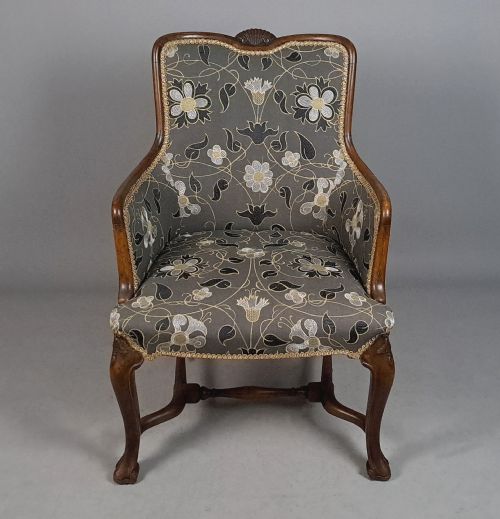


Fireside Armchair Floral
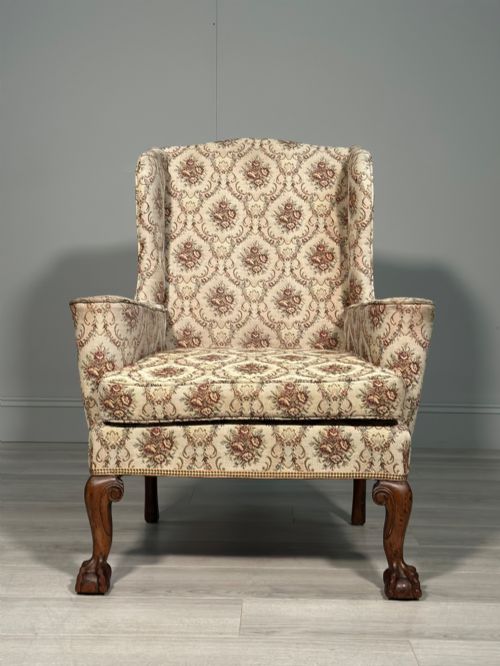
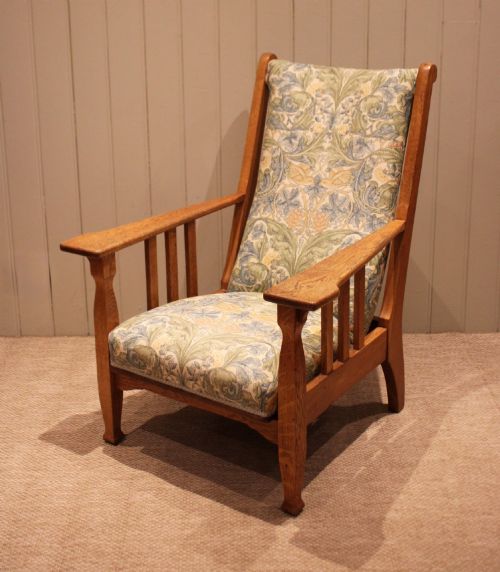
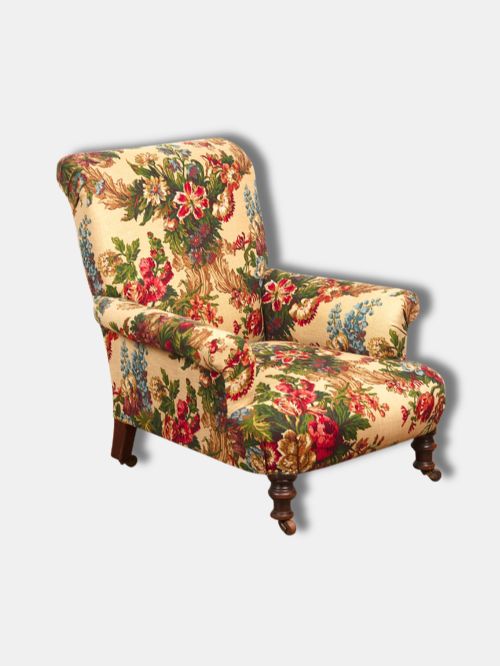
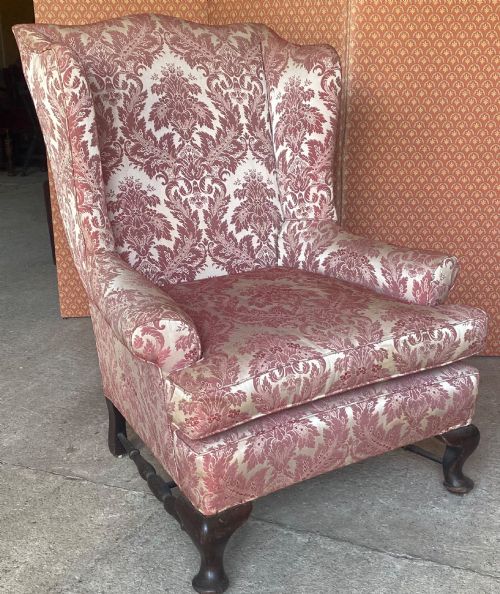
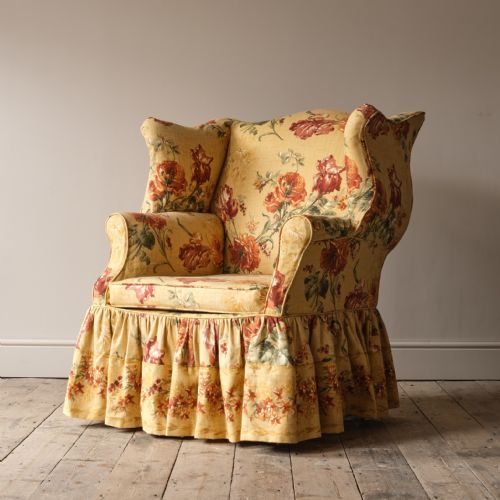
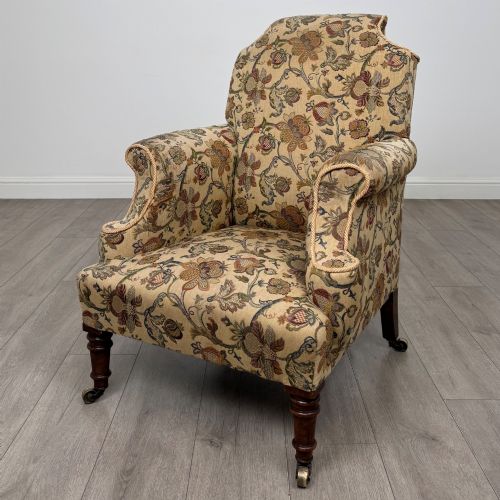
A fireside armchair floral brings traditional seating to life with patterned upholstery, ranging from Victorian wingbacks to Edwardian styles.
Fireside Armchair Floral
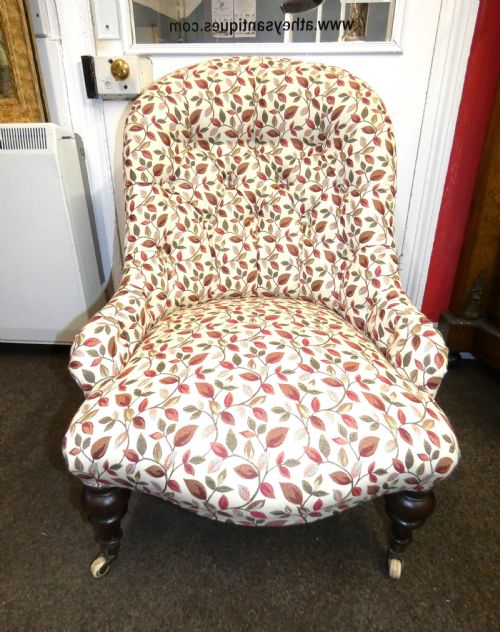
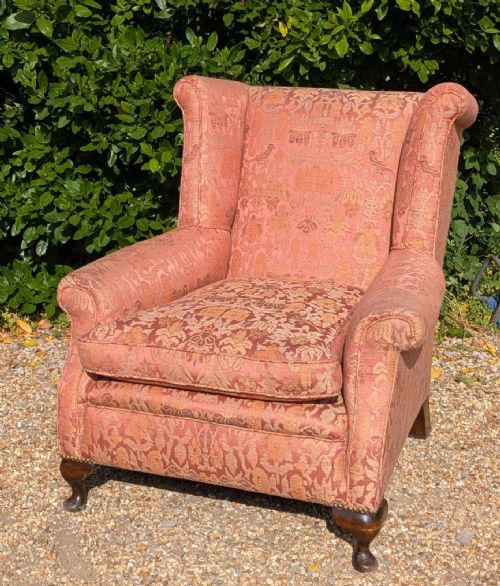
The fireside armchair floral category centres on seating designed for comfort by the hearth, upholstered in textiles that feature botanical patterns. Buyers exploring this selection encounter forms spanning the eighteenth century through to the early twentieth century, including wingbacks, nursing chairs, and barrel backs.
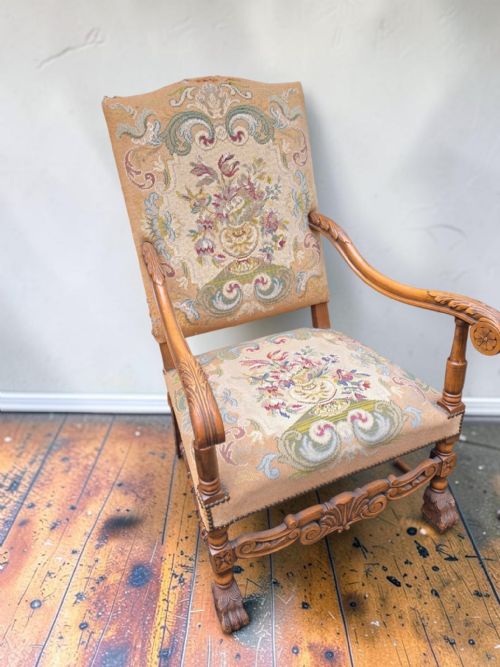
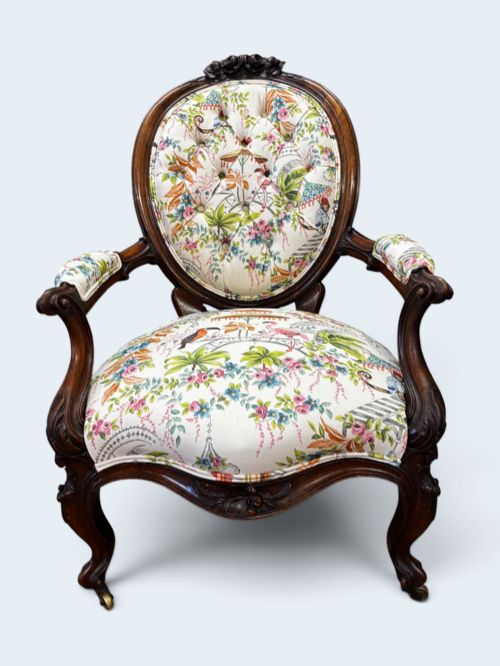
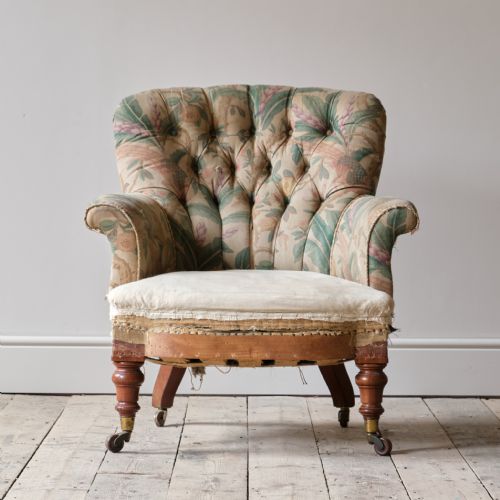
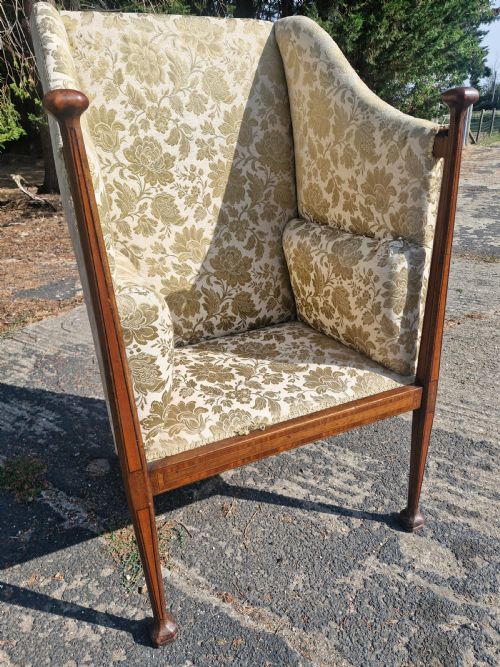
The most common examples on this page date from the Victorian and Edwardian periods, alongside pieces shaped in the Queen Anne and Chippendale revivals. These chairs often combine traditional wooden frames with floral fabric, tapestry, or crewelwork coverings.
Makers such as Strahan and Co., Howard and Sons, and Maple and Co. appear among the selections, alongside country house examples. The grouping reflects a strong British tradition of comfortable, padded seating upholstered in textiles.
Materials and construction methods
Frames are built from hardwoods including mahogany, walnut, oak, and rosewood, sometimes complemented by brass elements or iron frames. Carved details and cabriole legs show the hand of skilled cabinet makers across the Georgian, Victorian, and Edwardian eras.
Upholstery relies on traditional textiles, tapestry, and floral fabric, often feather-filled or button-backed for support. Techniques span hand-carving on the woodwork and detailed needlework on the covers.
Fireside Armchair Floral Retail Price Guide 2026
Typical asking prices for fireside armchair floral among the pieces listed under this phrase on Sellingantiques today, from the lower quarter to the upper quarter. They describe what is for sale here now, not the wider market.
Drafty rooms forced historical makers to invent wingbacks, proving that cold ankles inspired the best furniture.
Distinctions in craftsmanship and materials
Quality rests in the integrity of the hardwood frame and the depth of the hand-carved detail on the woodwork, such as cabriole legs or wingback profiles. Pieces by established workshops demonstrate superior structural joinery compared to standard utility seating.
The textile work defines the upper end of the range, with hand-stitched tapestry, crewelwork, or high-grade floral fabric maintaining its tension and integrity over time. Original fillings, such as feather padding, further separate notable pieces from later, simpler restorations.
Strahan and Co.·Howard and Sons·Maple and Co.
The Fireside Armchair Floral Glossary
- Wingback
- An armchair with high sides attached to the arms, designed to shield the sitter from draughts by the fire. These frames often date from the eighteenth and nineteenth centuries.
- Cabriole leg
- A furniture leg featuring a double curve, typically arching outward and tapering downward to a pad or claw foot. This form is common in Queen Anne and eighteenth-century revival pieces.
- Crewelwork
- Embroidery executed in wool on a sturdy fabric ground, frequently seen on historical upholstery. It creates textured floral and botanical motifs.
- Spoon back
- An upholstered chair back shaped like the bowl of a spoon, fitting the contour of the human spine. This form is particularly prevalent in Victorian salon chairs.
Fireside Armchair Floral: Frequently Asked Questions
What defines a fireside armchair floral?
These pieces combine comfortable padded seating with botanical or floral textile coverings, designed originally to sit near a hearth.
The category includes wingbacks, barrel backs, and nursing chairs originating from the eighteenth to the early twentieth centuries.
How do I identify a Victorian piece?
Victorian examples often feature dark hardwoods like mahogany or walnut, alongside button-backed upholstery or carved rosewood frames.
They also encompass specific forms such as nursing chairs and iron-framed seating.
Where should I place these chairs?
They suit living spaces, studies, and bedrooms, functioning as accent seating or reading chairs.
Their substantial frames and patterned textiles make them focal points in traditional or country house interiors.
How do I care for antique upholstery?
Protect the fabric from direct sunlight to prevent fading and keep the textile clean with gentle vacuuming using a soft brush attachment.
Maintain the wooden frames with appropriate wax or polish suitable for hardwood surfaces.