
Fireplace Log Bucket
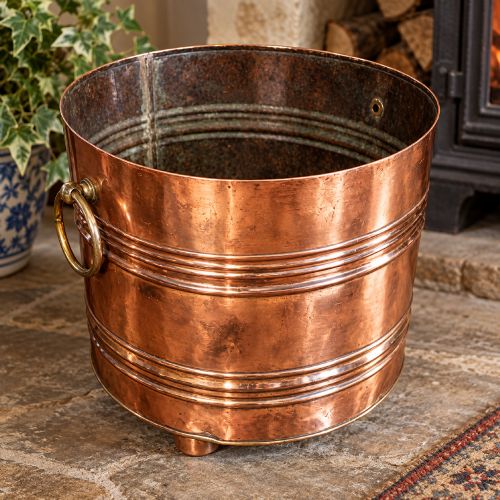
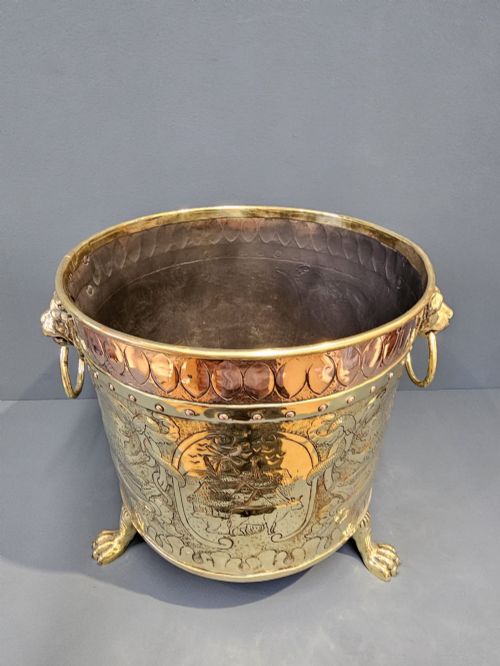
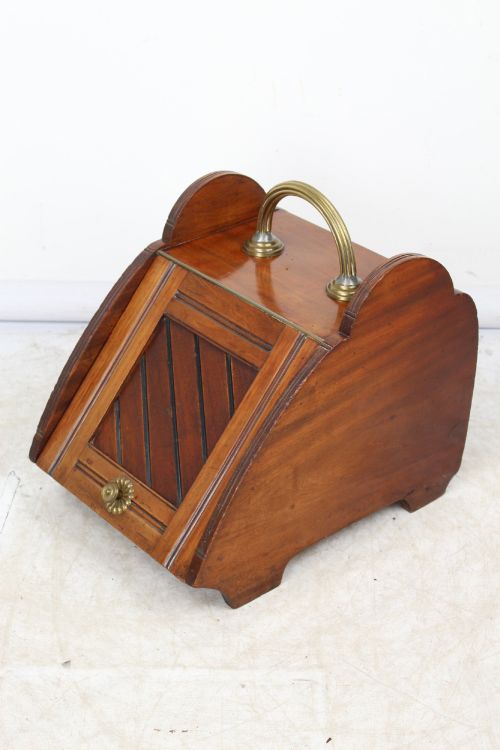
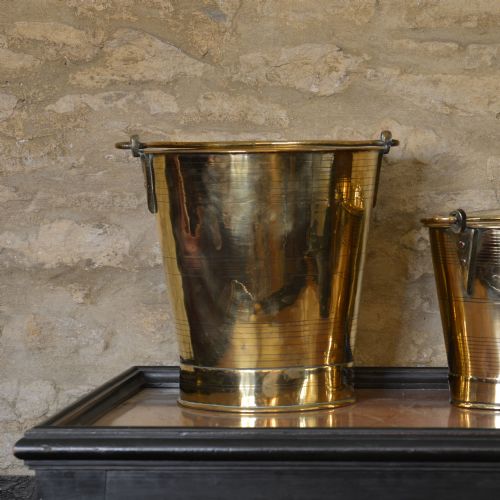
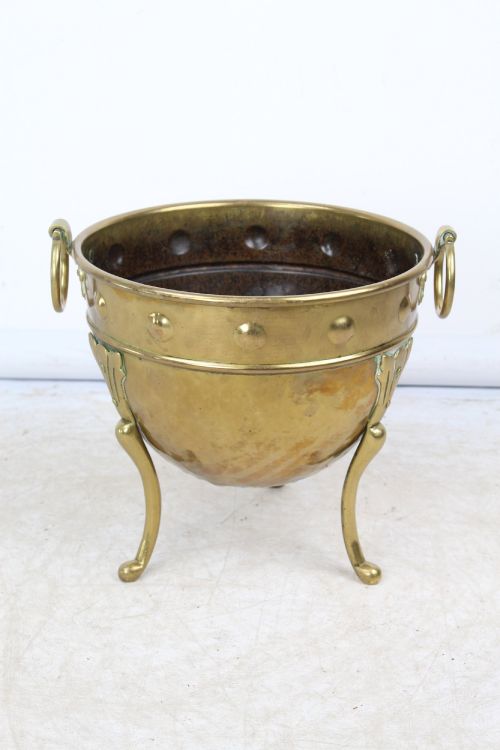
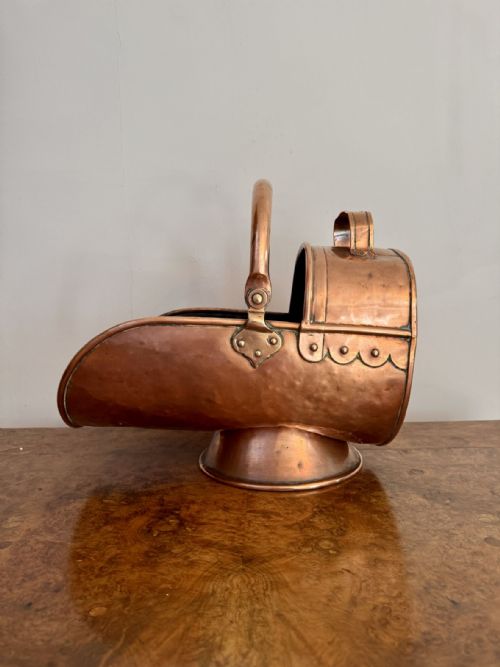
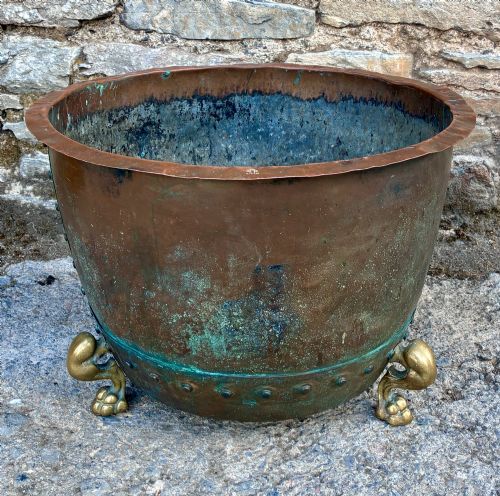
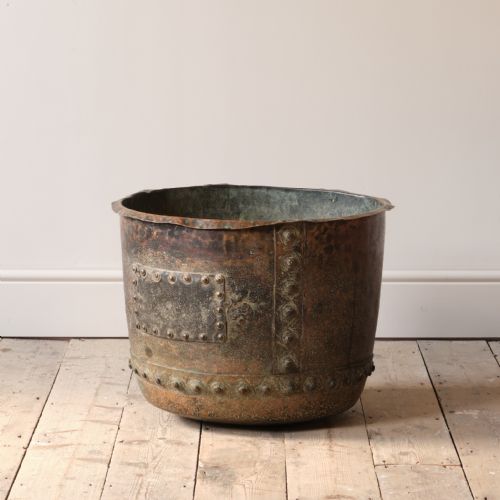
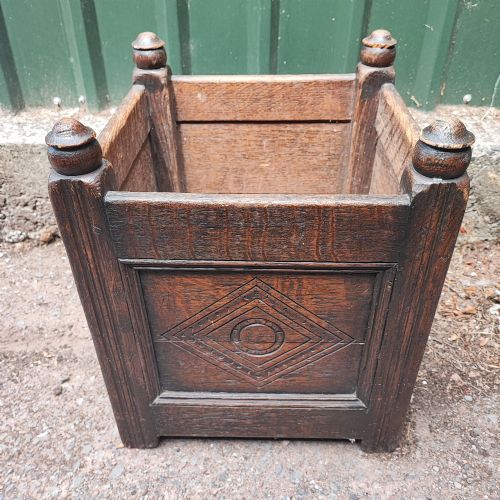
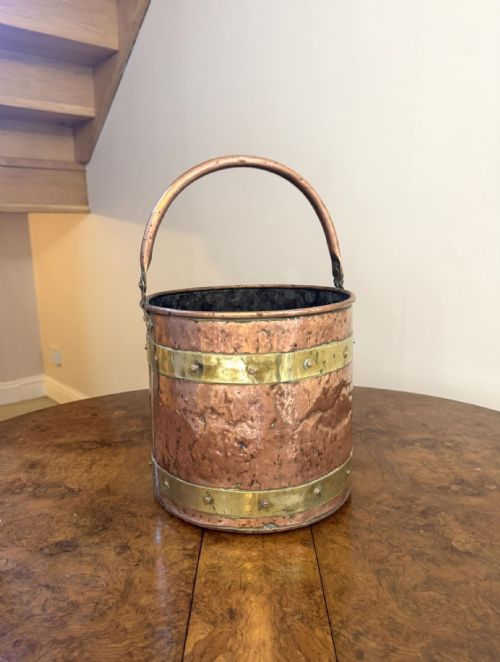
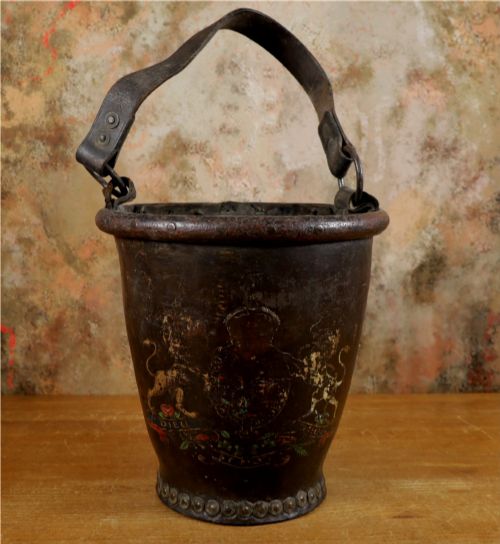
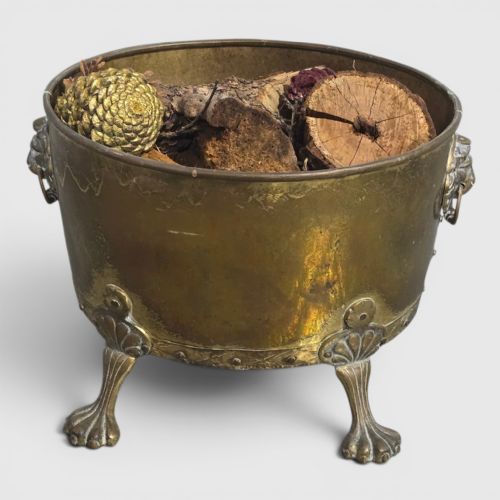
These fireplace log bucket examples combine heavy metal and warm wood to hold fuel beside the hearth.
Fireplace Log Bucket
A fireplace log bucket provides a dedicated vessel for holding fuel beside the hearth, appearing in forms such as coal scuttles, bins, and coopered barrels. These items originate from periods spanning the Georgian era through to the twentieth century, with Victorian examples appearing frequently.
Makers fashioned these pieces from materials including brass, copper, iron, oak, and mahogany. The inventory includes utilitarian fireside accessories alongside decorative planters and jardiniere vessels adapted for domestic use.
Design styles range from plain country oak boxes to ornate Arts and Crafts copper bins featuring riveted construction and brass banding. Pieces from the Regency, Edwardian, and Art Deco periods also contribute to the variety found in domestic interiors.
Materials and Construction
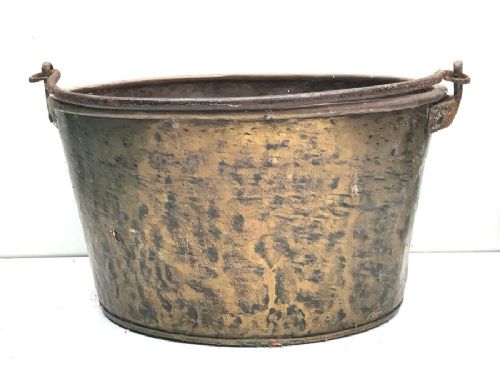
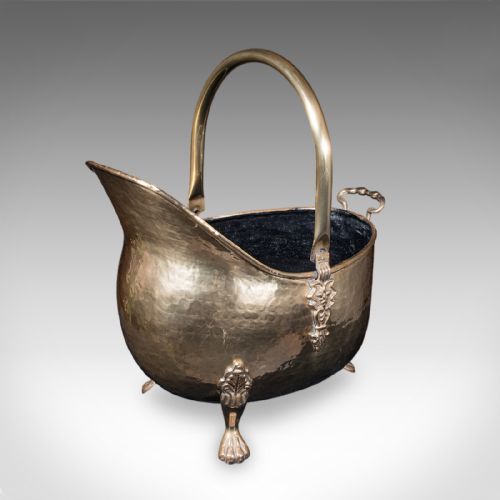
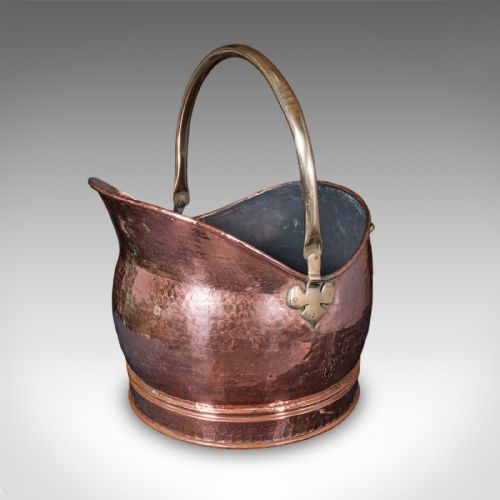
Metal vessels utilise sheet brass and copper, often joined by visible rivets or finished with hammered surfaces and contrasting brass bands. Handles formed from wrought iron or swinging brass attachments provide sturdy means for carrying heavy loads of wood or coal.
Wooden examples rely on traditional coopered construction, shaping oak and mahogany staves into sturdy barrel forms bound with metal hoops. Certain items incorporate interior liners to protect the wood from moisture and debris associated with fuel storage.
Listings feature oak, mahogany, brass, copper, and wrought iron shaped into buckets, scuttles, and bins across the Victorian, Edwardian, and Georgian eras.
Evaluating Quality
Quality rests upon the integrity of construction, seen in the strength of riveted seams, the thickness of copper or brass sheeting, and the precision of coopered wooden staves. Finer examples display careful hand-finishing, such as embossed detailing, heraldic crests, or matching metal hardware.
The presence of original elements, including swing handles, fitted liners, and matching shovels, elevates certain items above standard utilitarian vessels. Superior pieces maintain structural soundness alongside patination accrued from decades of domestic service.
Henry Loveridge·Richard Arkwright Masson Mills
The Fireplace Log Bucket Glossary
- Coopered
- Constructed from wooden staves joined side by side and bound with metal hoops, typical of barrels and buckets.
- Jardiniere
- An ornamental pot or stand for holding plants or flowers, often utilised indoors as a decorative container.
- Riveted
- Joined using metal pins hammered flat at the ends, creating strong, visible seams on copper and brass vessels.
- Scuttle
- A metal bucket or container specifically designed for holding coal, usually featuring a sloping rim or a hinged handle.
Fireplace Log Bucket: Frequently Asked Questions
What materials make up a fireplace log bucket?
These vessels appear in metals such as brass, copper, and iron, alongside timbers like oak and mahogany. Many pieces combine both materials through brass bands or iron handles fitted to wooden staves.
Craftsmen often hammered copper sheets and secured them with visible rivets, while wooden items relied on traditional barrel-making techniques.
How do I date an antique log bucket?
Dating relies on stylistic clues and construction methods specific to different eras, from Georgian leather and brass pieces to Victorian Arts and Crafts hammered copper designs. Edwardian and later twentieth-century items often show simpler utilitarian forms or wheels.
Examining the type of fixings, handles, and metal patination helps distinguish earlier handmade pieces from later production.
Can these buckets hold logs safely?
These items served historically to store fuel near the fire, making them suitable for holding logs and kindling in modern living spaces. Many metal and coopered wooden versions remain structurally robust for daily hearthside use.
Some delicate or decorative variants, particularly those with fitted liners or planter adaptations, function best when treated with care.
What is the difference between a coal scuttle and a log bin?
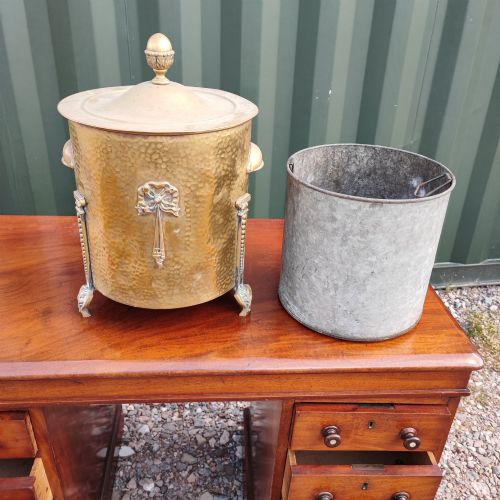
Coal scuttles traditionally feature shapes and spouts designed for transferring small fuel to a grate, often accompanied by a shovel. Log bins tend to be larger, straight-sided cylindrical vessels intended to store a reserve of firewood.
Both categories frequently overlap in historic terminology and shared domestic usage beside the hearth.