

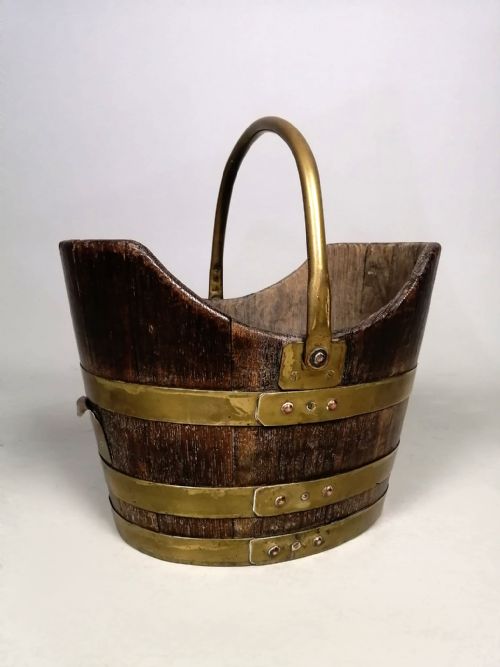


Riveted Copper Scuttle
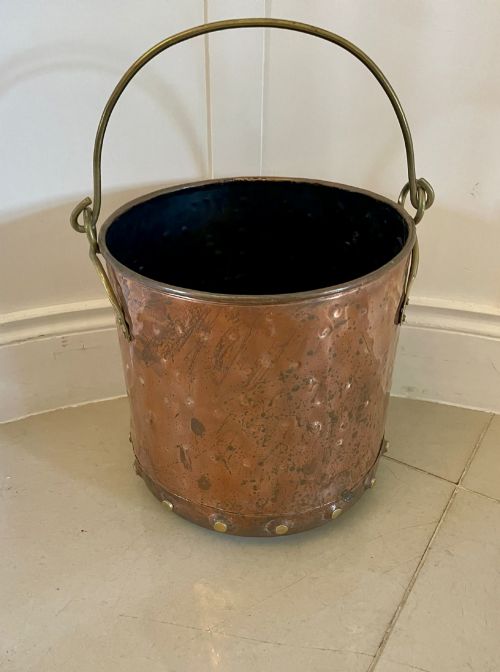
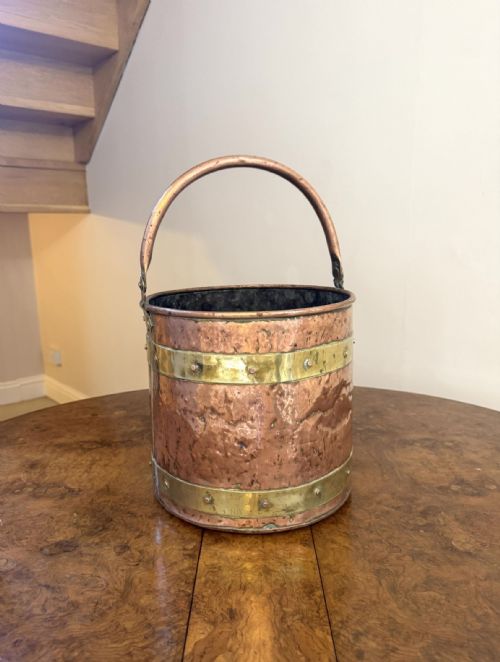
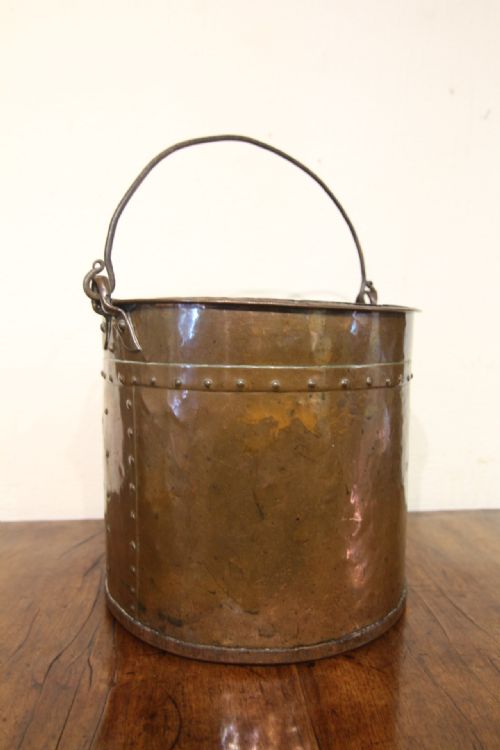
These riveted copper scuttle pieces are robust fireside vessels shaped from metal and held together with visible fasteners for daily hearth work.
Riveted Copper Scuttle
A riveted copper scuttle brings practical warmth to a fireplace through heavy-duty construction in copper, brass, and iron. When you search for a riveted copper scuttle, you meet utilitarian coal buckets, log bins, and fireside accessories dating principally from the nineteenth century.
The domestic interior of the Victorian era relied on these vessels for fuel storage beside the hearth. Most examples on this page reflect Victorian and Georgian utility, shaped with sturdy metal bodies designed for hauling coal and logs.
Makers shaped these items for heavy daily service rather than display, utilising durable metals and secure fastenings. You encounter open buckets alongside lidded bins and handled hods across this selection.
How they were made
Smiths formed these vessels by hammering sheet copper into deep cylindrical or bucket bodies, joining overlapping seams with heavy metal rivets. This mechanical fastening method provided the structural strength required to carry dense loads of coal.
Workshops reinforced the rims and bases with brass bands or wrought iron handles, secured firmly to the main copper body. The combination of malleable copper and rigid iron created a vessel capable of withstanding rough handling near the hearth.
Riveted Copper Scuttle Retail Price Guide 2026
Typical asking prices for riveted copper scuttle among the pieces listed under this phrase on Sellingantiques today, from the lower quarter to the upper quarter. They describe what is for sale here now, not the wider market.
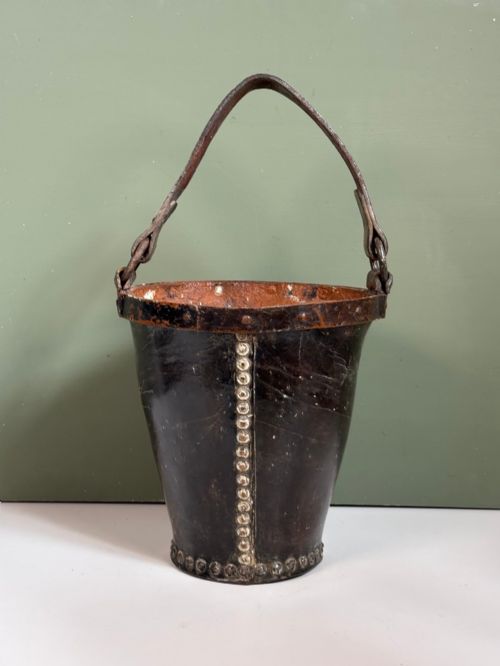
Listings span the eighteenth, nineteenth, and early twentieth centuries, incorporating materials such as copper, brass, iron, and boiled leather.
What varies in quality
The thickness of the metal plate and the regularity of the riveting determine the substance of each piece. Heavier gauge copper resists denting better than thinner sheet metal, while neatly spaced rivets indicate careful workshop production.
Integrity of construction and the retention of original brass bands or iron swing handles separate robust examples from simpler ones. Pieces that maintain their structural shape without excessive patching or distorted rims sit at the higher end of the range.
The Riveted Copper Scuttle Glossary
- Riveted
- Joined with metal pins hammered flat at the ends to secure overlapping sheets of copper. This technique provides visible structural reinforcement along the body seams.
- Coal scuttle
- A bucket or hod designed specifically to hold and carry solid fuel to a fireplace. These vessels often feature a wide mouth and a sturdy handle for tipping.
- Jardiniere
- An ornamental pot or container used to hold plants or flowers. Some heavy metal vessels originally built for fuel storage find a second life in this role.
- Ferrat
- A traditional metal vessel or bucket utilised for carrying materials. The term appears in connection with certain utilitarian nineteenth-century containers.
- Log bin
- A large container intended for storing firewood beside the hearth. These pieces are typically wider and deeper than standard coal buckets.
Riveted Copper Scuttle: Frequently Asked Questions
What were riveted copper scuttles used for?
These vessels served as practical containers for holding and transporting coal or logs to the domestic fireplace during the nineteenth century and earlier.
Households relied on their sturdy metal construction to handle heavy loads of solid fuel safely on a daily basis.
How do I date a copper scuttle?
Dating relies on observing construction methods, handle attachments, and material combinations recorded across Victorian and Georgian periods.
Earlier eighteenth-century examples often display distinct brass banding and hand-forged iron work, while later nineteenth-century pieces show more standardised industrial riveting.
Are these scuttles still usable today?
Many of these metal vessels remain structurally sound and capable of holding logs or coal beside a modern fireplace.
Their robust construction in copper and iron allows them to function practically as hearth accessories just as they did originally.
How should I clean antique copper?
Maintenance typically involves gentle dusting and preserving the natural darker patination that develops on older metal surfaces over decades of use.
Scouring or aggressive polishing alters the aged character that collectors look for on nineteenth-century pieces.