







Fine Textile Art
Fine textile art brings centuries of skilled stitching, weaving and storytelling directly onto your walls through antique needlework, tapestries and embroideries.
Fine Textile Art
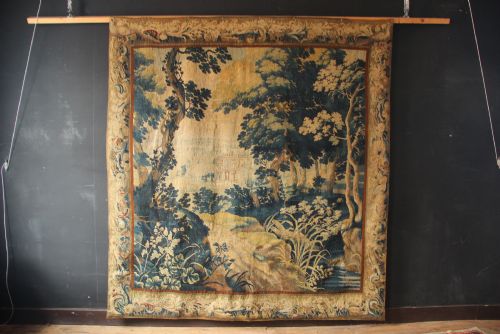
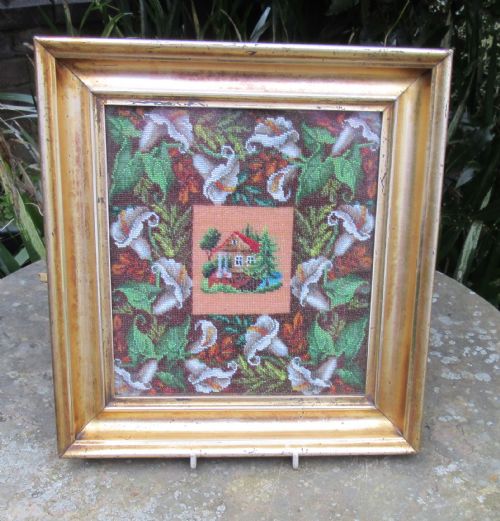
Fine textile art encompasses wall hangings, needlework pictures, tapestries and embroidered panels spanning the seventeenth century through to the mid-twentieth century. You encounter Flemish verdure tapestries, French Aubusson pieces, English needlework pictures, Central Asian Suzanis and American beadwork.
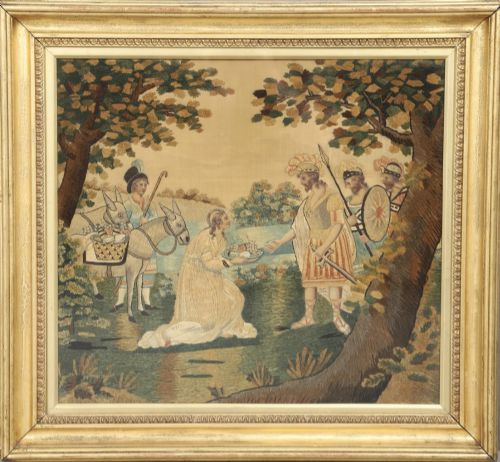
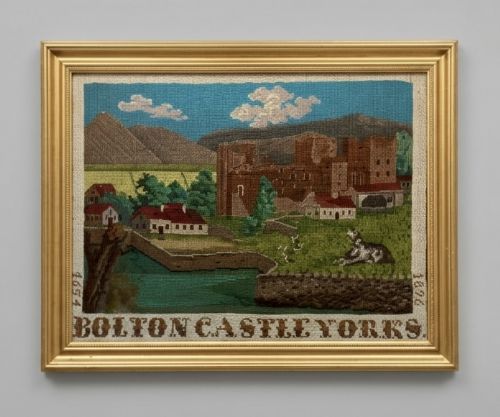
The predominant forms are wall tapestries and framed needlework pictures depicting biblical scenes, horse racing tracks, botanical elements or geometric motifs. These works draw upon Georgian, Victorian, Baroque and Rococo styles alongside Central Asian traditions.
Materials and construction methods
These pieces utilise natural fibres including wool, silk, linen, cotton and canvas, frequently combined with metal thread for added luminosity. Artisans stitched or wove these materials by hand, mounting textiles onto wooden frames or displaying them as hanging panels.
Woven tapestries employ complex warp and weft techniques originating in European and Flemish workshops, whilst needlework pictures rely on detailed hand-stitching across canvas or linen grounds.
Fine Textile Art Retail Price Guide 2026
Typical asking prices for fine textile art among the pieces listed under this phrase on Sellingantiques today, from the lower quarter to the upper quarter. They describe what is for sale here now, not the wider market.
Materials in these listings include wool, silk, linen, cotton, canvas, wood, glass and metal thread.
Judgement of quality
Quality rests in the precision of the handwork, the complexity of the design and the condition of the organic fibres over centuries of existence. Superior examples display tight, even stitching, intricate pictorial detail and well-preserved natural dyes.
The sophistication of the composition and the integrity of the textile support distinguish masterworks from simpler domestic pieces. Material choices, such as the inclusion of silk or metal threads alongside wool, elevate the visual depth of the work.
The Fine Textile Art Glossary
- Tapestry
- A form of textile art woven by hand on a loom, featuring pictorial designs created by interweaving coloured warp and weft threads. These large wall hangings often depict pastoral or biblical scenes.
- Needlework picture
- A decorative panel created by hand-stitching thread onto a linen or canvas ground, frequently framed for display like a painting. Eighteenth-century examples often show detailed landscapes or figurative subjects.
- Suzani
- An embroidered tribal textile originating in Central Asia, traditionally worked in silk on a cotton or linen foundation. They feature bold floral and geometric patterns created by local artisans.
- Verdure tapestry
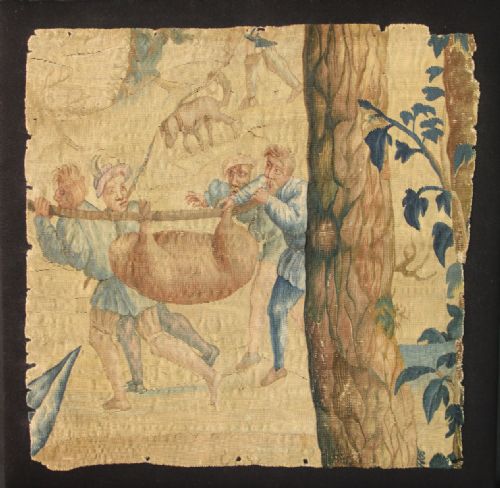
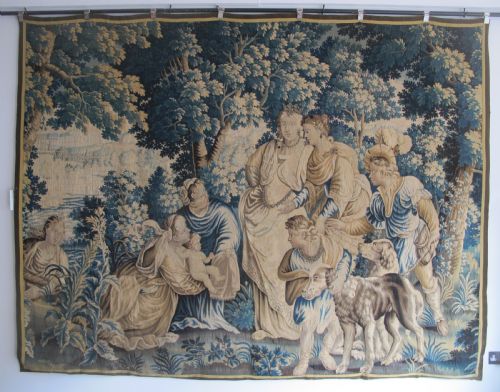
- A European wall tapestry dominated by lush botanical foliage, trees and garden landscapes, popular in Flemish workshops during the seventeenth century. Animals and small figures often hide among the green foliage.
- Metal thread
- Fine wire made of gold, silver or gilt copper incorporated into textiles to add reflective highlights. This material appears alongside wool and silk in high-status European panels.
Fine Textile Art: Frequently Asked Questions
How do I hang a heavy antique tapestry?
Support heavy tapestries by distributing the weight evenly across a wooden batten or a custom metal rod rather than hanging them from isolated points. Sew a sturdy cotton tape along the top reverse edge to attach the textile securely to the hanging support.
Keep woven panels away from direct sunlight and damp walls to protect the natural wool and silk fibres from degradation.
What is the difference between a tapestry and a needlework picture?
Tapestries are woven on a loom where the design forms as the fabric is constructed by interlacing warp and weft threads. Needlework pictures are worked by stitching threads onto a pre-existing woven canvas or linen ground after the fabric is made.
Both forms serve as wall art but employ fundamentally different textile techniques.
How do I identify a seventeenth-century Flemish tapestry?
Seventeenth-century Flemish tapestries typically feature dense verdure landscapes with verdant foliage, muted wool tones and occasional metal thread highlights. The weaving structure utilises heavy wool warps characteristic of workshops from that period.
Stylistic elements follow Baroque traditions with dramatic use of shadow and naturalistic plant forms.