



Fine Satsuma Ceramics
Fine satsuma ceramics bring intricate enamel and gold leaf detail to a room, offering the intense decorative work collectors prize in Japanese earthenware.
Fine Satsuma Ceramics
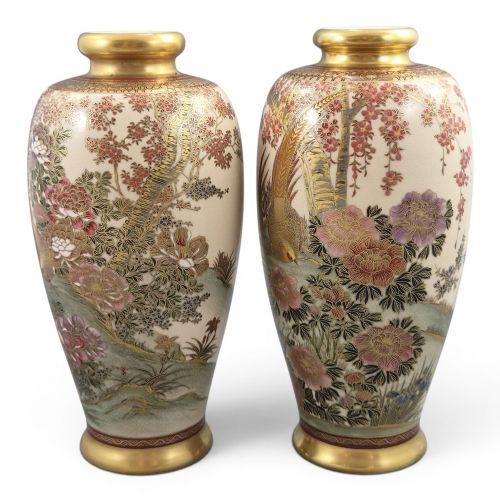
When you search for fine satsuma ceramics, you are looking at earthenware vessels decorated with detailed enamel and gold leaf. The pieces span the nineteenth century and the early twentieth century, taking forms such as vases, decorative bowls, dishes, and jars.
You are most likely to meet Meiji period items on this page, alongside pieces from the early Showa period and Victorian era dates. These include miniature vases, shallow dishes, and large jars originating from centres like Kyoto and Kobe.
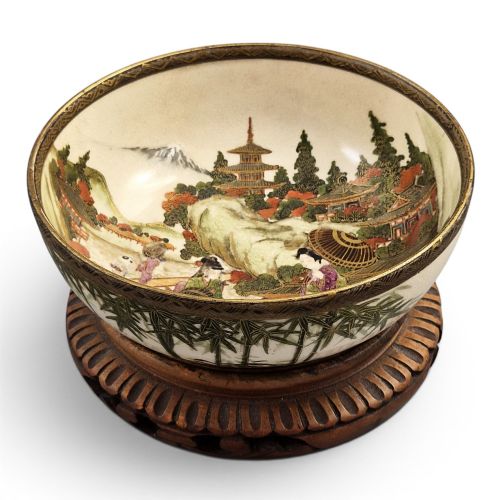
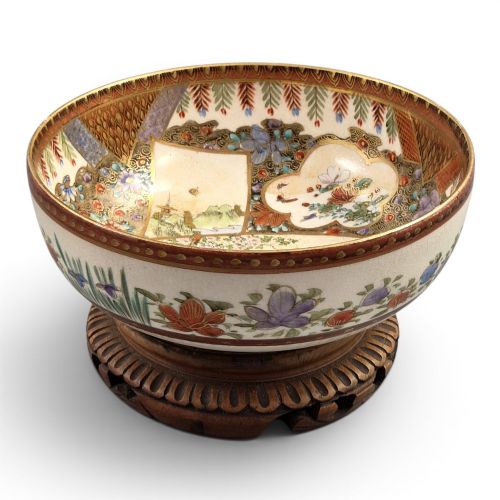
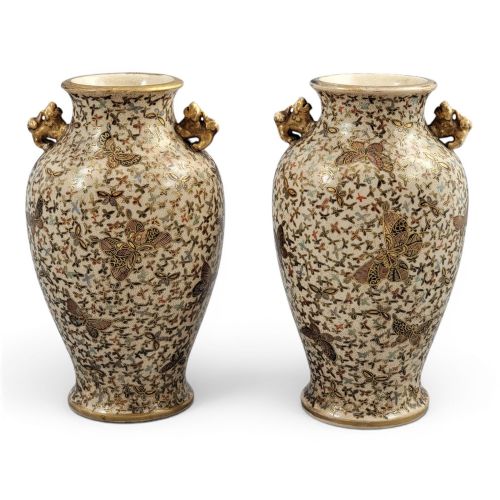
The objects often display specific thematic scenes, such as figural processions, landscapes with Mount Fuji, or dense patterns like thousand butterflies and millefleur designs. Makers sign many of these works, ranging from individual artists to notable studio circles.
How they were made
Makers shaped earthenware bodies to form vases, bowls, and jars before applying a characteristic crackle-glaze base. Artisans then painted intricate designs using enamel colours and detailed gold leaf work.
Some pieces incorporate moriage technique, applying raised slip decoration to create textured surfaces that stand proud of the glaze. Wood components occasionally appear alongside the ceramic bodies in the construction or presentation of the objects.
Fine Satsuma Ceramics Retail Price Guide 2026
Typical asking prices for fine satsuma ceramics among the pieces listed under this phrase on Sellingantiques today, from the lower quarter to the upper quarter. They describe what is for sale here now, not the wider market.
Listings feature nineteenth century and early twentieth century periods, utilising earthenware, enamel, gold leaf, wood, and gilt materials.
What varies in quality
The distinction between tiers of work rests upon the precision and complexity of the enamel painting and gilding. Pieces featuring dense, controlled brushwork and fine figural detail sit apart from simpler decorative output.
Signatures by recognised artists or established studios, such as Kinkozan or Gyokkō, signal higher levels of craftsmanship in the execution of landscapes, processions, and intricate motifs like thousand butterflies.
Manpei·Gyokkō·Kozan·Kinzan·Kinkozan·Chosei·Nanzan·Yamashu·Shuzan·Yasuda·Hayakawa
The Fine Satsuma Ceramics Glossary
- Earthenware
- Porous pottery fired at lower temperatures, forming the base body for these items before glazing and decoration take place.
- Moriage
- A technique of applying raised slip decoration to ceramics, creating tactile, three-dimensional surface patterns beneath or over the glaze.
- Millefleur
- A decorative pattern covering the surface with a dense arrangement of numerous small flowers, translated as a thousand flowers.
- Meiji Period
- The era in Japanese history spanning from 1868 to 1912, associated with intensive artistic production and international export of decorative arts.
- Enamel
- Opaque or translucent glass-like material fused to the ceramic surface through firing, providing the rich colours of the painted scenes.
Fine Satsuma Ceramics: Frequently Asked Questions
What are satsuma ceramics made from?
These items use an earthenware body finished with a characteristic pale, crackled glaze. Artisans then apply detailed enamel paints and gold leaf over this base.
Wood elements also appear in related mountings or associated components, supporting the ceramic structures.
How do I display these pieces?
Place vases and jars on stable surfaces away from direct sunlight to protect the delicate enamel and gold leaf details. Shallow dishes work well in dedicated display cabinets or on flat surfaces where the interior patterns remain visible.
Keep them clear of high-traffic areas to prevent accidental knocks against the earthenware body.
How are different periods identified?
Meiji period pieces typically exhibit fine brushwork in figural processions, landscapes, or complex butterfly and millefleur patterns. Signatures or studio marks on the base often link pieces to specific makers or production centres like Kyoto.
Early Showa period examples continue similar decorative traditions from the early twentieth century.
Were these objects meant for use?
Most forms, such as decorative bowls, jars, and miniature vases, served primarily as ornamental display pieces rather than functional tableware. Their intricate gold leaf and enamel decoration required careful handling even during their period of creation.
Export markets in the nineteenth and twentieth centuries drove the production of these decorative items.