


Fine Art Pastoral Picture
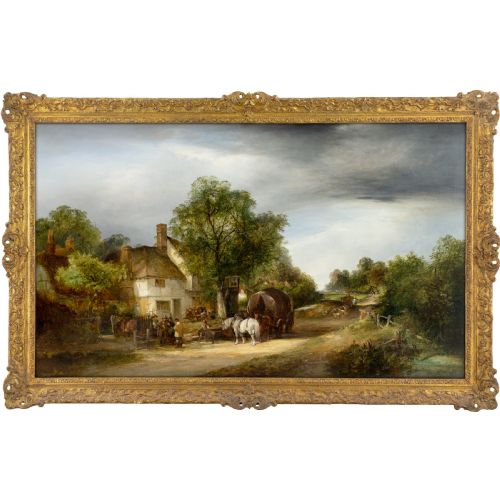
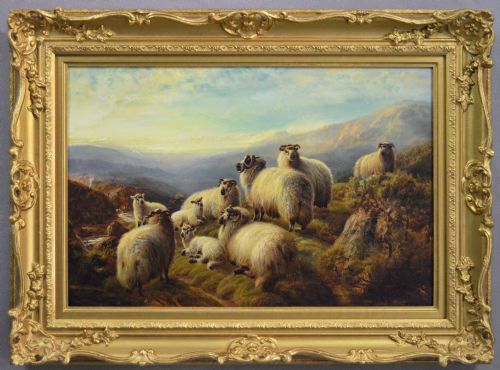
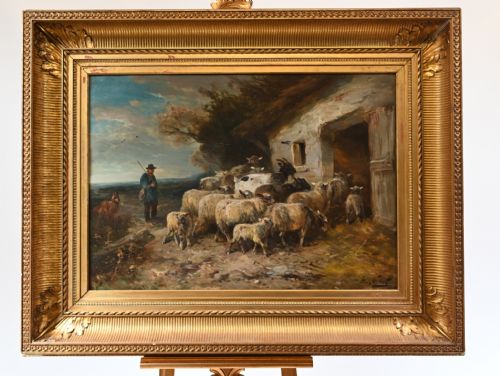
These fine art pastoral pictures capture quiet country scenes of shepherds, sheep, and harvest fields, bringing the peaceful English or European countryside indoors.
Fine Art Pastoral Picture
A fine art pastoral picture depicts rural landscapes populated by livestock, agricultural workers, and figures by rivers, capturing the traditional rhythms of country life. These works span from the eighteenth century through to the early decades of the twentieth century, reflecting shifting artistic interpretations of nature and farming.
The most common examples on this page are oil paintings on canvas and delicate watercolours or gouache works on paper. They frequently portray sheep, cattle, and farmyard animals tended by shepherds or milkmaids within rolling hills and river valleys.
Originating from British and continental European traditions, these artworks range from intimate framed watercolours to large landscape oil paintings. Buyers choose them to introduce a sense of historic calm, natural beauty, and traditional craftsmanship to domestic interiors.
How they were made
Artists applied oil paint or watercolour to canvas, wood panels, paper, or board, often incorporating detailed needlework panels and textiles for stitched rural scenes. Canvases were stretched and secured within wooden frames, frequently enhanced with gesso and gold leaf ornamentation.
Makers utilised traditional pigments mixed with oils or water, applying them with fine brushes to build up the atmospheric light of valleys, rivers, and coastal pastures. Giltwood and wood frames were shaped and finished to complement the visual depth of the artwork within.
A goose girl and a pet kid occasionally share the pasture with herds of Highland sheep and hardworking dairy cows.
What varies in quality
The standard of a fine art pastoral picture depends on the precision of the brushwork and the artist's ability to render the natural texture of animals, foliage, and water. Superior examples display subtle handling of light and shadow, particularly in the depiction of clouds, distant mountains, and reflective rivers.
Framing and material preservation also influence the piece, with original giltwood frames and well-maintained oil on canvas surfaces holding greater visual integrity. The fidelity of the composition and the specific reputation of the painter or follower elevate certain works above standard decorative pieces.
Robert Watson·Henry Schouten·Cornelius Pearson·Thomas Sidney Cooper·George Vicat Cole·Eugene Joseph Verboeckhoven·Henry H Parker·Thomas Baker of Leamington·Claude Cardon·Joseph Kirkpatrick·David Bates·Alfred Augustus Glendening Snr·George Turner·John Holland Snr·Thomas Mackay·Julius Ceaser Ibbetson·Peter de Wint
The Fine Art Pastoral Picture Glossary
- Gouache
- An opaque water-based paint that dries to a matte finish, allowing artists to create vibrant highlights in landscape works.
- Giltwood
- Wood carved and coated with a thin layer of gold leaf, commonly used for traditional picture frames.
- Needlework
- A textile art form using yarn or thread stitched onto canvas to create pictorial scenes of country life.
- Pastoral
- An artistic genre idealising rural life, shepherds, and agricultural landscapes.
- Gesso
- A plaster mixture applied to wooden frames as a smooth base before gilding.
Fine Art Pastoral Picture: Frequently Asked Questions
What subjects appear in these pastoral pictures?
These artworks predominantly show rural life, featuring flocks of sheep, cattle, harvest fields, and figures near rivers or cottages. Common scenes include shepherds tending animals, milkmaids at work, and panoramic views of valleys.
The settings reflect both British countryside locations, such as Welsh rivers and Yorkshire dales, and continental European landscapes with mountains or coastal vistas.
How do I hang a framed oil painting safely?
Choose an interior wall away from direct sunlight, heating vents, and damp areas to protect both the canvas and the wooden frame. Ensure the hanging hardware is securely fixed into wall studs to support the weight of the frame.
Use sturdy picture wire attached firmly to the frame's D-rings, and check the alignment with a spirit level to keep the artwork straight.
How can I tell a watercolour from an oil painting?
Watercolour paintings are executed on paper or board, typically displayed behind glass to protect the delicate pigments from moisture and dust. They possess a translucent quality where the white of the paper illuminates the colours.
Oil paintings utilise thicker paint applied to canvas, wood, or board, presenting a textured surface that does not require glass protection. The pigments have a richer depth and a visible gloss or matte sheen.
What periods do these artworks represent?
The listings span from the eighteenth century through the Victorian era and into the early twentieth century. Eighteenth-century pieces often reflect Georgian sensibilities and classical Italianate influences.
Nineteenth and early twentieth-century works capture romantic realism, British impressionism, and detailed animal portraits characteristic of the Victorian period and the Art Deco transition.