
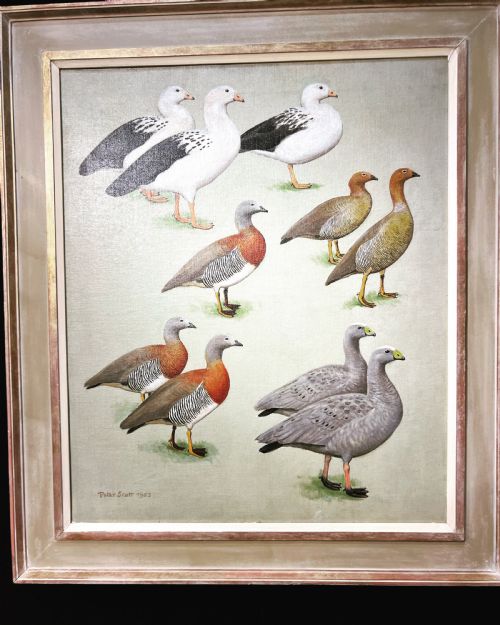


Antique Goose Painting Artwork
These antique goose painting artwork pieces capture rural life and naturalism across centuries, offering timeless charm for any collector.
Antique Goose Painting Artwork
When you search for antique goose painting artwork, you encounter a varied selection of traditional British scenes, pastoral landscapes, and international textile works. These items primarily date from the 18th Century through to the mid-20th Century, reflecting changing artistic approaches to birds and rural settings.
The most common formats you will meet on this page include oil paintings on canvas and wood, alongside watercolours, framed prints, and Japanese silk textile wall art. Works range from intimate pastoral watercolours by artists such as Thomas Mackay to large-scale oil landscapes depicting geese near ponds and cornfields.
How they were made
Makers utilised traditional mediums, applying oil paint onto prepared canvas or wood panels, and watercolour onto paper. Many pieces feature gilt and gilt wood frames that complement the detailed brushwork of the period.
Textile works demonstrate intricate needlework techniques, such as the large Japanese silk textile goose in flight created during the Meiji period. Pigments and materials reflect the technological and artistic standards of their respective Victorian, Edwardian, and 18th-century origins.
Geese frequently demand centre stage in these historic fields, proving that feathered birds have long inspired dramatic artistic moments.
What varies in quality
The distinction between standard and superior pieces rests upon the finesse of the brushwork and the naturalism of the bird and landscape depiction. Masterful handling of light in oil landscapes or precise detail in feather rendering elevates certain works above standard decorative items.
Frame craftsmanship and original mounting also contribute to overall distinction, with period gilt wood frames offering greater historical integrity. Furthermore, attributed works by known painters carry stronger artistic pedigree compared to anonymous regional compositions.
Sir Peter Markham Scott·John Horace Hooper·Marmaduke Cradock·Jacob Bogdani·Frederick James Knowles·Frank Percy Wild·Arthur Walker Redgate·Thomas Mackay
The Antique Goose Painting Artwork Glossary
- Oil on Canvas
- Pigments bound in a drying oil applied to stretched fabric. This medium allows for rich colour blending and textured brushstrokes.
- Watercolour Painting
- Pigments suspended in a water-based solution applied to paper. It yields translucent washes and delicate details.
- Gilt Wood
- Wood surfaces coated with a thin layer of gold leaf or metallic powder. This technique enhances frames and decorative mouldings.
- Japanese Meiji Period
- The era in Japanese history spanning from 1868 to 1912. Items from this time often exhibit refined textile artistry.
- British Naturalism
- An artistic movement focusing on realistic depictions of the natural world. It heavily influences Victorian pastoral paintings.
Antique Goose Painting Artwork: Frequently Asked Questions
What periods do these artworks span?
The pieces available range from the 18th Century through the Victorian and Edwardian eras up to the mid-20th Century. They reflect distinct artistic movements of each decade.
Buyers will find works representing traditional British naturalism as well as Meiji period Japanese textiles.
How should I hang oil paintings?
Oil paintings on canvas or wood need stable indoor environments away from direct sunlight and damp conditions. Proper wall fixings support the weight of traditional gilt wood frames.
Ensure adequate spacing to display landscape compositions effectively without crowding surrounding decor.
What materials are used in these pieces?
The primary materials include oil paint, canvas, wood panels, paper, and glass. Many artworks also incorporate gilt frames.
Textile selections feature silk wall art created through traditional needlework techniques.
How do I identify a Victorian pastoral scene?
Victorian pastoral artworks typically depict rural landscapes, ponds, or farmyards featuring domestic animals and geese. They emphasise calm countryside settings and natural light.
Artists from this era often employed detailed oil painting techniques to capture realistic textures in feathers and foliage.