


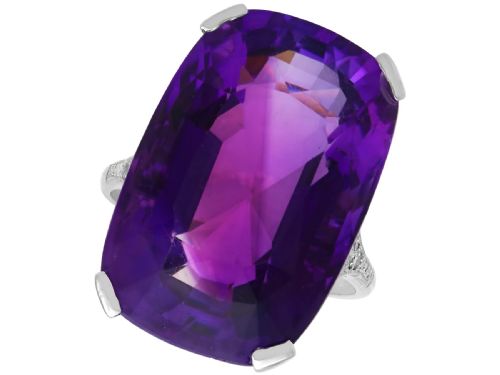


Fine Amethyst Jewellery
Fine amethyst jewellery brings together deep purple quartz and precious metals, offering a versatile addition to any collection through pendants, rings, and earrings.
Fine Amethyst Jewellery
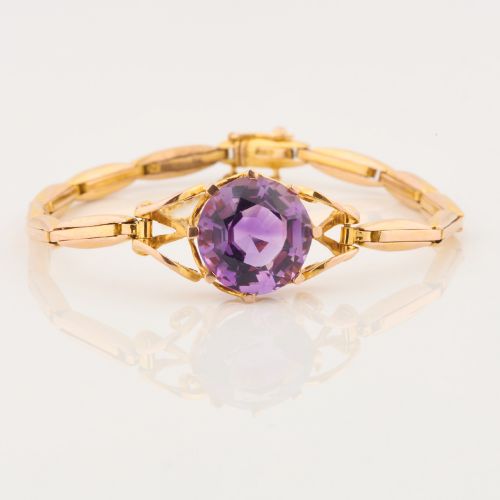
Fine amethyst jewellery encompasses rings, necklaces, pendants, bracelets, and various styles of earrings set with purple quartz. Pieces range from Victorian examples to mid-twentieth century designs.
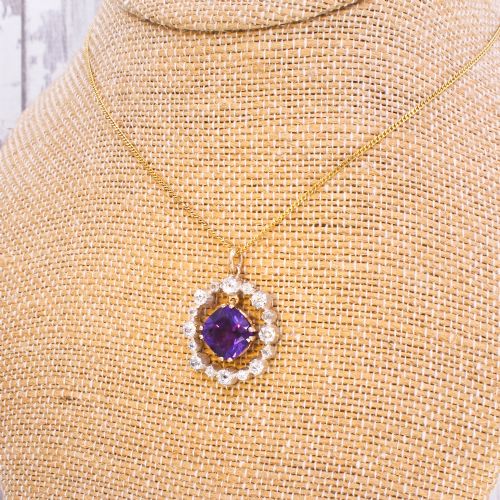
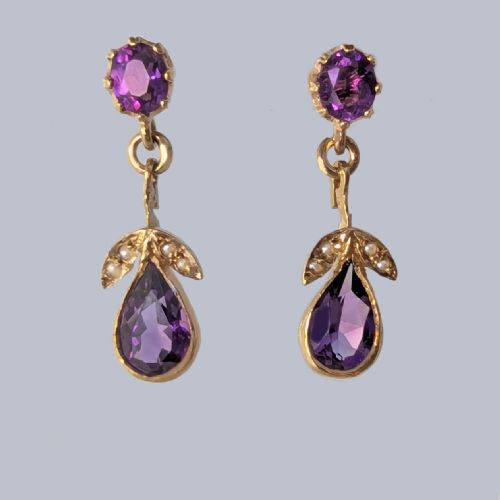
The selection includes Edwardian pendants, Art Deco drops, and twentieth-century cluster rings alongside simpler stud earrings. Buyers encounter both yellow gold and white metal settings spanning multiple decades.
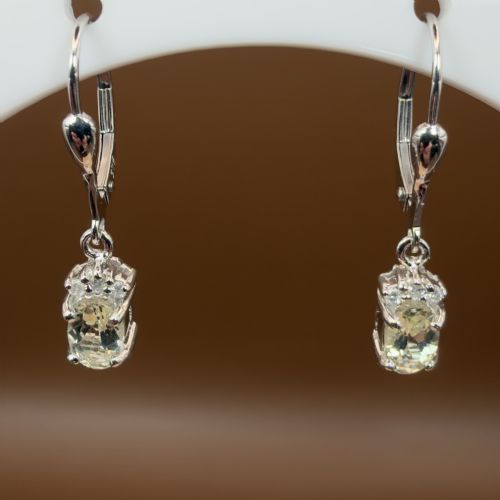
Earrings and pendant necklaces dominate the selection, often paired with complementary gemstones such as diamonds, seed pearls, or citrine.
Materials and construction
Goldsmiths utilise various purities of gold including 9ct, 14ct, 15ct, and 18ct, alongside platinum and white gold. Amethyst stones are cut in cushion, oval, pear, and emerald shapes to suit the mount.
Accompanying stones like old-cut diamonds and seed pearls frequently accent the central amethyst in claw or cluster settings. Hinge backs and traditional clasps secure the wearable items.
Metals identified across the selection include 9ct, 14ct, 15ct, and 18ct gold, white gold, and platinum.
Craftsmanship and distinction
The clarity and saturation of the central quartz separate standard examples from finer items. Stone weight and the presence of supporting diamonds or seed pearls influence the overall character.
Dating and stylistic cohesion play a role, as genuine period mounts from the Edwardian or Victorian eras display distinct hand-finished detail compared to later interpretations.
The Fine Amethyst Jewellery Glossary
- Lavalier pendant
- A drop necklace featuring a central gemstone suspended from a delicate chain, popular during the Edwardian period.
- Cluster setting
- An arrangement where a central stone is surrounded by a border of smaller gems such as diamonds or pearls.
- Old-cut diamond
- A vintage diamond faceting style characterised by a small table, high crown, and open culet, typical of pieces from the nineteenth and early twentieth centuries.
- Seed pearl
- A very small natural or cultured pearl, often drilled and strung or used in clusters to accent antique jewellery.
Fine Amethyst Jewellery: Frequently Asked Questions
How do I care for fine amethyst jewellery?
Amethyst is a durable quartz, but ultrasonic cleaners can damage treated stones or delicate seed pearls. Warm soapy water and a soft brush provide a safe clean.
Store pieces individually in soft pouches to prevent harder gems from scratching the gold or quartz surface.
Can I wear these pieces every day?
Pendants, earrings, and brooches face minimal physical wear and suit regular use. Rings require more caution because quartz can scratch upon impact with hard surfaces.
Removing rings before manual tasks preserves the integrity of the setting and the stone facets.
What periods do these designs represent?
The selection spans from nineteenth-century Victorian work through Edwardian and Art Deco periods, extending into mid-century twentieth-century pieces.
Stylistic cues like millegrain edges, yellow gold heart motifs, and geometric platinum mounts help distinguish the eras.
Are the pearls natural or cultured?
Seed pearls used in Edwardian and Victorian pieces are typically natural saltwater or freshwater pearls harvested from smaller molluscs. They are delicate and require careful handling.
Avoid exposing antique pearl jewellery to harsh chemicals, perfumes, or excessive moisture.