

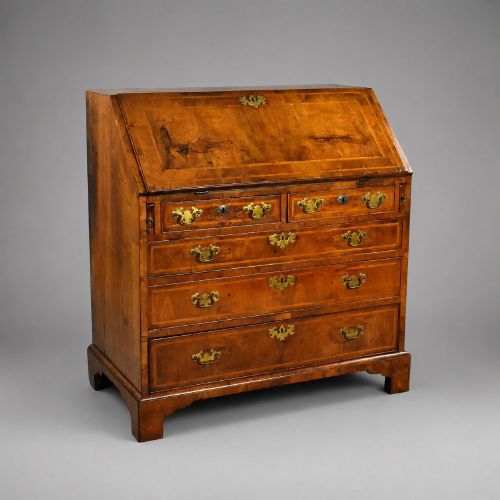


Figured Walnut Slant Desk
A figured walnut slant desk brings immediate warmth and figured grain into a room, offering a sloping fall-front workspace above practical drawers.
Figured Walnut Slant Desk
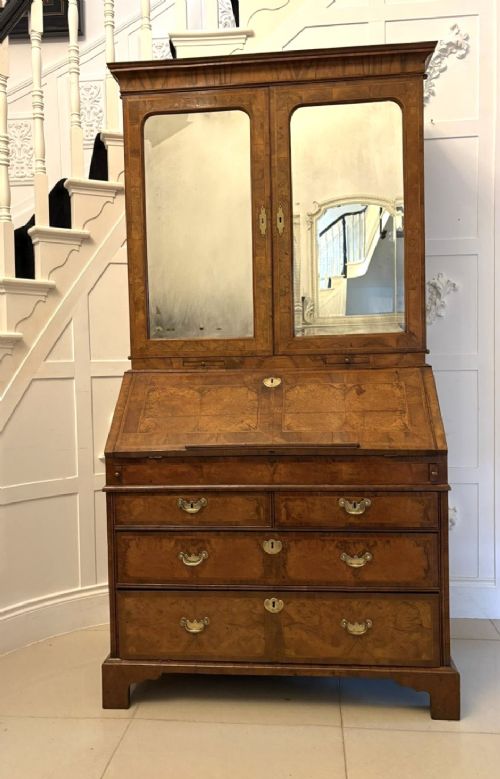
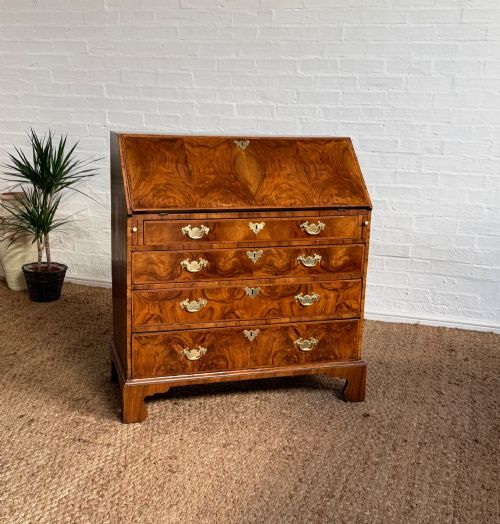
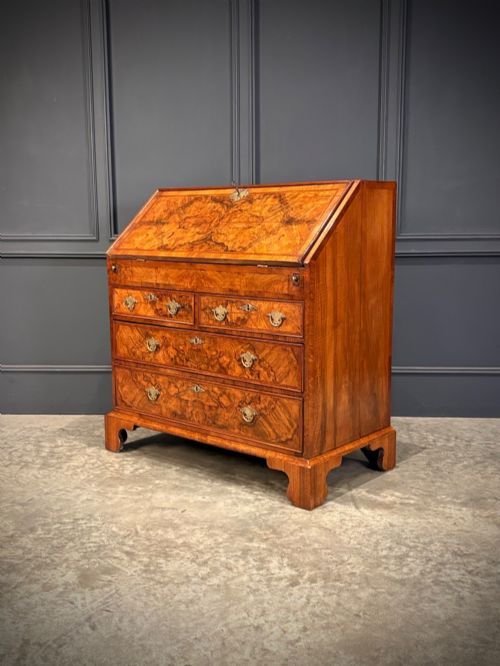
A figured walnut slant desk is primarily encountered here as a bureau, writing bureau, or bureau bookcase originating from periods ranging from the late seventeenth century through the Georgian era and into the Edwardian and later periods. These writing pieces feature a sloping fall-front that opens to reveal an interior fitted with pigeonholes and small drawers for correspondence.
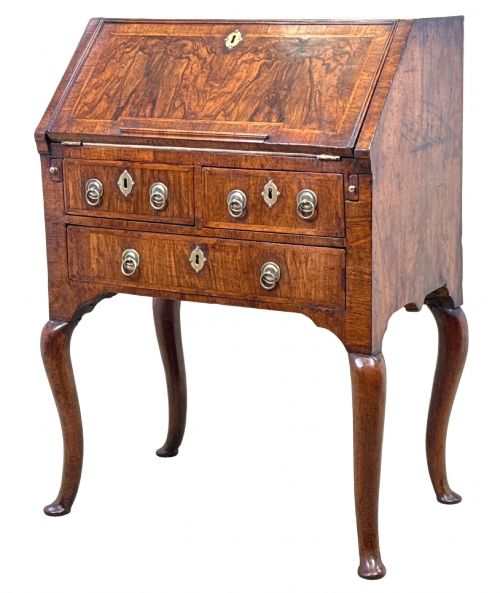
The selection includes early forms such as William and Mary, Queen Anne, and George I examples, alongside small bureaus on legs or stands, bureau bookcases, and occasional Victorian or Edwardian interpretations. Buyers meet both compact writing desks and larger secretary cabinets designed to house books and papers behind glazed or panelled upper doors.
What varies in quality
The visual appeal depends largely on the richness of the figured walnut grain and the symmetry of the veneer work across the fall-front and drawer facades. Early examples from the Queen Anne and George I periods generally demonstrate superior timber selection and cabinet work compared to later revivals.
Proportion and scale also separate simpler writing tables from substantial bureau bookcases, with smaller desks on stands or legs offering particular architectural refinement. The survival of original brasses, fitted internal compartments, and secondary oak linings elevates the standing of any piece.
Figured Walnut Slant Desk Retail Price Guide 2026
Typical asking prices for figured walnut slant desk among the pieces listed under this phrase on Sellingantiques today, from the lower quarter to the upper quarter. They describe what is for sale here now, not the wider market.
Listings span multiple centuries, incorporating periods from William and Mary and Queen Anne through Georgian reigns to Edwardian and later interpretations.
The Figured Walnut Slant Desk Glossary
- Slant desk
- A writing desk featuring an angled fall-front that folds down to create a flat surface for writing.
- Bureau
- A piece of furniture containing a writing slope and drawers, often synonymous with a slant desk in British terminology.
- Burr walnut
- A highly prized wood veneer taken from a walnut tree growth, showing intricate, swirling grain patterns.
- Secretaire
- A cabinet or desk incorporating a writing drawer or fold-down writing flap.
- Bureau bookcase
- A tall cabinet combining a slant desk lower section with upper shelving enclosed by doors.
Figured Walnut Slant Desk: Frequently Asked Questions
What is a figured walnut slant desk?
A figured walnut slant desk is a traditional writing piece featuring a sloping lid that opens for correspondence, constructed with decorative walnut veneers.
These pieces range from early seventeenth and eighteenth-century examples to later Edwardian interpretations designed for home writing use.
How were these desks used historically?
They served as private writing stations for letters, household accounts, and the storage of important documents within the main rooms of a house.
The internal drawers and pigeonholes kept stationery organised, while the locking fall-front kept private papers secure.
What is the difference between a bureau and a bureau bookcase?
A standard bureau consists of the writing slope and lower drawer section only, designed to sit independently against a wall.
A bureau bookcase adds an upper cabinet section with shelves for storing books and displaying objects above the desk.
How do I identify a Georgian walnut bureau?
Georgian walnut bureaus typically display period characteristics such as herring-bone stringing, feather-banding, and candle slides or bracket feet.
They date through the reigns of George I, George II, and George III, reflecting evolving architectural styles in their proportions and mouldings.
Where should I place a slant desk in a modern home?
A slant desk fits well in a study, living room, or hallway where the figured grain of the walnut can add warmth and texture.
The compact footprint of many models makes them practical workspace alternatives to standard modern desks.