
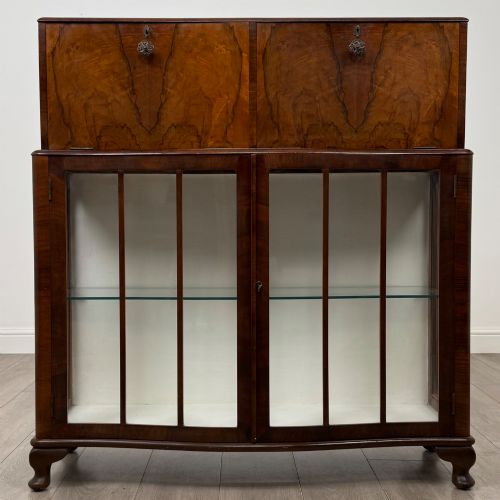
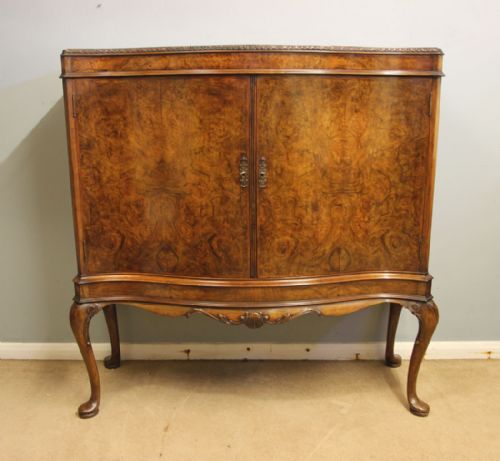


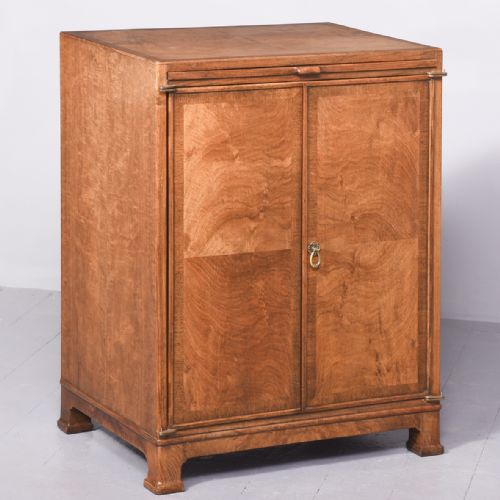

Figured Walnut Sideboard Cabinet
A figured walnut sideboard cabinet combines striking timber grain with practical storage, offering a focal point that anchors a dining room or living space.
Figured Walnut Sideboard Cabinet
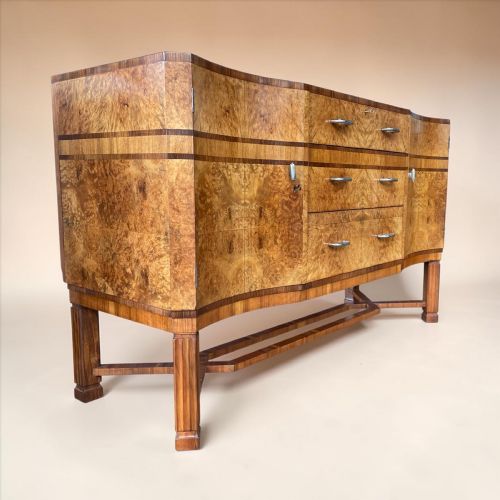
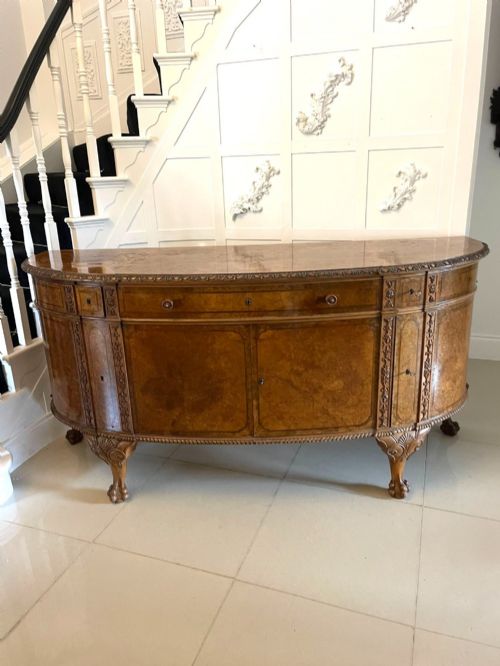
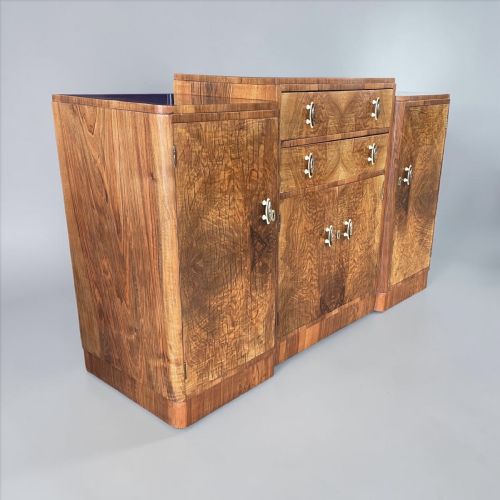
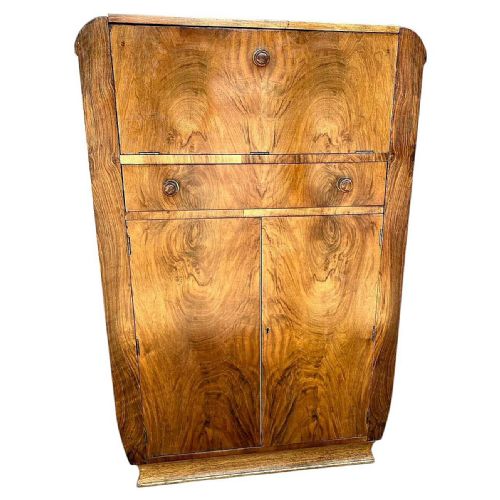
When you search for figured walnut sideboard cabinet, you encounter a range of substantial timber storage furniture spanning from the Victorian period through the Edwardian era into Art Deco design. These pieces appear as traditional Victorian credenzas and display cabinets, alongside geometric Art Deco sideboards and cocktail units.
The most common examples on this page date from the 1930s, favouring clean curves and book-matched veneers, or from the mid-to-late nineteenth century, featuring rich marquetry and ormolu mounts. Makers utilised the distinct grain patterns of walnut, burr walnut, and figured walnut to create bold visual movement across the primary doors and drawer fronts.
How they were made
Cabinetmakers constructed these pieces using solid timber frames overlaid with fine veneer sheets, particularly burr and figured walnut, chosen for their swirling grain patterns. Crossbanding and marquetry inlay added decorative borders, while interior components often incorporated walnut veneer and secondary softwoods.
Metalwork played a structural and decorative role, with brass handles, glass panels, and ormolu mounts fitted to Victorian credenzas and Art Deco drinks cabinets alike. Marble tops also appeared on select nineteenth-century sideboard variants, adding weight and a durable surface to the wooden carcass.
Materials documented across the inventory include solid walnut, burr walnut veneers, brass hardware, glass panels, and marble tops.
What varies in quality
The grade of timber selection and the precision of the veneer matching dictate the initial visual impact of the piece. Master craftsmen aligned the grain symmetrically across multiple doors and panels, creating harmonious patterns that lesser workshops failed to achieve.
Construction methods and hardware refinement separate standard utility items from exhibition-grade examples. Superior pieces feature heavier ormolu mounts, intricate marquetry, meticulous internal fitting for silver or drinks, and substantial timber thickness in the primary structure.
Harry and Lou Epstein·Hamptons of Pall Mall London·The Bowman Brothers·Whytock & Reid of Edinburgh
The Figured Walnut Sideboard Cabinet Glossary
- Figured walnut
- Walnut timber possessing an exceptional, highly decorative grain pattern caused by irregular growth. This distinct grain is typically sliced into thin veneers for prominent display on cabinet doors.
- Credenza
- A low-profile nineteenth-century cabinet often featuring glass doors, marquetry inlay, and ormolu mounts. These pieces frequently served display and serving functions in formal Victorian dining spaces.
- Ormolu
- Gilded bronze ornamentation applied to nineteenth-century furniture for decorative contrast. These cast metal mounts embellish the corners and friezes of quality credenzas.
- Marquetry
- The art of applying small pieces of veneer to a structure to form decorative patterns or pictures. Craftsmen utilised various tinted woods to create floral or geometric motifs across the cabinet surfaces.
Figured Walnut Sideboard Cabinet: Frequently Asked Questions
How do I date a figured walnut cabinet?
Examine the overall silhouette, handles, and construction methods to determine the era. Victorian pieces often display heavy marquetry, glass doors, and ormolu mounts, whereas 1930s examples showcase streamlined Art Deco geometry and symmetrical burr walnut veneers.
Secondary woods inside drawers and the style of internal fittings also offer clues. Edwardian and nineteenth-century interiors differ significantly from the specialised shelving found in Art Deco cocktail units.
Where should I place a sideboard cabinet?
These cabinets suit dining rooms, living spaces, and generous hallways where their decorative grain can catch the light. Ensure the room has stable humidity to protect the delicate walnut veneers from drying out.
Allow sufficient clearance for doors to open fully, particularly on credenzas with sweeping serpentine fronts or cocktail cabinets featuring drop-down mixing surfaces.
What is the difference between a credenza and a sideboard?
A credenza traditionally refers to a low nineteenth-century cabinet, often featuring glazed central sections and gilt-bronze ormolu mounts. Sideboards generally emphasise serving space and larger storage capacities for dining utensils.
Over time, terminology overlaps in antique listings, with many pieces described interchangeably depending on their proportions and internal layout.
How should I care for walnut veneer surfaces?
Maintain the wood by dusting regularly with a soft, dry cloth and avoiding silicone-based polishes. Keep the cabinet away from direct sunlight and heat sources to prevent the veneer from fading or lifting.
Occasional application of appropriate wax nourishes the timber and preserves the natural lustre of the figured grain without building up heavy chemical residues.