

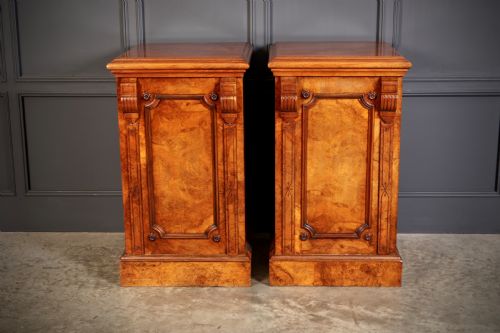
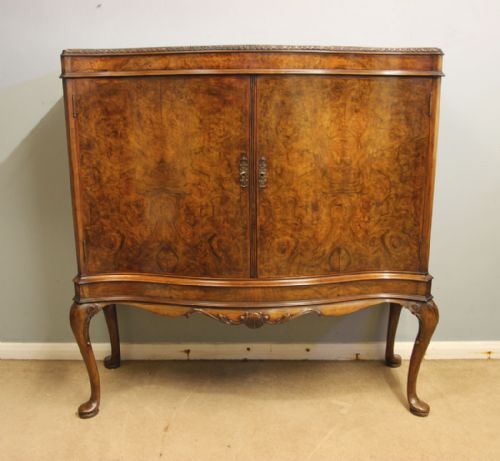


Figured Walnut Side Cabinets
Figured walnut side cabinets bring swirling wood grain and period presence into a room, spanning Victorian and Art Deco designs.
Figured Walnut Side Cabinets
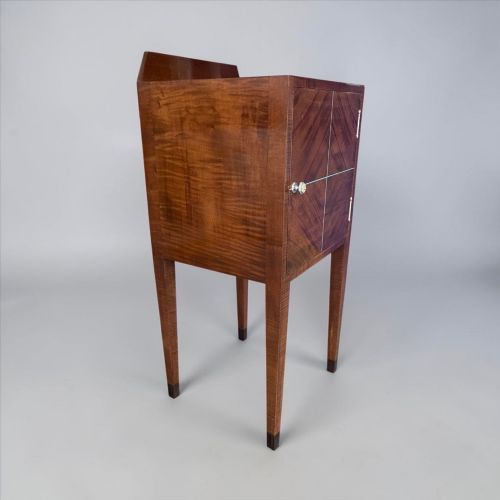
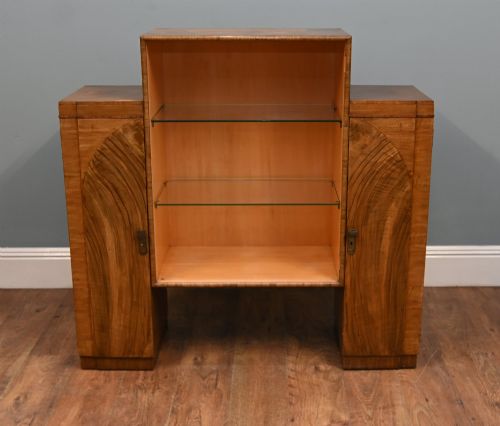
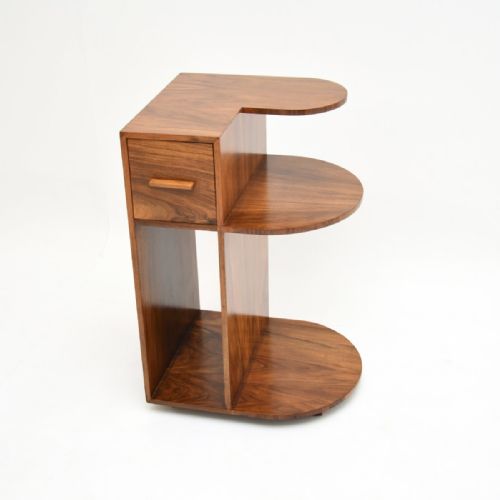
Figured walnut side cabinets encompass low bedside cupboards, glazed pier cabinets, and compact credenzas designed for storage and display. When searching for figured walnut side cabinets, buyers encounter both 19th-century Victorian examples with marquetry and streamlined Art Deco pieces from the 1920s and 1930s.
The selection ranges from French panelled nightstands to English pedestal cabinets and open bookcases with drawers. Art Deco pairs dominate the finds, matched alongside Victorian glazed display pieces built for formal reception rooms.
How they were made
Cabinet makers applied thin veneers of burr and figured walnut over solid timber carcases to expose the rich, swirling patterns of the grain. They integrated brass, glass, and marble tops, mounting certain Victorian pieces with cast ormolu mounts.
Marquetry inlay appears across Victorian surfaces, contrasting different wood types in floral or geometric motifs. French polishing built up a smooth, protective finish that heightened the depth of the walnut figure.
Figured Walnut Side Cabinets Retail Price Guide 2026
Typical asking prices for figured walnut side cabinets among the pieces listed under this phrase on Sellingantiques today, from the lower quarter to the upper quarter. They describe what is for sale here now, not the wider market.
The recorded object types span bedside tables, pedestal cabinets, credenzas, and davenport desks.
What varies in quality
Quality rests in the intensity and symmetry of the walnut grain matched across the doors and drawer fronts. Superior examples display continuous figuring that flows logically from one panel to the next.
The sophistication of the secondary details, such as finely chased ormolu mounts, precise marquetry, and original bevelled glass, separates standard production from exceptional workshop output.
Maurice Adams
The Figured Walnut Side Cabinets Glossary
- Burr walnut
- A specialised timber cut from walnut tree growths, producing dense, swirling patterns of knot clusters highly prized for veneering. It forms the primary decorative surface on many Art Deco and Victorian pieces.
- Pier cabinet
- A low freestanding cabinet designed to sit against the wall space between windows. These Victorian display pieces frequently feature glazed doors and velvet-lined interiors.
- Ormolu
- Gilt bronze mounted onto furniture as decorative feet, key escutcheons, or corner mounts. French 19th-century pieces utilise this technique to accent serpentine forms.
- Marquetry
- The art of applying small pieces of veneer to a structure to form decorative patterns or pictures. Victorian cabinet makers used this technique to inlay floral motifs onto walnut surfaces.
- Credenza
- A low sideboard or cabinet originating in Italy and adapted in 19th-century England and France. These enclosed storage pieces often incorporate glazed side compartments and central cupboards.
Figured Walnut Side Cabinets: Frequently Asked Questions
Where should I place a side cabinet?
These compact cupboards fit beside beds, in hallways, or flanking a fireplace where surface space is useful. Their enclosed shelving keeps smaller items concealed while displaying lamps or ornaments on top.
Larger credenzas and pier cabinets suit dining rooms or living spaces where glazed doors protect books or ceramics from dust.
How do I tell Victorian from Art Deco?
Victorian examples rely on dark timber tones, elaborate marquetry inlay, curved serpentine shapes, and glazed doors with wooden astragals. They often include ormolu mounts and velvet linings.
Art Deco pieces from the 1920s and 1930s favour clean geometric lines, symmetrical waterfall veneers, and simpler hardware without historic revival ornamentation.
Are pairs common in these cabinets?
Bedside pairs appear frequently in the record, particularly from the Art Deco period when matching twin nightstands became popular. These matching sets were built together to balance symmetrical bedroom layouts.
Larger credenzas and pier cabinets generally survive as single items rather than matching pairs due to their primary function in formal reception rooms.
How do I care for figured walnut?
Keep walnut furniture away from direct sunlight and heat sources to prevent the wood veneer from drying out or splitting. Natural wax applied periodically maintains the lustre of the polished surface.
Avoid using harsh chemical sprays or abrasive cloths, relying instead on a soft, dry duster for routine maintenance.