


Figured Mahogany Hall Table
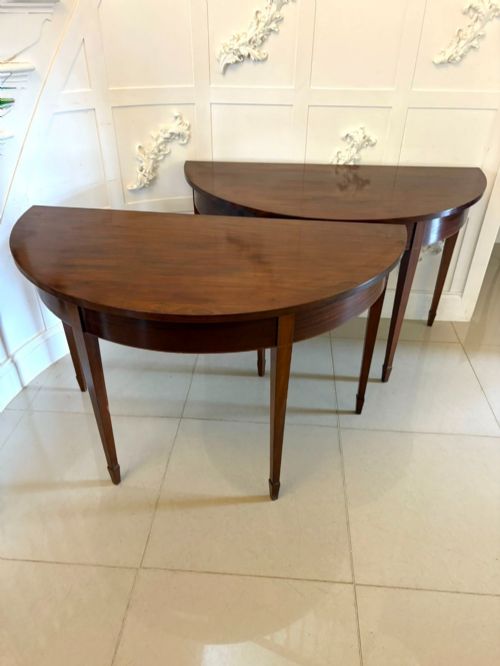
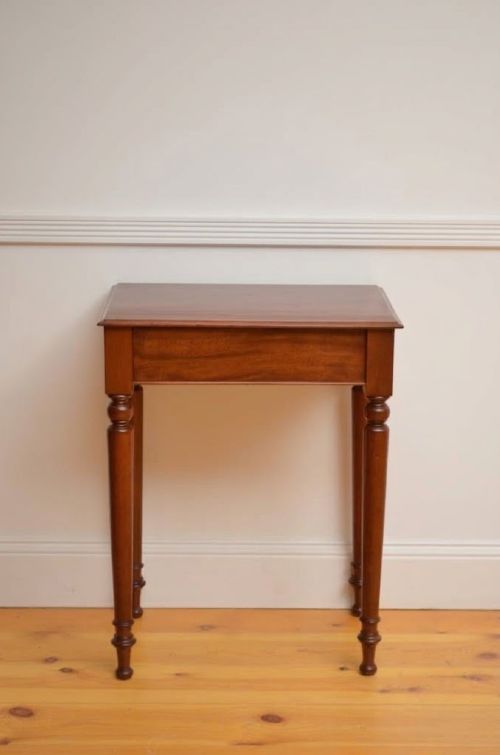
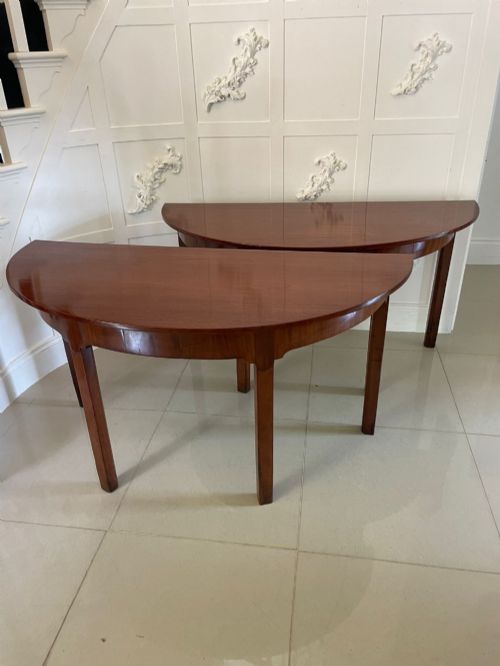
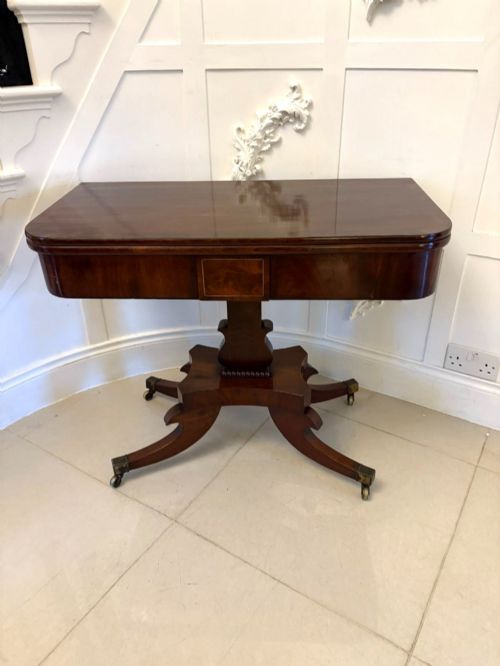
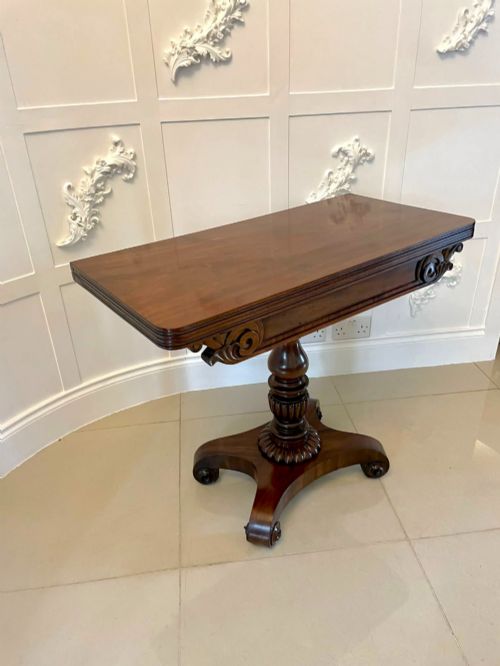
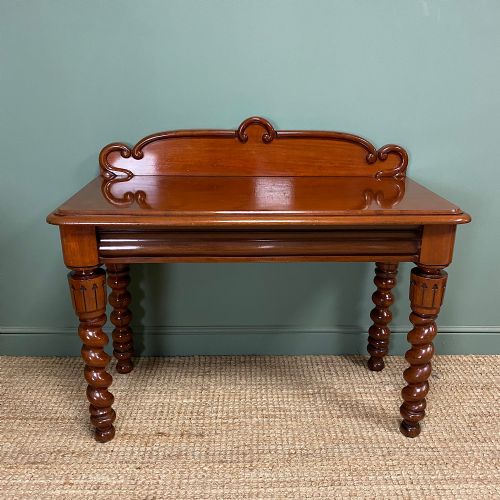
These figured mahogany hall table pieces bring striking timber grain and refined proportions directly into a hallway.
Figured Mahogany Hall Table
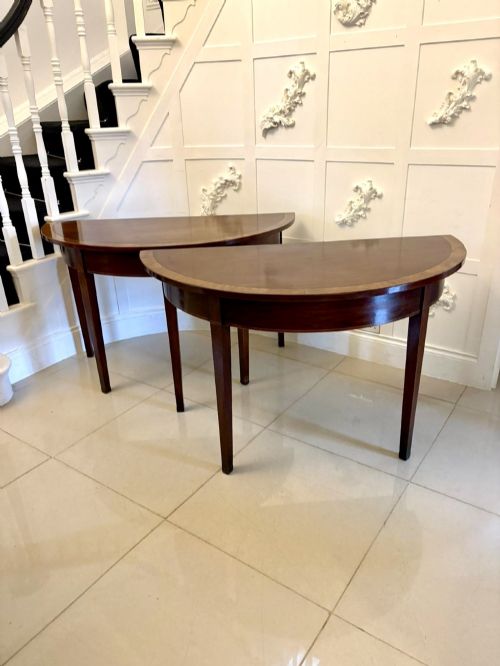
A figured mahogany hall table brings rich, patterned timber grain into an entrance space through console, side, and demi-lune forms. These pieces span eighteenth-century origins through Victorian revivals, taking various shapes including pairs and freestanding formats.
The pieces on this page are most frequently encountered as George III or Regency console and side tables, often shaped as demi-lune tables designed to sit flush against a wall. Examples from the William IV and Victorian periods also appear regularly, alongside occasional French Empire and Edwardian interpretations.
Materials and construction
Makers utilised solid mahogany and mahogany veneer over secondary timbers to display the decorative figuring of the wood. Brass mounts, ormolu details, and marble tops occasionally complement the timber construction on specific revival pieces.
Joinery techniques ranged from simple pegged framing on eighteenth-century lowboys to complex curved veneering on demi-lune console tables. Cabinetmakers selected timber specifically for its flame, fiddleback, or plum pudding grain patterns to create visual depth across the top surface.
Listings span from the eighteenth-century Georgian era through Regency, William IV, and Victorian periods, extending into early twentieth-century French styles.
Assessing quality and craftsmanship
Quality rests in the intensity and book-matching of the timber veneer across the primary surfaces, where superior examples exhibit symmetrical, highly active grain patterns. The crispness of carved mouldings and the structural integrity of the frame differentiate standard workshop output from exceptional pieces.
Proportion and form dictate the refinement of a table, with demi-lune pairs and freestanding centre tables often showing greater complexity in their design. The retention of original brass hardware or subtle inlaid detailing further distinguishes the better pieces in this category.
The Figured Mahogany Hall Table Glossary
- Demi-lune
- A half-moon shape popular for console tables designed to stand flat against an entrance wall. This profile maximises floor space while offering a decorative surface.
- Figured mahogany
- Timber selected for its unusual and decorative grain patterns, such as flame or feather effects. Cabinetmakers reserved these boards for prominent display surfaces.
- Console table
- A table supported by wall brackets or front legs, designed to stand against a vertical surface. In a hall, these pieces provide a slim profile for display.
- Lowboy
- A small eighteenth-century dressing or side table featuring drawers beneath the top. These pieces share similar proportions and timber construction with early hall tables.
- Sofa table
- A rectangular table traditionally placed before a sofa, featuring drop leaves at either end. These versatile tables appear frequently alongside standard side and console formats.
Figured Mahogany Hall Table: Frequently Asked Questions
Where should I place a hall table?
These narrow tables suit entrance halls, corridors, and narrow reception spaces where floor space is at a premium. Demi-lune and console formats sit flush against the wall, leaving walkways clear while providing a surface for lamps or decorative objects.
Placing one beneath a mirror or painting creates a traditional focal point upon entering a home. Freestanding centre tables require more clearance and work best in wider hallways or central vestibules.
How do I care for mahogany veneer?
Protect the polished surface from direct sunlight to prevent the rich reddish-brown colour of the mahogany from fading unevenly. Dust regularly with a soft, dry cloth and avoid silicone-based sprays that build up over time.
Maintain a stable room humidity to prevent the underlying wood from expanding and causing the veneer to lift or crack. Applying a quality beeswax occasionally nourishes the timber and preserves the natural sheen.
How do I distinguish George III from Victorian pieces?
George III pieces typically display lighter proportions, restrained classical stringing, and understated bracket feet or slender tapered legs. The timber selection prioritises subtle flame mahogany combined with precise joinery and traditional hand-cut dovetails.
Victorian interpretations tend to be heavier in scale, featuring bolder carved details, darker patination, and sometimes robust cabriole legs or platform bases. Revival pieces from the later nineteenth century often borrow decorative motifs from earlier eras while employing industrial-era manufacturing improvements.