



Figured Mahogany Console Table
When you search for a figured mahogany console table, you are looking at timber worked with striking grain patterns, shaped to stand against a wall.
Figured Mahogany Console Table
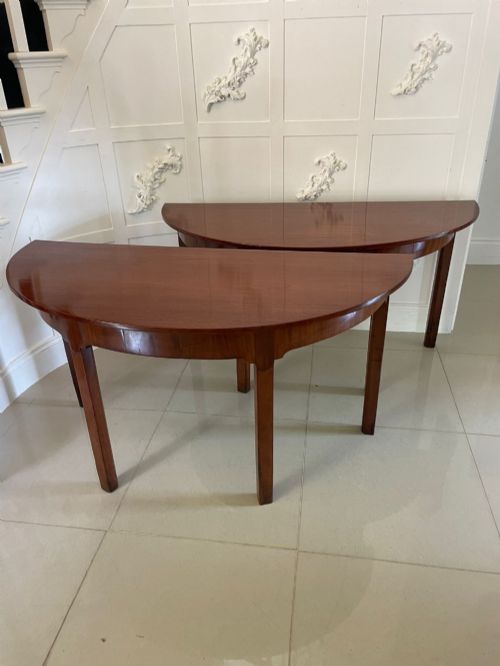
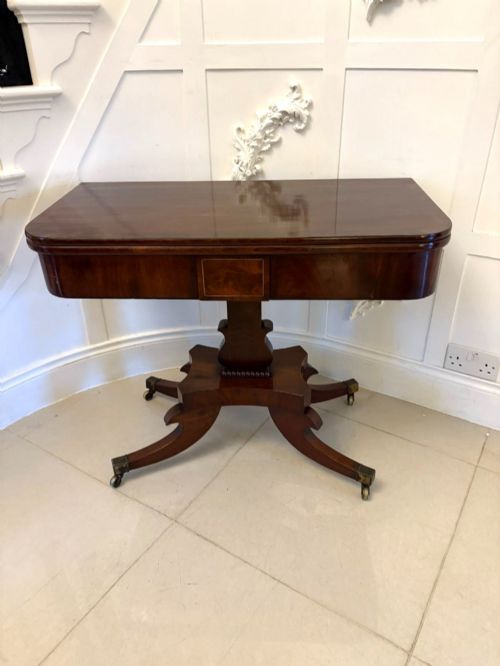
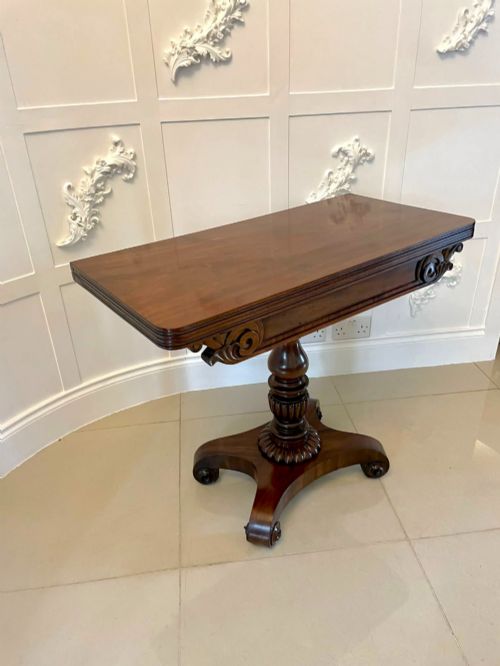
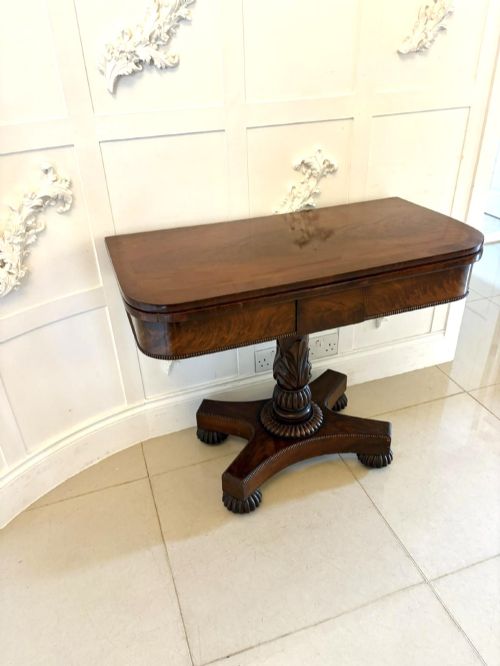
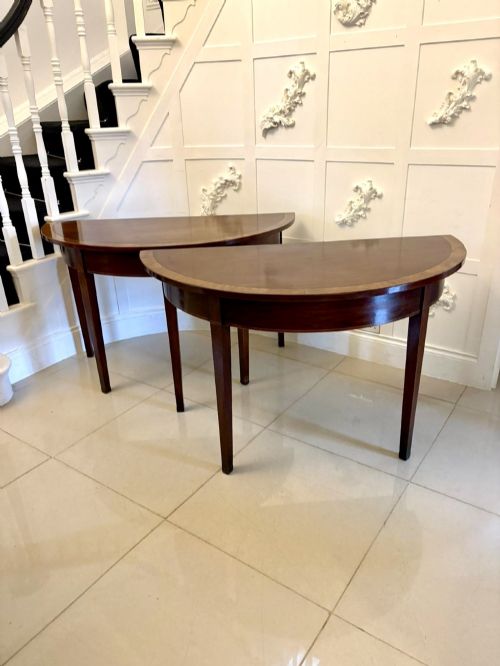
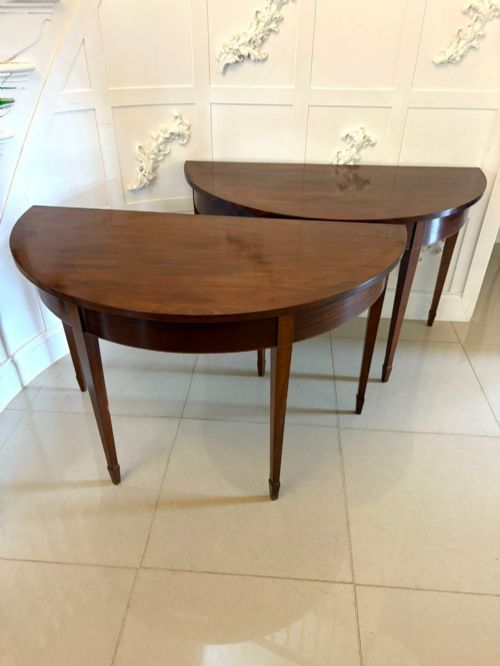
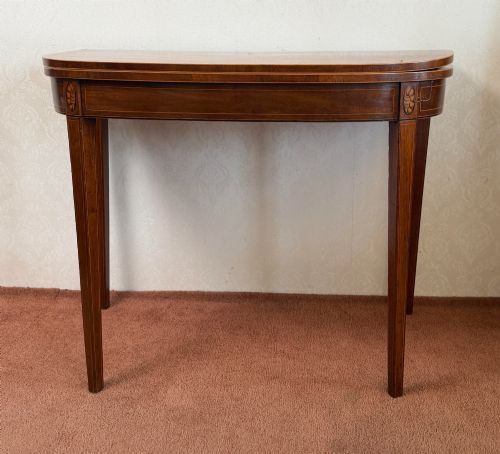
A figured mahogany console table brings richly patterned timber to a room, often taking the form of a demi-lune or a rectangular serving piece designed to sit flush against a wall. The examples collected here span the Georgian, Regency, William IV, Victorian, and Edwardian eras, demonstrating how cabinetmakers adapted the form across changing stylistic periods.
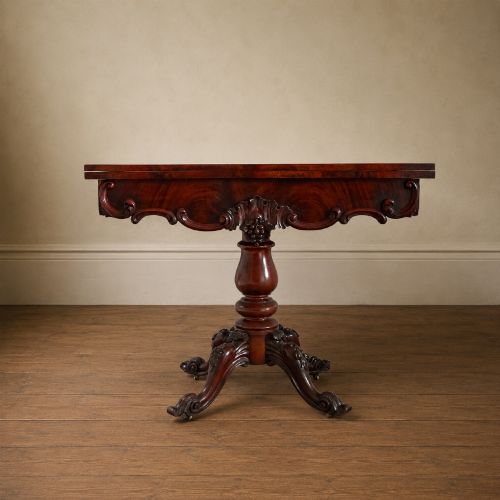
Many of these tables double as card tables, tea tables, or sofa tables, featuring turnover tops and folding leaves that allow them to expand when needed. George III demi-lune pairs and Regency freestanding designs appear frequently alongside later Victorian and Edwardian iterations.
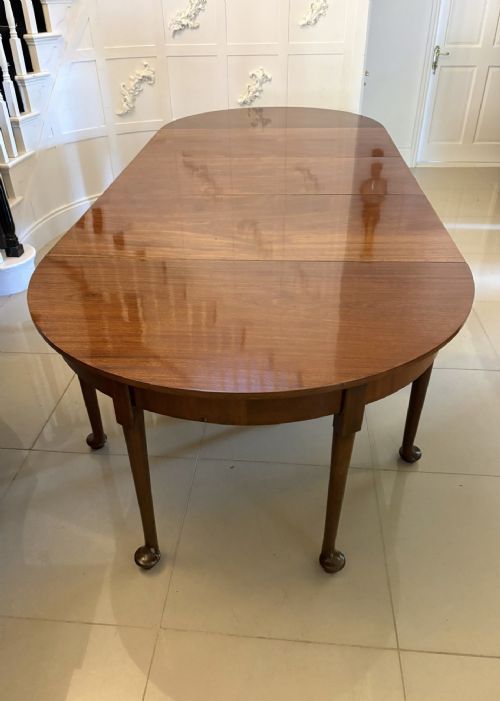
Makers produced these pieces to anchor hallways, drawing rooms, and formal dining spaces, utilising the natural movement of the wood to catch the light. Whether built as a rigid console or a metamorphic dining combination, each item relies on the decorative power of its timber.
Materials and Construction
Cabinetmakers constructed these pieces using solid timbers and carefully selected wood veneer, laying thin slices of highly figured mahogany over secondary woods to display complex grain patterns. Artisans often enhanced the primary mahogany surface with contrasting stringing and inlay work using boxwood and satinwood.
Metal accents played a functional and decorative role in the construction of finer pieces, incorporating brass mounts, ormolu, and gilded details around the legs and aprons. Marble tops also appear on select examples, adding weight and a cool surface texture to the wooden framework.
Several tables cleverly hide playing card wells beneath folding tops, ready for an impromptu evening of Regency whist.
Judging the Workmanship
The visual impact of a figured mahogany console table depends heavily on the depth and symmetry of the grain selected by the original maker. Grain patterns that ripple evenly across a demi-lune top indicate superior material selection compared to plain or disjointed timber.
Structural refinement distinguishes standard items from exceptional ones, particularly in the precision of the joinery, the crispness of any carved elements, and the integration of pivoting leaves or folding mechanisms. Quality also shows in the retention of original brass hardware and the careful alignment of inlaid stringing.
The Figured Mahogany Console Table Glossary
- Figured mahogany
- Timber exhibiting distinctive, highly decorative grain patterns such as flame, curl, or fiddleback. This wood was selected for prominent surfaces to create visual movement.
- Demi-lune
- A half-moon shape used frequently for console and card tables. This profile allowed tables to stand neatly against a wall while offering a broad surface.
- Turnover top
- A hinged tabletop designed to fold open and double the surface area. It often conceals a well or baize-lined playing surface underneath.
- Ormolu
- Gilded bronze or brass applied as a decorative mount. Makers used it to accent the corners, legs, and aprons of formal tables.
- Satinwood
- A pale, durable exotic timber utilised for contrasting inlay and stringing. It provides a bright visual border against darker mahogany.
Figured Mahogany Console Table: Frequently Asked Questions
What is a console table used for?
A console table is designed to stand against a wall rather than float in the middle of a room, acting as a surface for decorative objects, lamps, or serving dishes.
Many period versions also incorporate folding leaves, allowing them to transform into card tables or tea tables when entertaining guests.
How do I identify a George III console table?
George III pieces frequently feature demi-lune shapes, crisp inlay work, and carefully matched mahogany veneers across the top.
These tables often display restrained classical proportions and refined leg structures, dating from the late eighteenth or turn of the nineteenth century.
What makes mahogany figured?
Figured mahogany refers to timber cut from specific parts of the tree, such as where branches meet the trunk, producing natural ripples, curls, or flame patterns in the grain.
Cabinetmakers prized these sections for their ability to catch the light and create striking visual depth on tabletops.
Are these tables suitable for everyday use?
These tables adapt well to modern interiors as hallway focal points, sideboards, or occasional writing surfaces against living room walls.
Care should be taken with moisture and direct heat to protect the antique polish and veneered surfaces.