

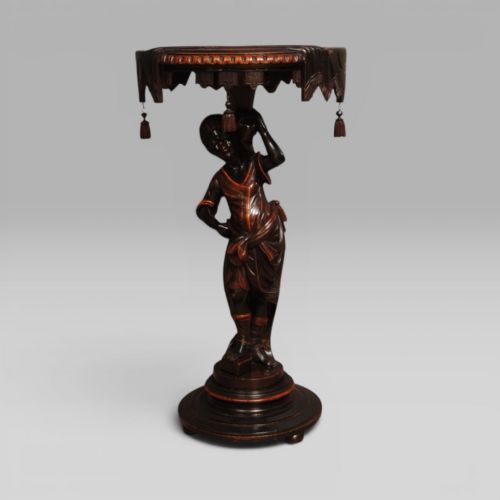


Figural Pedestal Plant Stand
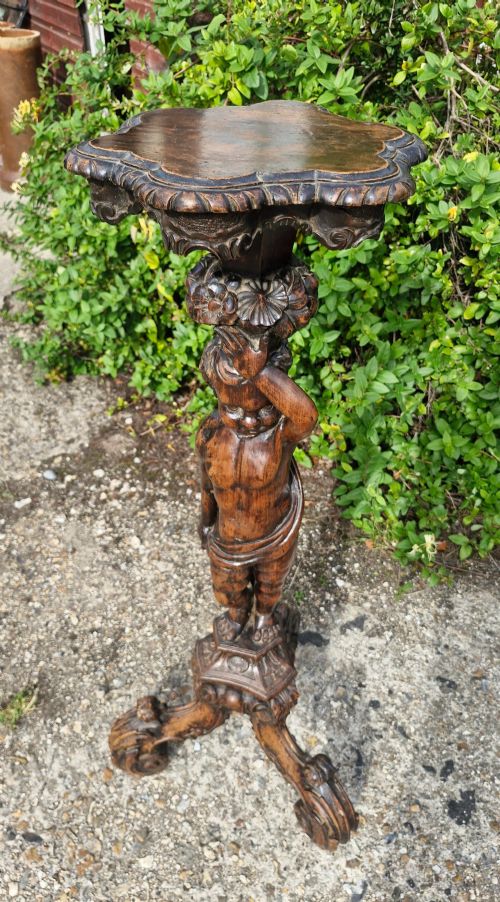
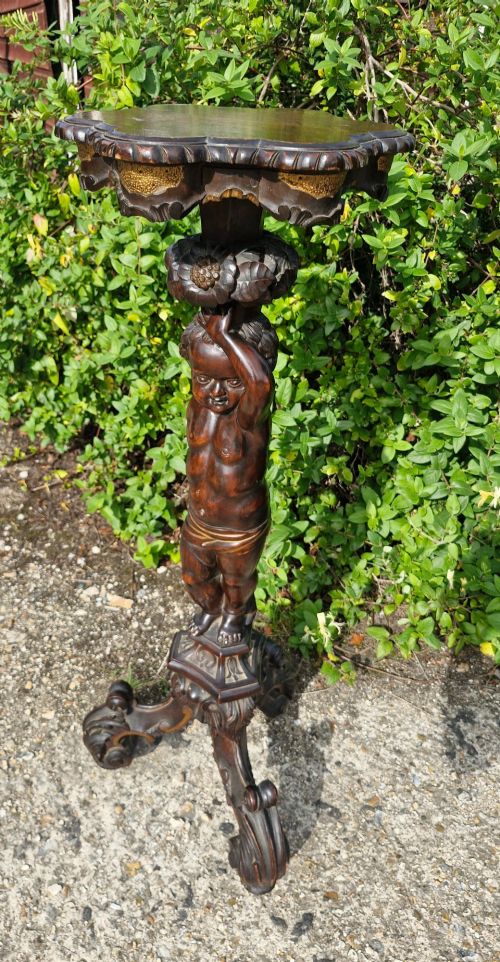
These figural pedestal plant stands bring character and drama to a room, carrying heavy bowls and greenery on carved wooden figures from the nineteenth and early twentieth centuries.
Figural Pedestal Plant Stand
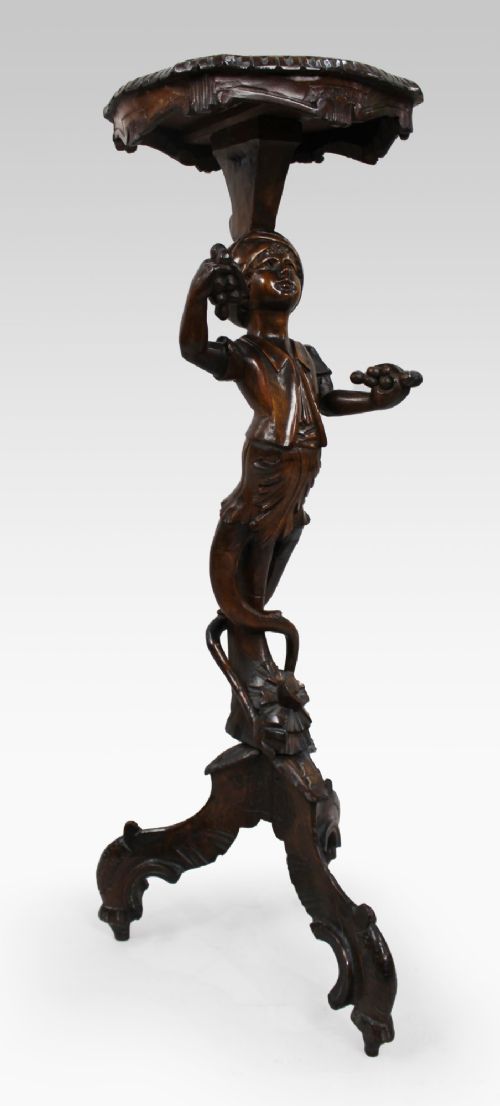
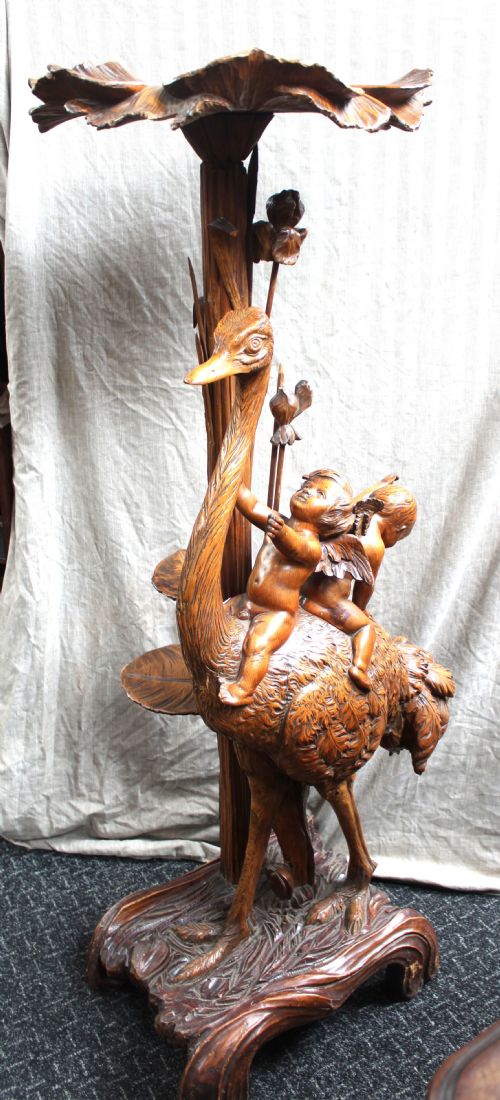
When you search for a figural pedestal plant stand, you are looking at carved wooden supports where human or animal figures hold up the top surface. These decorative stands appear in various forms, including tables, torcheres, and caryatid columns designed to display plants and decorative objects.
The versions you are most likely to meet on this page date from the nineteenth century up to the 1930s. They draw on styles such as Venetian Baroque, Italian Renaissance Revival, Victorian, and African Tribal traditions, often taking the form of figures holding shells, tables, or pedestals.
Makers and carvers worked across different regions, producing pieces from places like Italy, Venice, and Anglo-Indian workshops. Each regional tradition brings distinct carving techniques and finishes, from polychrome paint and gilt to plain carved oak and hardwood.
How they were made
Carvers shaped these pieces from solid timber, utilising hardwoods, carved walnut, and oak to build the structural core of each figure and stand. The physical weight of the timber ensures stability when the stand bears the load of a plant pot or bowl.
Figural Pedestal Plant Stand Retail Price Guide 2026
Typical asking prices for figural pedestal plant stand among the pieces listed under this phrase on Sellingantiques today, from the lower quarter to the upper quarter. They describe what is for sale here now, not the wider market.
Listings feature 19th-century pieces alongside 1920 and 1930 examples, spanning carved wood, oak, hardwood, polychrome paint, and gilt.
What varies in quality
The preservation of original surface finishes, whether polychrome paint or gilt, marks the distinction between pieces that retain their intended character and those that have lost their decorative depth through later re-painting or stripping.
The Figural Pedestal Plant Stand Glossary
- Caryatid
- A carved female figure serving as an architectural support in place of a column or pillar. This classical form appears frequently in nineteenth century pedestals.
- Polychrome
- The practice of decorating architectural elements, sculpture, or furniture in a variety of bright colours. It adds lifelike realism to carved wooden figures.
- Torchere
- A tall ornamental stand meant to carry a lamp or candle, often grouped with pedestals and plant stands. These stands elevate light sources or decorative objects.
- Gilt
- A thin layer of gold applied to wood or other surfaces to give a golden appearance. This finish catches the light and highlights carved details.
- Baroque
- An extravagant style of architecture, art, and design marked by elaborate ornamentation and dramatic movement. Venetian interpretations of this style strongly influence these figural stands.
Figural Pedestal Plant Stand: Frequently Asked Questions
What is a figural pedestal plant stand?
A figural pedestal plant stand is a carved wooden support shaped like a human or animal figure holding a top surface. They serve to elevate plants, bowls, and decorative objects in a room.
These pieces combine furniture with sculpture, drawing on historical styles from the nineteenth and early twentieth centuries.
How were these stands used historically?
Historically, these stands functioned as decorative display pieces in grand interiors, holding potted plants, lamps, or small sculptures. Their sculptural presence allowed them to act as standalone art objects as well as functional furniture.
Positioned in corners, hallways, or reception rooms, they added drama and theatrical flair to domestic spaces.
How do I live with a figural stand?
Living with these stands involves placing them in spaces where their carved details can be appreciated without obstruction. They work well supporting trailing plants, heavy ceramic bowls, or standing alone as sculptural focal points.
Keep them away from direct heat sources and strong sunlight to protect the wooden structure and any applied polychrome or gilt finishes.
How do I tell different periods apart?
Telling periods apart relies on observing the carving style, materials, and regional characteristics evident in each piece. Nineteenth-century examples often lean towards Venetian Baroque or Renaissance Revival, while later pieces from the 1920s and 1930s might show Art Deco or tribal influences.
Examining the treatment of the timber and the application of paint or gilt helps place the object within its proper era.