
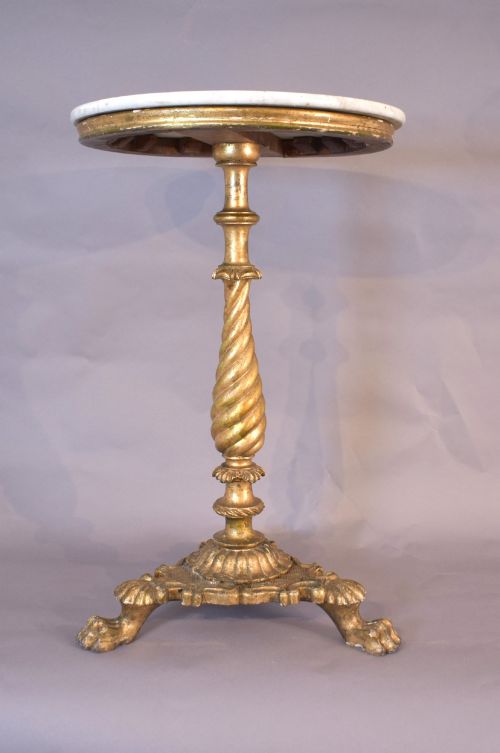
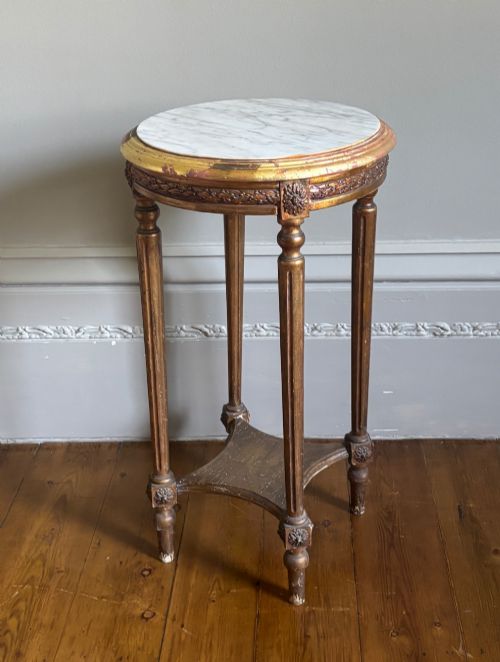
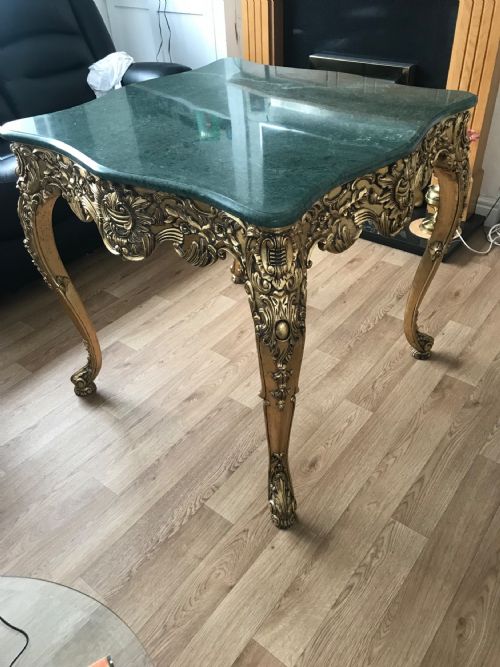
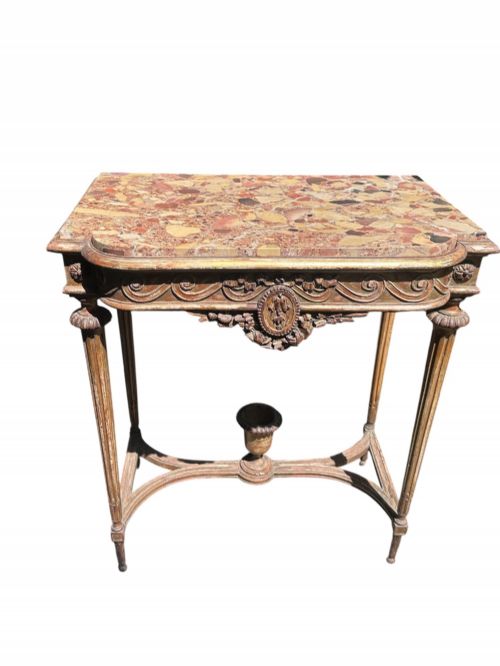


Giltwood Carved Occasional Table
A giltwood carved occasional table brings gilded elegance and practical surface space to a room, offering a decorative focal point with French or Victorian character.
Giltwood Carved Occasional Table
A giltwood carved occasional table is a compact decorative surface designed for placement in sitting rooms, halls, or parlours, functioning as a side, centre, or display piece. When you search for this phrase, you encounter items intended primarily for ornamental display alongside lighter utilitarian use, often featuring circular or oval tops.
The pieces listed on this page span the nineteenth century, the Regency era, and the twentieth century, with many examples drawing heavily on French styles such as Louis XVI and Rococo Revival. You will find tripod tables, urn stands, plant stands, and low coffee tables among the common forms.
Origins represented in the evidence include French, Italian, and English workshops, demonstrating the widespread European taste for gilt furnishings during these periods. The structural forms range from simple tripod stands to heavy marble-topped centre tables supported by carved frames.
Materials and construction
Construction typically involves a wooden frame, often fashioned from softwood, ebonised wood, or carved timber, which serves as the foundational base for subsequent surface treatments. Artisans applied gesso to smooth the wooden carvings before gilding the surface with gold leaf.
Many tables incorporate heavy polished marble tops, frequently in green or other ornamental stones, inset into the carved giltwood frames. Additional decorative elements include polychrome details, painted highlights, and parcel-gilt finishes on carved motifs like swans or tripod supports.
Listings feature items spanning the nineteenth century through the mid-twentieth century, predominantly utilising giltwood, marble, and gesso in French and Regency styles.
Judging quality in giltwood tables
Quality in these pieces rests primarily on the depth and crispness of the hand-carved wood beneath the gilding, where sharper, more articulate details separate superior work from softer moulding. The integrity of the gold leaf application and the handling of the gesso ground layer also dictate the visual richness of the surface.
The choice and thickness of the inset marble top contribute significantly to the weight and substance of the table, with solid polished stone elevating the piece above lighter alternatives. Furthermore, the coherence of the chosen style - whether Louis XVI or Regency Revival - reflects the maker's adherence to classical proportions and balanced design.
The Giltwood Carved Occasional Table Glossary
- Giltwood
- Timber covered with a thin layer of gold leaf applied over a prepared gesso ground. This finish provides the characteristic metallic brilliance seen on antique frames and furniture.
- Gesso
- A plaster-like mixture applied to wood to create a smooth surface for gilding or painting. It allows carvers to achieve fine detail before the gold leaf is laid down.
- Tripod table
- A small freestanding table supported by a central pillar resting on three feet. This form offers stability on uneven floors and saves floor space.
- Centre table
- A freestanding table designed to be viewed from all sides rather than pushed against a wall. These pieces often occupy the middle of a principal room.
- Parcel-gilt
- Partially gilded furniture where gold leaf highlights specific carved details while the underlying wood or painted surface remains visible elsewhere.
Giltwood Carved Occasional Table: Frequently Asked Questions
Where should I place an occasional table?
These pieces suit living rooms, entrance halls, or bedrooms where they provide a convenient surface for lamps, books, or decorative objects. Their compact footprint allows them to sit comfortably beside seating or in empty corners.
Because of their decorative gilt surfaces, placing them out of heavy traffic lanes helps protect the finish from accidental knocks while allowing the carved details to catch the light.
How do I care for a marble top?
Polished marble requires gentle cleaning with a soft, damp cloth and neutral soap to avoid dulling the stone or damaging the surrounding gilt frame. Acidic liquids like wine or citrus juice can etch the polished surface if left unattended.
Using coasters and placemats helps prevent scratches and staining, preserving the smooth finish of the heavy stone inserts found on many nineteenth-century examples.
What is the difference between a side table and a centre table?
Side tables typically feature a finished front and back intended to stand against a wall or beside furniture. They serve functional roles for holding lamps and daily items.
Centre tables are constructed to be viewed equally from all angles because they historically stood in the middle of a room. They often feature more elaborate carving all the way around the skirt and legs.
How do I identify French revival styles?
French revival pieces incorporate design elements from earlier royal periods, such as the classical symmetry of Louis XVI or the ornate curves of Rococo. Look for motifs like fluted legs, acanthus leaves, and gilded swags that echo eighteenth-century Parisian workshops.
Nineteenth- and early twentieth-century makers revived these aesthetics to satisfy Victorian and Edwardian demands for continental elegance in domestic interiors.