

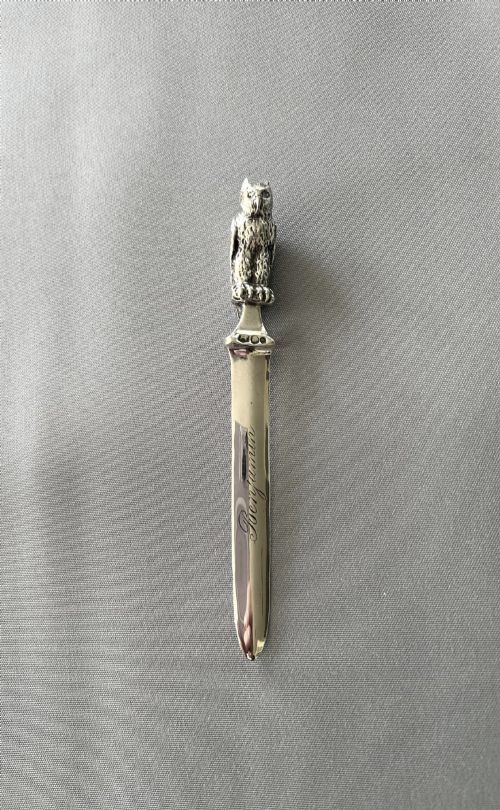


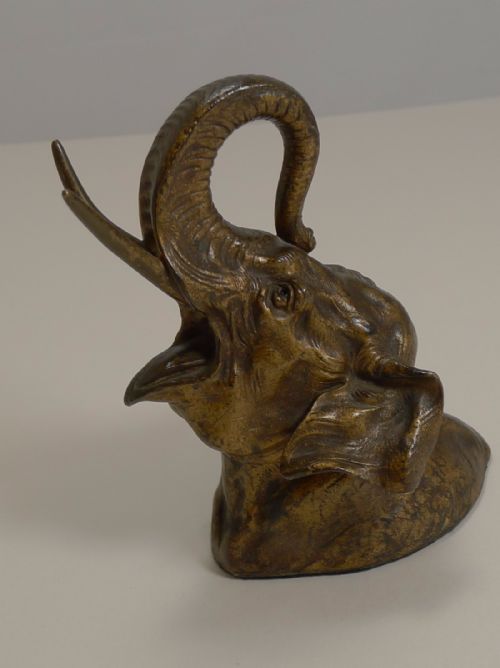


Figural Desk Accessory
These figural desk accessory pieces unite utility with sculptural form, offering a tangible link to domestic desks of the nineteenth and early twentieth centuries.
Figural Desk Accessory
A figural desk accessory serves a practical function on the writing table while taking the shape of an animal, a human figure, or an architectural form. When exploring a figural desk accessory, collectors encounter items such as inkwells, inkstands, paperweights, letter openers, match strikers, and table lighters that double as small sculptures. These objects draw inspiration from varied aesthetics including Victorian animalier, Black Forest carving, Art Deco design, and Chinese scholars studio traditions.
The pieces on this page span several decades from the Victorian era into the Art Deco period, crossing stylistic boundaries from French Second Empire gilt bronze to Middle Eastern spelter. Buyers meet everything from naturalistic St. Bernard dogs and emus to human figures like Pierrot the clown and the Manchester Man. Each item reflects the distinct writing habits and desk habits of past centuries through cast metal, carved wood, and worked glass.
Materials and construction methods
Makers utilised a range of metals including bronze, brass, spelter, ormolu, and gilded bronze to cast the sculptural figures that dominate these pieces. Metalworking often involved lost-wax casting or sand casting to achieve fine detail in fur, feathers, and facial expressions, sometimes accented with original glass eyes. Ormolu and gilt bronze applications provided rich surface finishes on French and English pieces alike.
Beyond metal, workshops employed carved bamboo, cut crystal glass, and silver with enamel to build functional desk companions. Inkwells and inkstands frequently combined heavy glass reservoirs with hinged metal lids, whilst Black Forest items relied on skilled hand-carved wood traditions to depict animals in relief or round.
Figural Desk Accessory Retail Price Guide 2026
Typical asking prices for figural desk accessory among the pieces listed under this phrase on Sellingantiques today, from the lower quarter to the upper quarter. They describe what is for sale here now, not the wider market.
Several animals gaze back across the centuries with their original glass eyes intact.
Markers of distinction and finish
The presence of signatures from known makers or documented foundries elevates an object, as does the survival of original surface gilding, patination, and fitted glass eyes. Weight, material density, and the integration of functional elements without compromising the sculptural silhouette mark the higher tiers of these desk objects.
Edmé Samson·A. Barrett·Ernest Louis ADNIN·Maison F. Mack
The Figural Desk Accessory Glossary
- Animalier
- A nineteenth-century artistic style focusing on the realistic depiction of animals, frequently seen in bronze inkwells and desk sculptures. This movement captured creatures in motion or repose with anatomical precision.
- Spelter
- A zinc alloy commonly used as a cost-effective substitute for bronze in decorative metalwork, often painted or bronzed to simulate more expensive materials. It appears frequently in early twentieth-century table lighters and match strikers.
- Ormolu
- Gilded bronze produced by applying a mercury-gilding process to a bronze base, creating a brilliant golden surface finish. French desk sets from the nineteenth century frequently showcase this technique.
- Inkstand
- A tray or stand holding one or more inkwells, alongside slots for pens, sanders, and other writing implements. These desk centrepieces often incorporated figural bronze or brass motifs.
- Match striker
- A small desk container featuring a rough striking surface for safety matches, often modelled in figurative or novelty shapes. They kept ignition sources close to hand for smokers and desk users.
Figural Desk Accessory: Frequently Asked Questions
What is a figural desk accessory?
A figural desk accessory is a functional writing-table item, such as an inkwell, letter opener, or paperweight, that incorporates a sculpted human, animal, or decorative figure into its design.
These pieces combine utility with decorative sculpture, transforming everyday stationery items into ornamental works of art for the nineteenth and early twentieth-century desk.
How were antique inkwells used?
Antique inkwells held liquid ink within a glass or ceramic reservoir protected by a hinged lid, allowing a writer to dip a quill or nib pen without spilling the contents.
Desk stands and inkstands often grouped the inkwell with pen rests and match holders to keep all writing necessities organised in one place.
How do I care for bronze desk items?
Bronze and brass desk accessories require only gentle dusting with a soft, dry cloth to preserve their natural patination and surface finish over time.
Avoid using abrasive metal polishes or chemical cleaners, as these can strip away historical patinas and damage delicate gilt or ormolu surfaces.
How can I tell Victorian pieces apart?
Victorian desk items often display heavier cast construction, naturalistic animalier subjects, and rich finishes like ormolu, brass, or carved Black Forest wood.
Later pieces moving into the Art Deco period tend to feature stylised geometric forms, spelter figures, and smoother metallic surfaces typical of the nineteen-twenties and thirties.