




Figural Ceramic Centrepiece
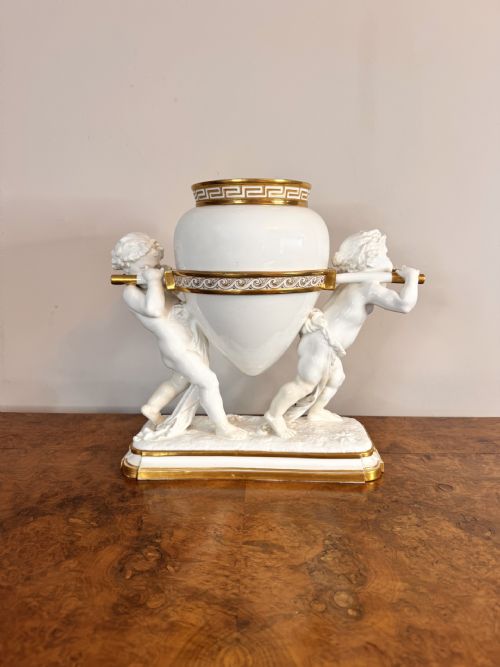
A figural ceramic centrepiece commands the middle of a formal table with sculpted human and animal forms modelled in porcelain and finished in gilt.
Figural Ceramic Centrepiece
A figural ceramic centrepiece brings sculptural narrative to the dining table, combining bowls, comports, and candelabra with modeled figures and animals. These works emerge predominantly across the nineteenth century, drawing on Victorian and continental traditions of table ornamentation.
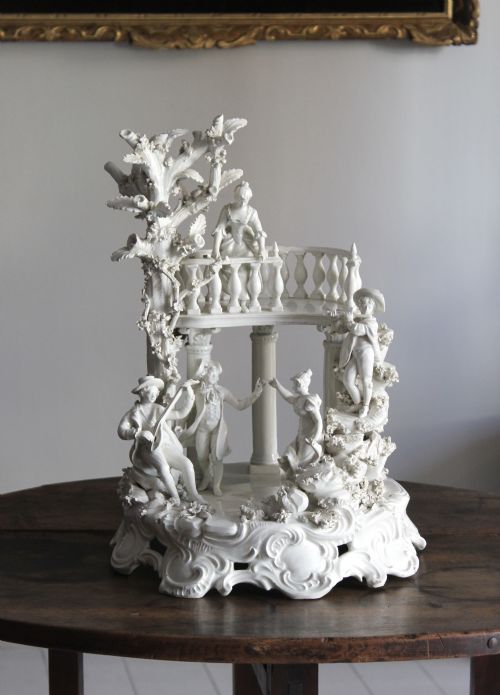
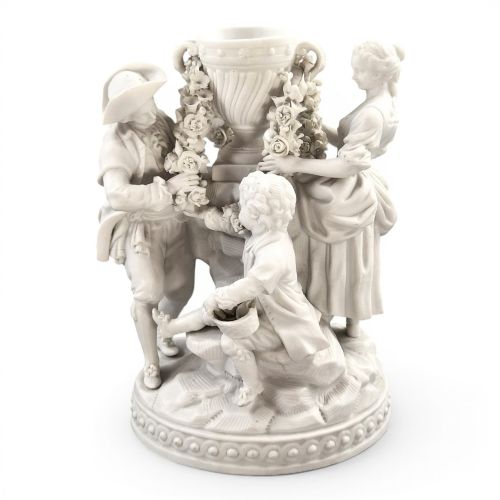
The selections available run from grand German Dresden and Sitzendorf candelabra to Royal Dux shell centerpieces and French biscuit porcelain sculptural groups. Many examples incorporate cherubs, bather figures, elephants, and floral carts executed in porcelain.
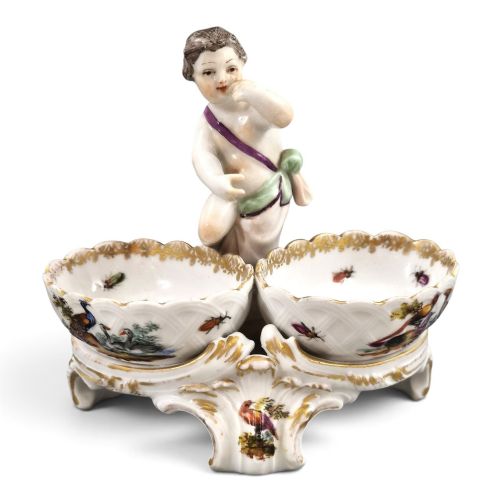
Makers such as KPM Berlin, Meissen, and Royal Worcester shape the upper tiers of these forms, spanning Rococo Revival curves and Art Nouveau contours. Buyers find pieces ranging from salt cellars and punch bowls to large chariot vases and multi-arm candelabra.
How They Were Made
Potters shape these figures using porcelain, bisque porcelain, and biscuit porcelain, often building complex multi-part moulds for intricate groupings. Artisans then apply ceramic glazes alongside hand-painted bird motifs and floral garlands before firing.
Gilding, gold leaf, and enamel enrich the surfaces, particularly on Rococo Revival and Victorian pieces where metallic highlights trace the moulded contours. Dedicated workshops finish these works with detailed burnishing on bases and rims.
Figural Ceramic Centrepiece Retail Price Guide 2026
Typical asking prices for figural ceramic centrepiece among the pieces listed under this phrase on Sellingantiques today, from the lower quarter to the upper quarter. They describe what is for sale here now, not the wider market.
Elephants appear pulling porcelain chariots across nineteenth-century dining tables.
What Varies in Quality
The refinement of the modeling separates masterworks from standard production, visible in the articulation of hands, drapery, and facial expressions on figures. Crisp hand-painting on birds and florals distinguishes superior pieces from simpler glazed surfaces.
The precision and preservation of the gilding and gold leaf indicate the original workshop tier, alongside the structural integration of complex candelabra arms and delicate shell basins.
KPM Berlin·Kister Scheibe-Alsbach·Sitzendorf·Royal Dux·Meissen·Royal Worcester
The Figural Ceramic Centrepiece Glossary
- Bisque porcelain
- Unglazed porcelain with a matte, marble-like texture frequently utilised for nineteenth-century sculptural groups and figures. This finish highlights the precision of the modeler's work without the distraction of a glossy surface.
- Candelabra
- Branched lighting fixtures designed to hold multiple candles, often incorporated into large ceramic centrepieces. These objects combine utilitarian function with elaborate sculptural bases featuring cherubs or animals.
- Comport
- A raised dish or bowl set upon a stem and foot, used for serving fruit or sweets on a formal table. They frequently form part of continental and English ceramic table garnitures.
- Famille rose
- A palette of Chinese porcelain enamels dominated by opaque pink, developed in the eighteenth century and imitated in later European wares. The colouring allows for delicate rendering of robes, flowers, and birds.
- Gilding
- The application of gold leaf or powdered gold to ceramic surfaces to accentuate borders, scrolls, and figural details. It provides a rich contrast against white porcelain bodies and painted enamel work.
Figural Ceramic Centrepiece: Frequently Asked Questions
How were figural centrepieces used originally?
These pieces anchored the middle of formal dining tables during nineteenth-century dinner parties, serving as conversation pieces and decorative focal points.
Larger versions combined utility with display by holding fruit, flowers, or candles during long courses.
Where should I place a centrepiece at home?
Dining tables, large sideboards, and entry hall consoles provide stable surfaces that showcase the three-dimensional modeling safely.
Ensure the location protects delicate elements like outstretched fingers, floral garlands, and candelabra arms from foot traffic.
How do I identify nineteenth-century German porcelain?
Look for characteristic German styles including Dresden floral encrustations, Sitzendorf multi-arm candelabra, and rich gilt Rococo Revival scrolls.
Paste density, underglaze factory marks, and the specific rendering of figural anatomy assist in confirming the origin.
What is the difference between bisque and glazed porcelain?
Bisque porcelain remains unglazed after firing, offering a smooth, matte white surface that resembles carved marble.
Glazed porcelain receives a vitreous coating that produces a shiny, reflective finish sealed against moisture and handling.