

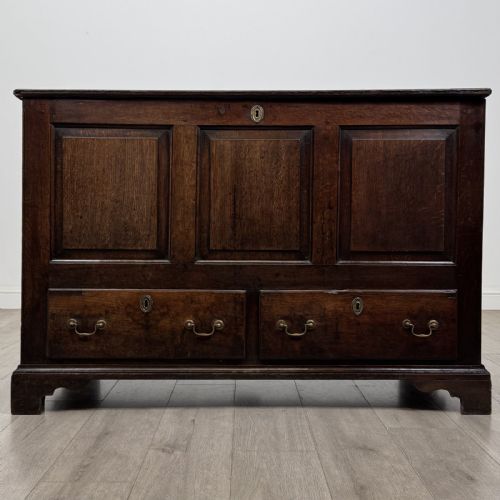
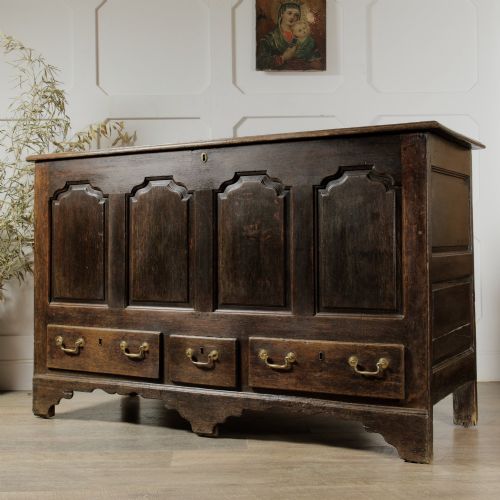
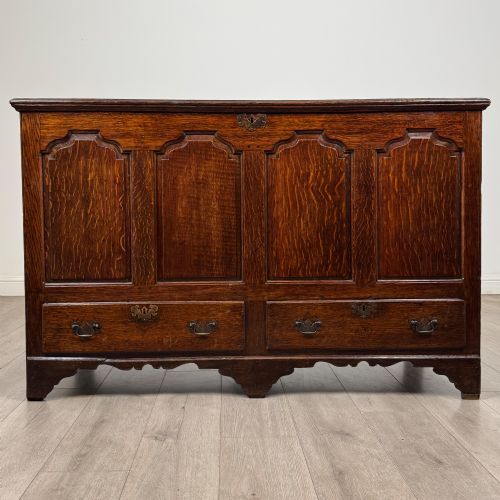
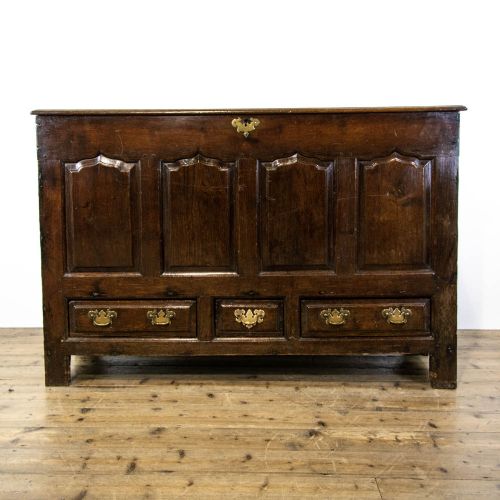


Fielded Panel Mule Chest
These fielded panel mule chests combine deep storage with lower drawer convenience, offering practical utility and honest country character for the home.
Fielded Panel Mule Chest
A fielded panel mule chest provides deep blanket storage in the upper compartment alongside one or more drawers built into the base. These traditional pieces bridge the gap between a standard coffer and a chest of drawers.
The term encompasses regional variations including the coffer bach and the kist, reflecting different local cabinetry methods across Britain. Buyers searching for a fielded panel mule chest will encounter sturdy oak constructions designed for daily domestic utility.
How they were made
Cabinetmakers constructed these chests predominantly from solid oak, utilising frame and panel techniques to accommodate the natural seasonal movement of the timber. The characteristic fielded panels feature a central raised portion tapered at the edges to fit neatly into grooved framing.
Iron and brass hardware secure the lids and drawers, including hinges, escutcheons, and drop handles that vary from simple functional ironwork to more decorative brass fittings. Drawer construction relies on traditional dovetail joints to withstand regular pulling.
Regional workshops shaped these chests using hand tools, resulting in pegged joints and visible grain patterns that demonstrate eighteenth and nineteenth-century joinery methods.
Fielded Panel Mule Chest Retail Price Guide 2026
Typical asking prices for fielded panel mule chest among the pieces listed under this phrase on Sellingantiques today, from the lower quarter to the upper quarter. They describe what is for sale here now, not the wider market.
The site's listings for fielded panel mule chests span the eighteenth and nineteenth centuries, featuring regional oak styles from Wales and rural England.
What varies in quality
Quality rests upon the crispness of the fielded panels and the proportional balance between the upper storage box and the lower drawers. Finer examples display carefully selected oak boards with harmonious grain figures across the front elevation.
The structural integrity of the base and the smoothness of the drawer action separate superior pieces from simpler utilitarian boxes. Original hardware and minimal timber replacement elevate the standing of an eighteenth or nineteenth-century chest.
Regional distinctiveness, such as Welsh vernacular detailing, adds character that distinguishes bespoke country craftsmanship from standard workshop production.
The Fielded Panel Mule Chest Glossary
- Fielded panel
- A wooden panel with bevelled or rebated edges that fit into a grooved frame. This traditional construction method allows the timber to expand and contract with humidity changes.
- Mule chest
- A storage chest fitted with one or more drawers beneath the main lift-up compartment. It represents a transitional form between the simple coffer and the chest of drawers.
- Coffer bach
- A small Welsh box or chest, often incorporating a drawer, translating literally from the Welsh as small coffer. These miniature versions follow the structural conventions of their larger counterparts.
- Kist
- A traditional regional term for a wooden chest or box used for domestic storage. The word shares Germanic roots with chest and appears frequently in northern and western British contexts.
- Vernacular
- Architecture or furniture built by local craftsmen using traditional materials and regional styles rather than high-fashion metropolitan designs. These pieces serve practical domestic needs with local character.
Fielded Panel Mule Chest: Frequently Asked Questions
What is a fielded panel mule chest?
A fielded panel mule chest is a traditional storage furniture piece featuring a hinged lid opening to a deep compartment, with one or more drawers built into the base.
The front and sides incorporate panels with bevelled edges set into wooden frames, giving the surface structural depth and visual interest.
How were mule chests used?
These chests served primarily for storing household linens, blankets, and woollen garments in domestic bedchambers and living spaces.
The lower drawers provided accessible space for smaller items of clothing, combining the functions of a trunk and a chest of drawers in one piece.
How do I date an oak mule chest?
Dating relies on examining construction methods, joinery details, timber characteristics, and hardware types used throughout the piece.
Eighteenth-century examples often display hand-cut pegs, pegged tenons, and distinct regional vernacular traits, while nineteenth-century pieces may show different internal framing and machine-sawn components.
Where were these chests made?
Mule chests were produced by regional cabinetmakers and country joiners across Britain, with distinct stylistic groups emerging from Wales and various English counties.
Local workshops utilised native timber like oak to build sturdy furniture suited to rural and provincial homes.
How do I live with an antique mule chest?
An antique mule chest functions well as a coffee table, a blanket box at the end of a bed, or a hallway storage piece.
Positioning the chest away from direct heat sources and dramatic humidity shifts helps preserve the traditional oak timbers and panel construction.