




Fereghan Wool Carpet
These fereghan wool carpet examples bring traditional Persian craftsmanship into your home with enduring textiles.
Fereghan Wool Carpet
A fereghan wool carpet represents classic Persian weaving traditions originating from the nineteenth and early twentieth centuries. These floor coverings range from compact area rugs to substantial room-sized carpets and narrow hallway runners.
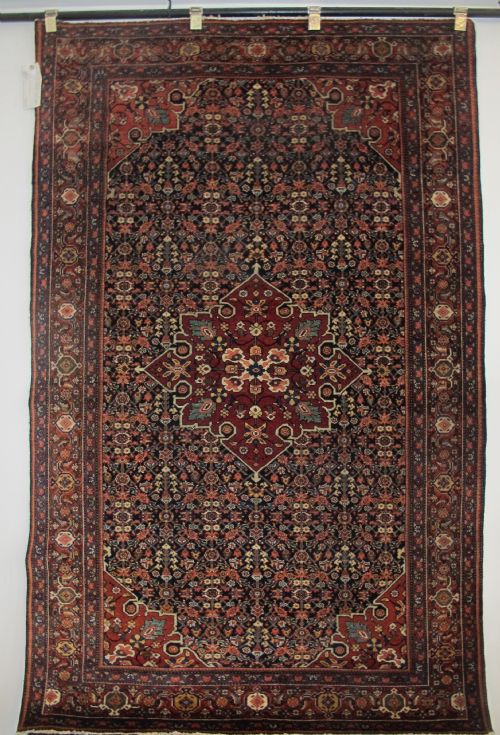
The selections span various decades including the eighteen-fifties, eighteen-eighties, and eighteen-nineties, reflecting traditional Persian styles. Pieces often feature specific regional subtypes such as Sarouk village and Ziegler designs.
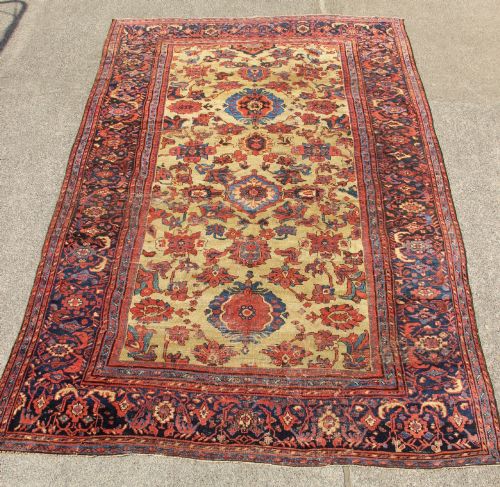
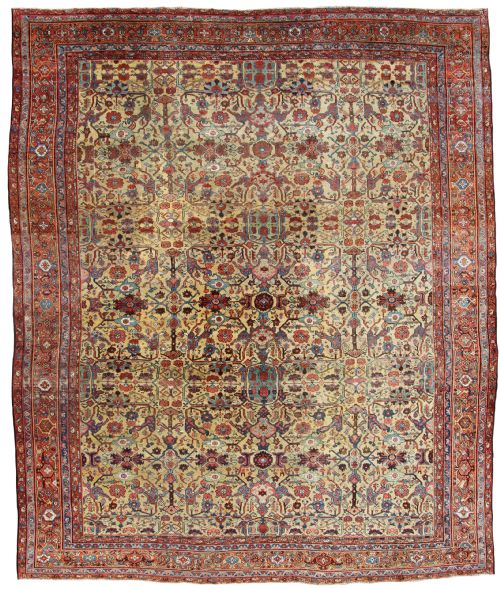
Buyers encounter formats with classic patterned fields, plain fields, and golden fields adorned with botanical motifs like pomegranates and birds. Each rug shows the distinct aesthetic of West Persian workshops from the Qajar period.
What Determines Quality
Knot density and the precision of the woven motifs distinguish finer examples from standard village pieces. Finer weaving allows for crisper botanical details and more complex compositional layouts.
The condition of the wool pile and the integrity of the cotton foundation dictate the structural longevity of each textile. Uniform wear and intact original edges indicate careful preservation over generations.
The current selection spans the nineteenth and early twentieth centuries, featuring wool and cotton construction in diverse regional styles.
The Fereghan Wool Carpet Glossary
- Pile
- The surface of the carpet formed by the upright ends of the yarn. This soft layer absorbs foot traffic and displays the woven design.
- Warp
- The vertical threads stretched tightly on the loom before weaving begins. Cotton warps provide a rigid and durable framework for the knots.
- Weft
- The horizontal threads passed across the warps between rows of knots. This technique binds the structure together horizontally.
- Runner
- A long and narrow format designed specifically for hallways and corridors. These pieces guide movement through domestic spaces.
- Field
- The central background area of the carpet enclosed by the borders. This space often displays plain surfaces or intricate botanical patterns.
Fereghan Wool Carpet: Frequently Asked Questions
How do I clean an antique rug?
Professional dusting and specialist washing preserve the delicate wool fibres and natural dyes of older Persian textiles. Avoid harsh chemical treatments and excessive moisture.
Vacuum gently using suction attachments without rotating brushes to prevent loosening the pile and foundation threads over time.
Can these carpets handle heavy foot traffic?
Traditional construction methods and dense wool piles make these floor coverings remarkably resilient for everyday living spaces. Placed in moderate traffic areas, they endure well.
Using a quality underlay prevents slipping and cushions the cotton foundation against hard flooring surfaces, reducing friction and wear.
What is a village rug?
Village rugs are woven by independent artisans in regional communities rather than large urban manufactories. They often feature expressive, slightly asymmetrical tribal designs.
These pieces reflect the personal creativity of local weavers who relied on traditional motifs passed down through generations.
How do I date an old carpet?
Examining the wool quality, dye palette, structural materials, and stylistic nuances helps determine the approximate period of creation. Nineteenth-century examples often show distinct regional characteristics.
Comparing knot structures and design elements against documented historical pieces provides further clarity regarding the era of production.