



Feather Banded Walnut
Feather banded walnut describes timber furniture decorated with delicate double-banded inlay, prized for its warmth and crisp geometric contrast.
Feather Banded Walnut
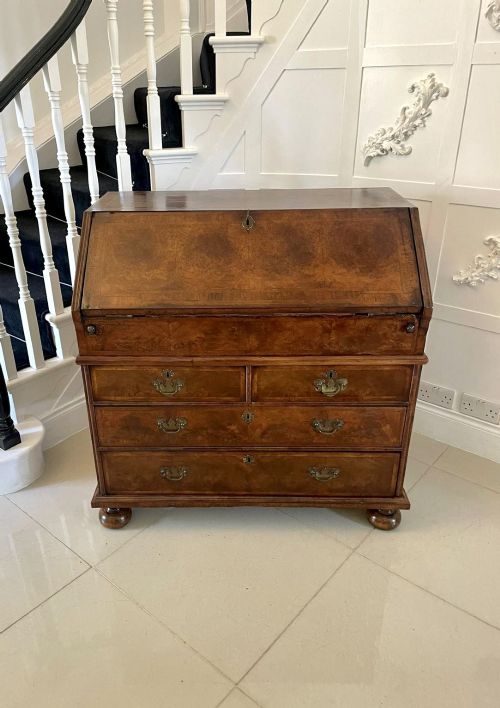
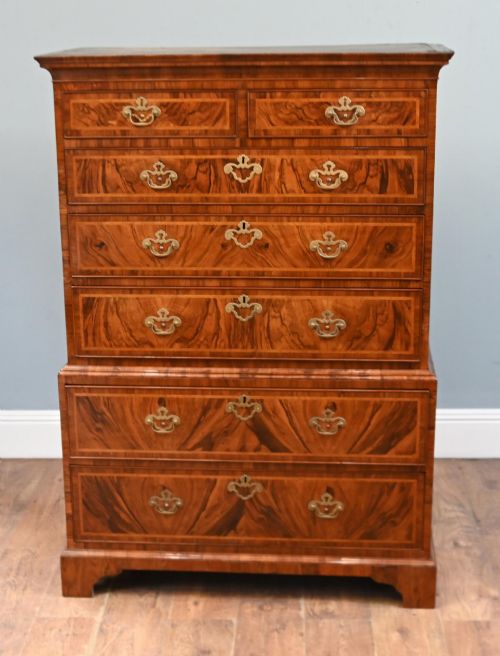
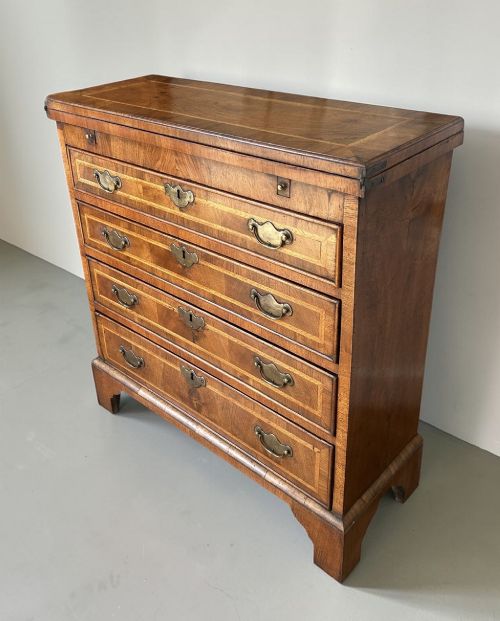
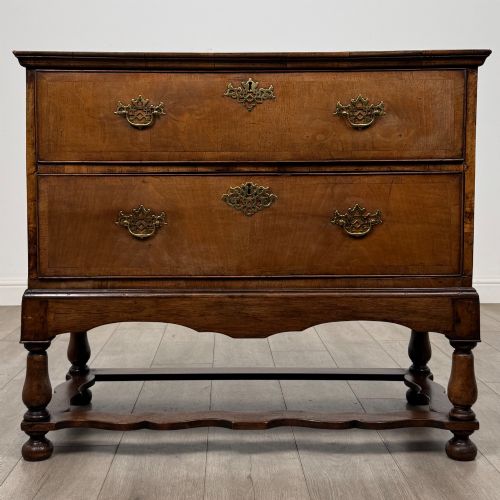
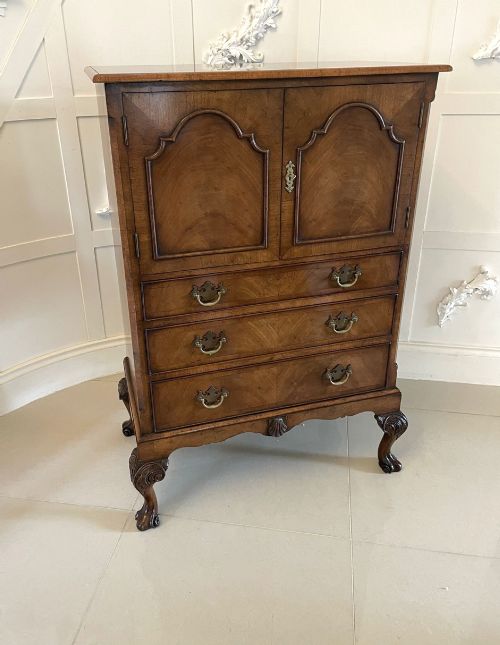
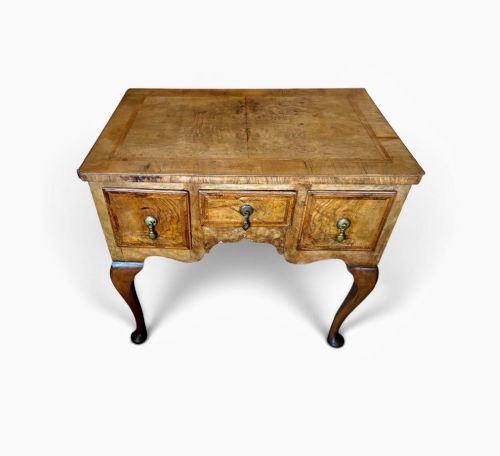
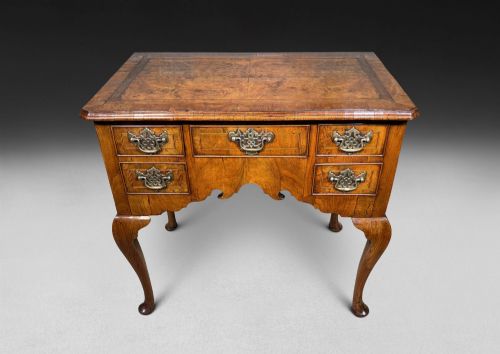
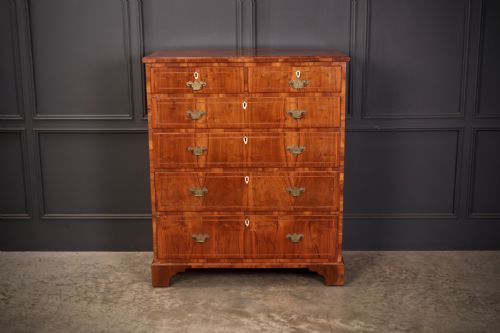
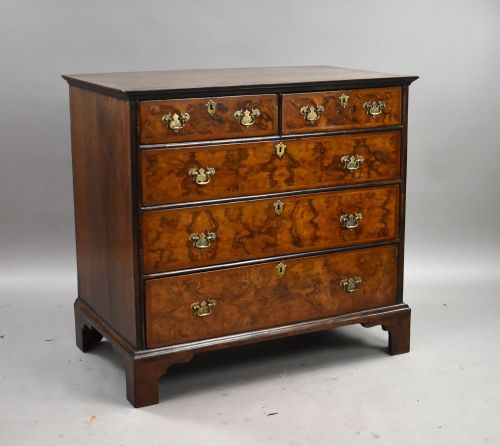
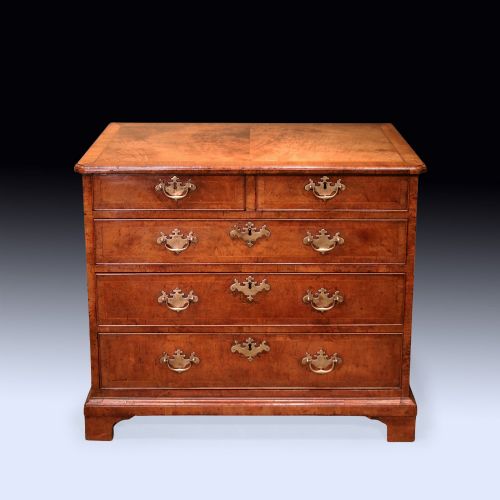
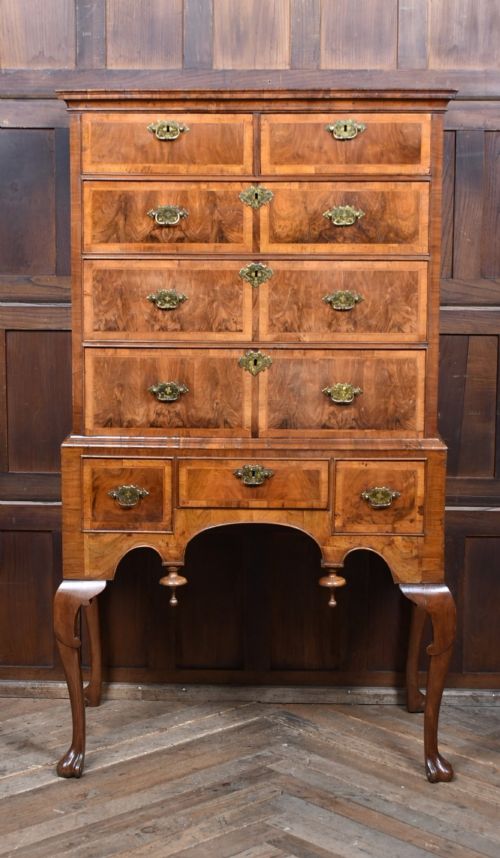
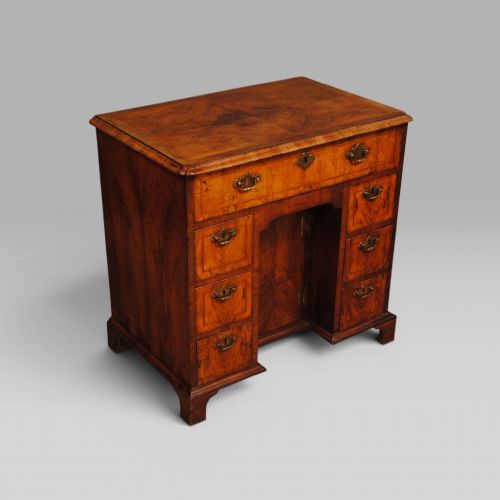
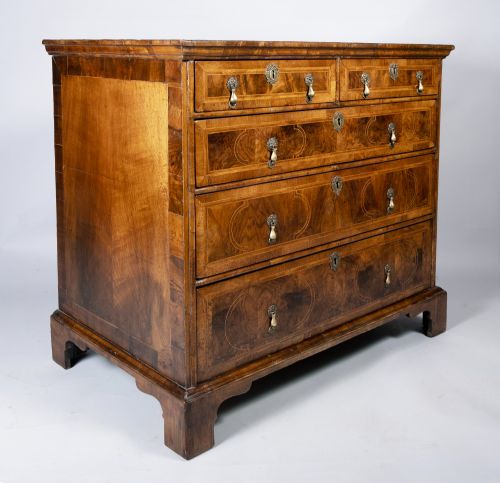
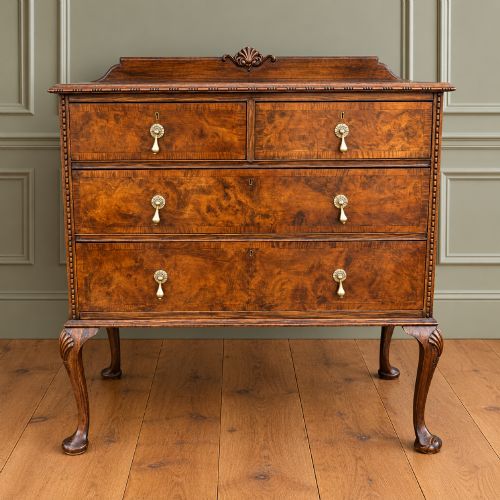
When buyers search for feather banded walnut, they encounter case pieces built primarily during the early eighteenth century under William and Mary, Queen Anne, and the early Georgian reigns. The selections span chests of drawers, lowboys, writing bureaux, and tallboys created to display rich timber grain.
The most common formats on this page are chests of drawers and lowboys displaying figured walnut veneers bordered by precise inlay. Pieces range from genuine period examples dating to seventeen hundred through the eighteenth century, alongside later revivals from the Edwardian era and the early twentieth century.
Form follows function in these domestic storage items, which combine surface decoration with practical drawer arrangements. Compact bureaus and kneehole desks also appear frequently, offering fitted interiors behind sloping lids or central cabinet doors.
Materials and construction methods
Cabinet makers utilised thin veneers of figured walnut and burr walnut laid over secondary woods such as oak or pine. The characteristic feather banding was constructed by cutting narrow strips of walnut veneer at an angle and laying them in opposing diagonal directions to create a central quill-like herringbone pattern.
Cross-banding frequently frames the drawer fronts and tabletops, where grain runs perpendicular to the main panel to provide a contrasting border. Boxwood stringing and brass hardware including drop handles and escutcheons complete the decorative scheme of these timber surfaces.
Feather Banded Walnut Retail Price Guide 2026
Typical asking prices for feather banded walnut among the pieces listed under this phrase on Sellingantiques today, from the lower quarter to the upper quarter. They describe what is for sale here now, not the wider market.
Distinctions in quality and execution
Quality rests upon the selection of timber and the precision of the veneering work. Finer examples display symmetrical burr walnut figures and tightly matched feather banding that follows drawer perimeters without distortion.
The integrity of secondary timbers and the retention of original brass handles or patination elevate a piece significantly. Early period construction showing traditional dovetailing and uncompromised surface depth separates master craftsmanship from later revival items.
The Feather Banded Walnut Glossary
- Feather banding
- A decorative inlay made from two strips of veneer cut diagonally and arranged to meet at a central axis, resembling the barbs of a feather. This technique frames drawer fronts and tabletops on eighteenth-century case furniture.
- Cross-banding
- A border of veneer laid so that the grain runs at right angles to the surrounding wood. It frames panels and adds contrast to the primary surface.
- Burr walnut
- A prized timber harvested from walnut tree growths, yielding a swirling, highly figured grain pattern. It was widely utilised for principal surfaces on high-status desks and chests.
- Lowboy
- A small side table featuring one or more rows of drawers, commonly supported on cabriole legs. These versatile pieces served as dressing tables or serving surfaces.
- Escutcheon
- A protective plate surrounding a keyhole, frequently fashioned from brass on period cabinetwork. It secures the wood around the lock and adds decorative detail.
Feather Banded Walnut: Frequently Asked Questions
What is feather banded walnut?
Feather banded walnut refers to antique wooden furniture decorated with fine linear veneers arranged in a herringbone pattern around drawer edges and panel borders.
Cabinet makers used this decorative technique during the seventeenth and eighteenth centuries to enhance plain surfaces and highlight the rich grain of walnut timber.
How do I identify period pieces?
Authentic early pieces display hand-cut dovetails, oak or pine secondary timbers, and surface patination developed through centuries of handling.
Examining the underside and drawer linings reveals construction methods consistent with the Georgian and Queen Anne eras rather than later revival periods.
Where were these pieces used?
These items functioned as primary storage and writing furniture in bedrooms, parlours, and private studies of grand homes.
Bureaux provided private spaces for correspondence, while chests of drawers and lowboys held clothing and personal valuables.
How do I care for walnut veneer?
Walnut furniture requires stable indoor humidity and protection from direct sunlight to prevent veneer from drying out or lifting.
Occasional application of appropriate wax maintains the lustre and nourishes the historical timber without sealing the surface.