
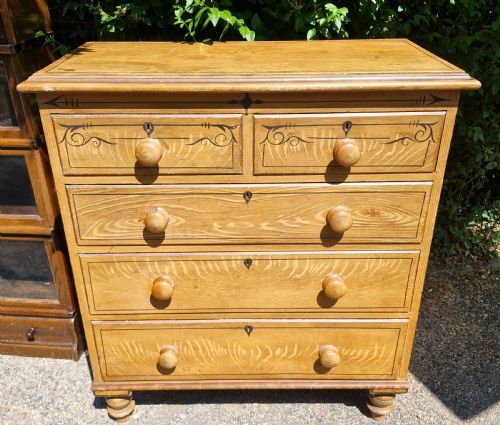
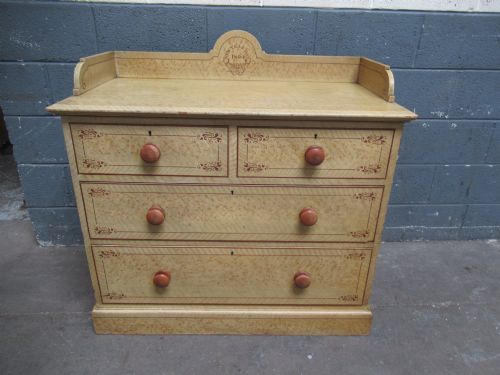
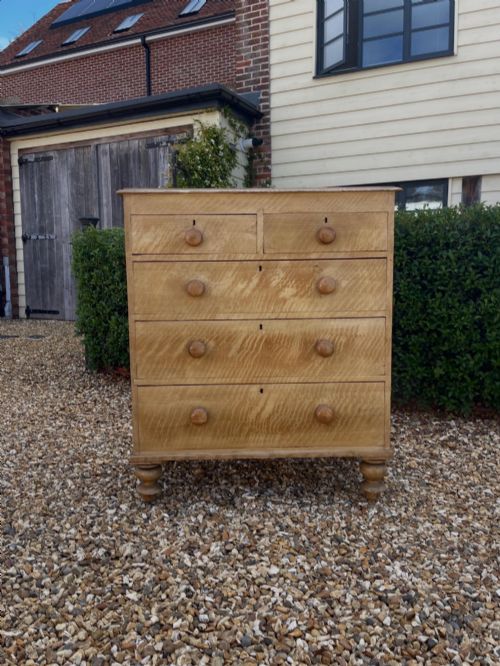
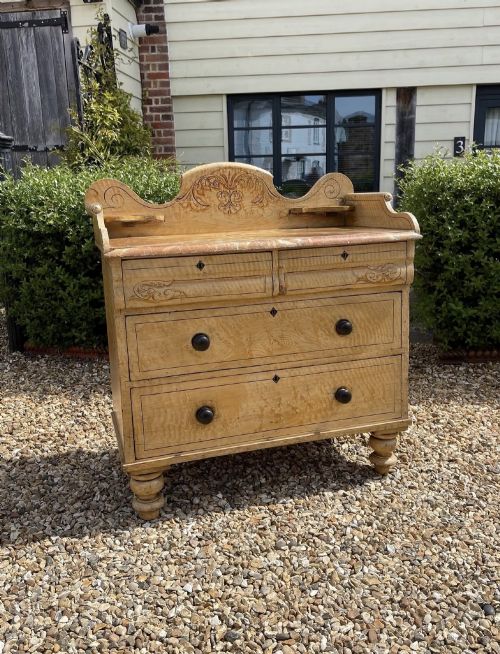
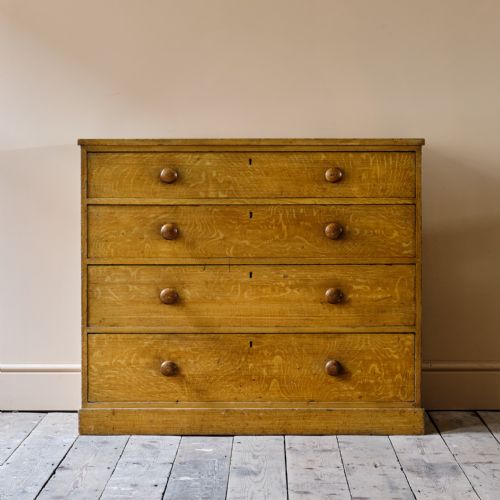


Faux Grain Painted Drawers
Faux grain painted drawers bring warmth and character through simulated wood finishes applied to pine surfaces.
Faux Grain Painted Drawers
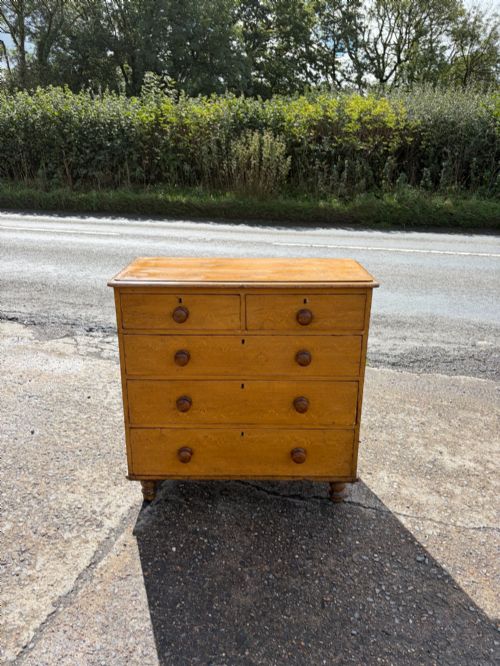
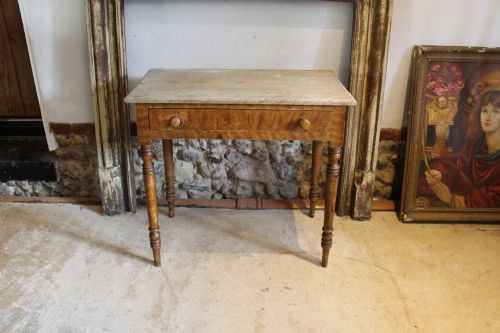
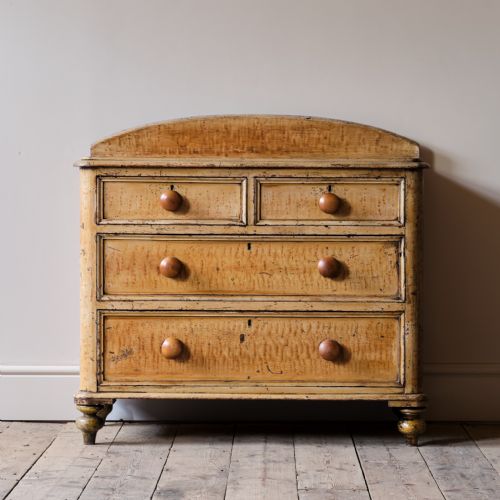
Faux grain painted drawers comprise storage pieces designed to imitate expensive timbers through decorative surface treatment. A buyer searching this phrase encounters chests of drawers, side tables, and dressing chests primarily from the nineteenth century and the Victorian era.
The versions most frequently met on this page are constructed from pine or softwood and retain their original painted surfaces. Styles range from simple rustic farmhouse and country house designs to Victorian folk art examples.
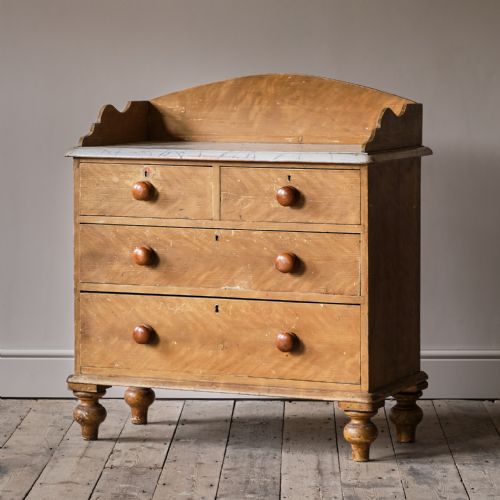
Forms extend beyond full-size chests to include miniature furniture and washstands. These pieces demonstrate how utilitarian storage was elevated through decorative paintwork.
Materials and construction
Makers utilised pine and softwood as the primary base materials for constructing these chests of drawers and auxiliary tables. Wood surfaces were prepared before receiving pigmented layers designed to replicate the grain patterns of more costly hardwoods like mahogany.
Scumble glaze techniques played a central role in achieving the translucent, layered effect characteristic of these finishes. Artisans manipulated the wet glaze using combs, brushes, and rags to imitate natural timber figuring before sealing the work.
Listings span the nineteenth century to nineteen-twenty, featuring pine, brass, ceramic, and glass materials across Victorian and rustic country styles.
Judging the finish
The distinction between standard and superior pieces rests entirely upon the execution and preservation of the decorative paintwork. Superior examples display controlled scumble work that successfully tricks the eye into seeing natural grain rather than applied pigment.
Originality governs the value of these surfaces. Pieces retaining their untouched nineteenth-century paint without modern overpainting or restoration stand apart from those with compromised finishes.
The Faux Grain Painted Drawers Glossary
- Scumble glaze
- A translucent oil or varnish mixture applied over a lighter base coat and manipulated while wet to create simulated wood grain. This technique forms the foundation of most finishes seen on nineteenth-century pieces.
- Simulated wood
- A decorative paint technique intended to imitate the appearance of expensive timbers on cheaper base woods like pine. Artisans employed this method to achieve high-status aesthetics using domestic materials.
- Wellington chest
- A tall, narrow chest of drawers secured by a single hinged locking stile on the right side. Examples appear decorated with country house scumble paint.
- Washstand
- A low cabinet or table designed to hold a basin and jug, frequently incorporating drawers. These pieces often feature original painted pine surfaces.
- Miniature furniture
- Small-scale versions of standard chests of drawers, often created as apprentice pieces or salesman samples. They utilise the same scumble glaze techniques found on full-size furniture.
Faux Grain Painted Drawers: Frequently Asked Questions
What is scumble paint?
Scumble paint involves a translucent medium manipulated over a lighter ground to imitate timber grain.
Artisans use combs and brushes while the glaze remains wet to create realistic patterns.
Are these pieces made of solid pine?
The listings consist primarily of pine and softwood carcasses supporting decorative paint layers.
Secondary woods sometimes appear in drawer linings and internal framing.
How do I clean faux painted furniture?
Surfaces require gentle dusting with a dry cloth to protect the delicate original glaze.
Moisture and harsh cleaning agents damage historic paint layers permanently.
What period do these drawers date from?
The selection spans the nineteenth and early twentieth centuries, with a strong Victorian presence.
Dates range from mid-nineteenth-century examples through to nineteen-twenty.