
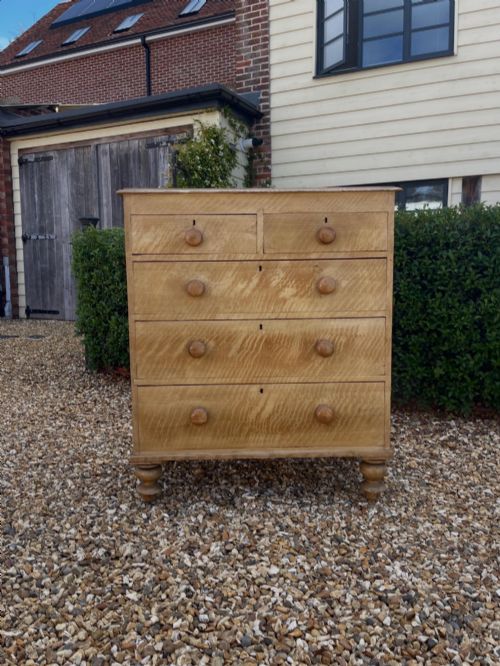
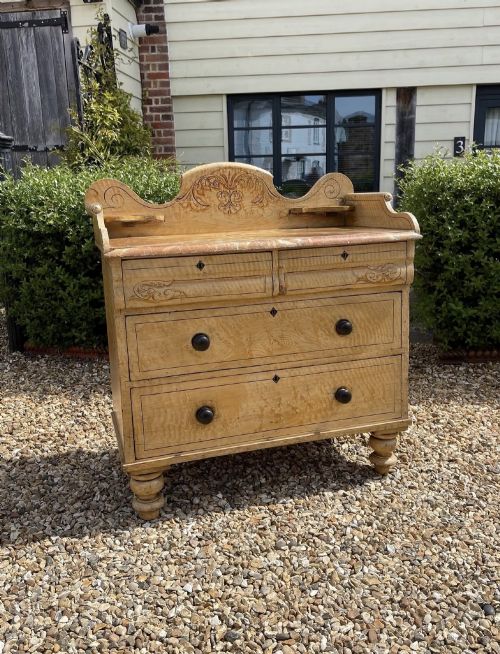
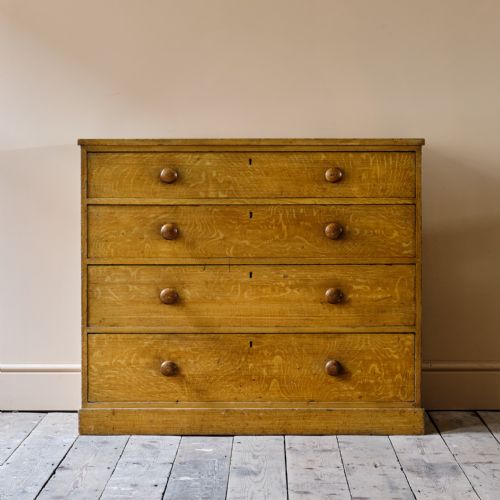


Faux Grain Chest Drawers
A faux grain chest drawers brings tactile warmth and rustic charm to a room through skillful imitation of costly timber.
Faux Grain Chest Drawers
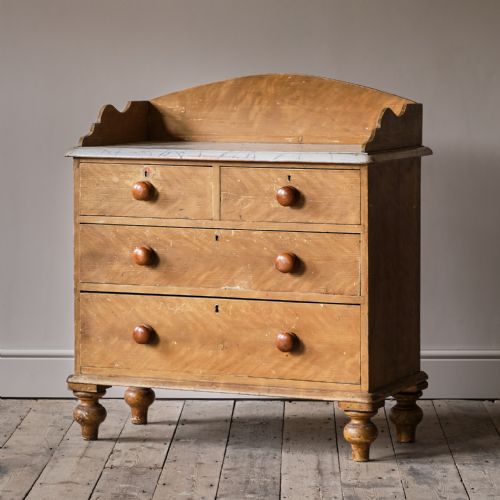
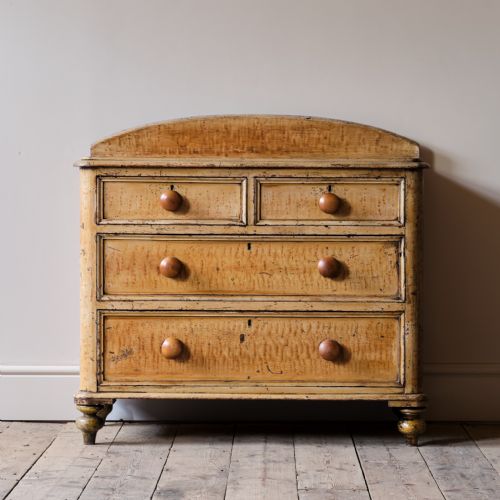
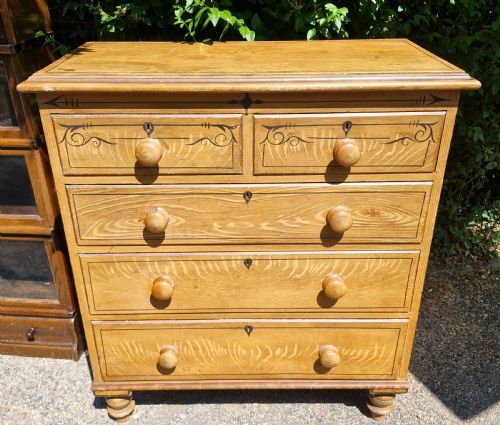
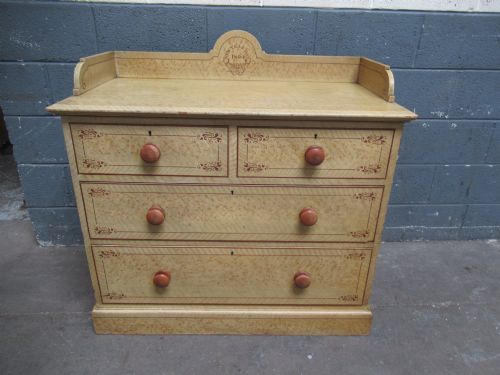
A faux grain chest drawers is primarily a pine or softwood storage piece transformed by decorative paintwork to resemble more expensive woods like oak or walnut. The examples encountered here span the nineteenth century and the early twentieth century, taking the form of chests of drawers, dressing chests, washstands, and occasional miniature pieces. Most hail from Victorian country houses and rural workshops, embodying practical domestic storage with an inventive surface finish.
The aesthetic sits firmly within the vernacular traditions of English and French country houses, rustic farmhouses, and folk art. Makers created these pieces to bring the fashionable look of fine hardwood into homes that relied on affordable local timber. Consequently, buyers meet substantial upright chests alongside smaller bedside or dressing formats, all unified by their painted surfaces.
Materials and technique
Constructed predominantly from pine and softwood, these pieces began as plain utilitarian carcases built for daily use. Carpenters assembled the drawers using standard joints before handing the furniture to painters who specialised in decorative finishes. The wood underneath provided a stable, pale canvas for the transformative layers of pigment that followed.
The surface effect relies on scumble, a translucent glaze manipulated while wet using combs, feathers, or brushes to mimic the natural grain patterns of oak or exotic timbers. Painters applied this technique to simulate wood or marble, sometimes sealing the work with a protective varnish that has deepened in tone over the decades.
Listings feature nineteenth century and Victorian pieces constructed primarily from pine and softwood, finished with original paint, scumble glaze, and faux grain decoration.
Assessing the execution
Quality in these pieces rests entirely on the skill and preservation of the paintwork rather than the intrinsic value of the underlying softwood. The finest examples display deliberate, controlled comb work and brush marks that convince the eye of genuine timber, while lesser pieces show heavy, flat applications lacking depth.
Another measure of quality is the survival of the original surface without heavy modern intervention or overpainting. Pieces retaining their untouched nineteenth century scumble glaze or faux bois decoration command greater appreciation from collectors seeking authenticity.
The Faux Grain Chest Drawers Glossary
- Scumble
- A translucent oil or varnish glaze applied over a lighter painted base coat to allow decorative manipulation. Painters used combs and brushes through this wet layer to create simulated grain patterns.
- Faux bois
- French for false wood, describing the artistic imitation of wood grain on a non-wooden or plain timber surface. This technique was widely practiced during the Victorian era to elevate humble pine furniture.
- Mule chest
- A traditional storage chest featuring one or more drawers at the base beneath a hinged lid compartment. These combined the storage utility of a trunk with the drawer access of a cabinet.
- Wellington chest
- A tall, narrow set of drawers secured by a hinged vertical locking side bar fastened with a key. They originated in the nineteenth century for efficient, secure storage.
Faux Grain Chest Drawers: Frequently Asked Questions
What is a scumbled pine chest?
A scumbled pine chest is a piece of softwood furniture finished with a translucent glaze that has been manipulated to imitate fine wood grain. Painters used tools like combs to drag the wet glaze, creating patterns that mimic oak or walnut.
This decorative method allowed nineteenth century households to enjoy the fashionable look of costly timber on economical local wood. The resulting surface carries the distinct character of vernacular craft.
How do I clean painted faux grain furniture?
Maintenance requires gentle dusting with a dry, soft cloth to protect the historic paint layers from moisture damage. Avoid modern chemical sprays or abrasive cleaners that can dissolve or lift the original scumble glaze.
If cleaning requires more attention, use a slightly damp cloth with mild soap, testing a small hidden area first. Preserving the integrity of the nineteenth century paint surface remains the primary goal.
Are these pieces made of solid pine?
The underlying construction of these chests relies on solid pine and softwood carcases built by nineteenth century carpenters. The timber was chosen for its availability and affordability before receiving its decorative skin.
While the wood beneath is standard softwood, the exterior visual impact comes entirely from the hand-applied paint and glaze layers. This combination kept furniture affordable while offering high visual variety.
How do I date a faux grain chest?
Dating relies on examining the construction methods of the drawers, the type of hardware used, and the style of the painted finish. Nineteenth century pieces often show hand-cut dovetails and vernacular construction traits characteristic of the Victorian period.
The specific composition of the scumble glaze and the wear patterns on the painted surface also offer clues to age. Comparing the form to dated examples helps narrow the period of manufacture.