
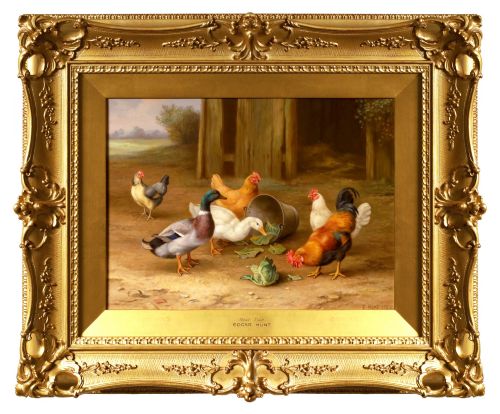
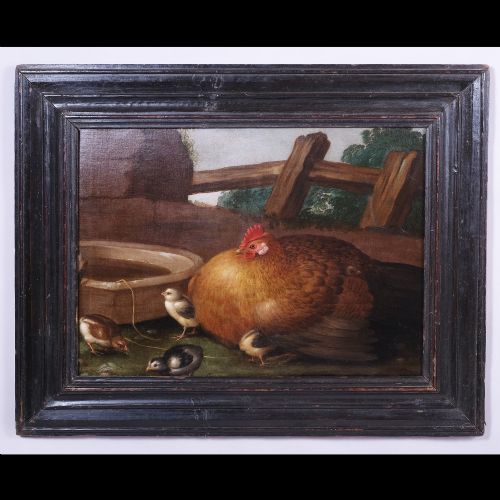

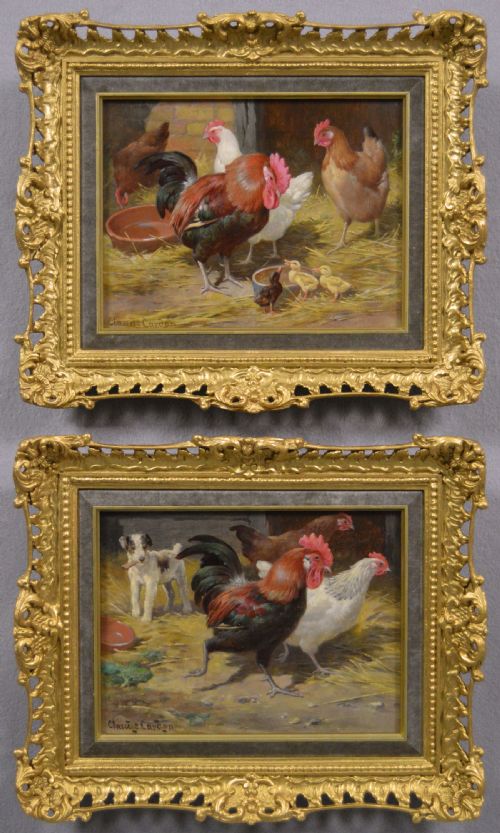


Farmyard Scene Oil Painting
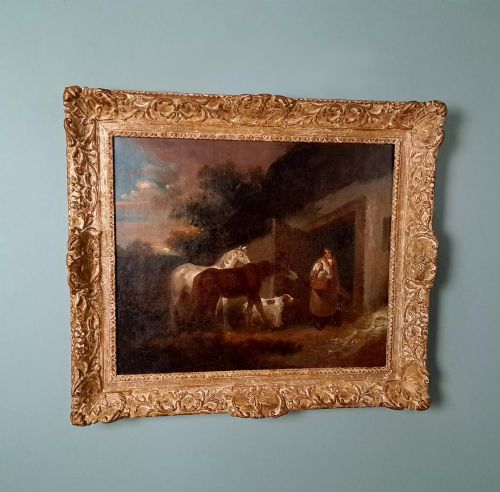
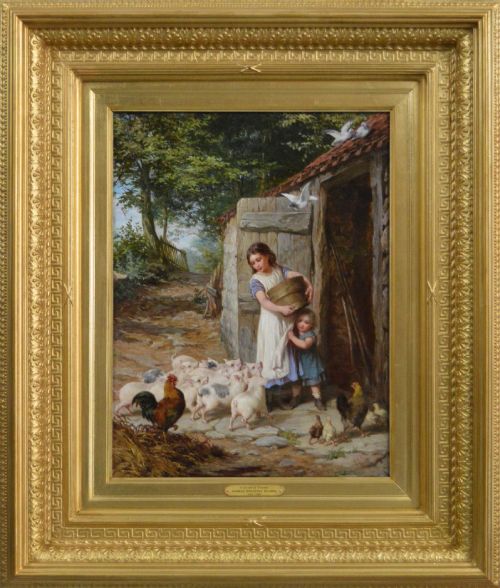
A farmyard scene oil painting captures the quiet rhythm of rural life through horses, poultry, and rustic barns.
Farmyard Scene Oil Painting
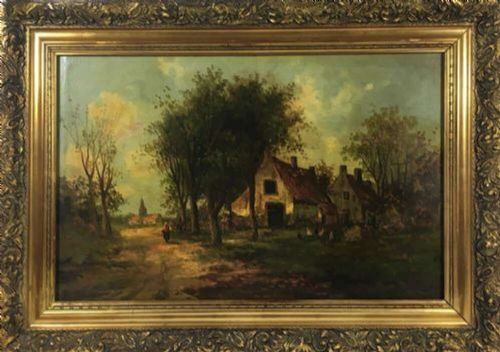
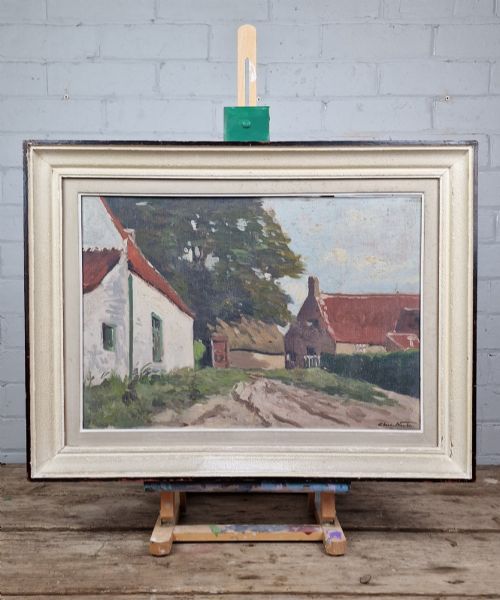
A farmyard scene oil painting depicts rural life, domestic animals, and agricultural architecture across centuries of British and European art. These works range from tightly focused studies of poultry and livestock to wide pastoral landscapes featuring shire horses and labourers.
Buyers will most frequently encounter nineteenth-century canvases and board paintings, often reflecting Victorian pastoral styles or animalier traditions. These pieces frequently feature detailed studies of horses, pigs, and chickens set against barns and farm buildings.
Materials and Construction
Painters applied oil paint predominantly to stretched canvas or wooden boards, occasionally utilising prepared panels. Pigments were layered to build depth in animal coats, rustic timber, and atmospheric skies.
Finished works were typically housed in wood or giltwood frames, which protected the edges of the canvas and complemented the domestic display of the artwork.
Materials recorded across the archive include oil on canvas, wood panels, and gold leaf frames.
Distinctions in Quality
The standard of a farmyard scene oil painting depends heavily on the anatomical accuracy of the animals and the handling of natural light. Superior works demonstrate careful observation in the rendering of feathers, fur, and the textures of weathered wood and stone.
Compositional balance also separates accomplished compositions from more formulaic student or follower pieces. Stronger examples integrate figures, livestock, and landscape into a coherent spatial narrative rather than placing isolated studies side by side.
William Joseph Shayer Senior·Edgar Hunt·John Frederick Herring Jnr·Julius Caesar Ibbetson·Owen Bowen
The Farmyard Scene Oil Painting Glossary
- Animalier
- An artist who specialises in the realistic depiction of animals. These painters focus closely on the anatomy and behaviour of livestock and working horses.
- Barbizon School
- A nineteenth-century French movement focused on naturalistic landscape painting. Artists associated with this style worked outdoors to capture realistic rural atmospheres.
- Oil on Board
- A painting executed on a rigid wooden or composition board rather than woven fabric. This support provides a firm surface that resists sagging.
- Giltwood
- Wood carved and coated with gold leaf or a metallic substitute. It is commonly found on traditional picture frames from the eighteenth and nineteenth centuries.
Farmyard Scene Oil Painting: Frequently Asked Questions
What periods do these paintings span?
The available selection spans from the eighteenth century through the Victorian era into the early twentieth century.
Most surviving examples date from the nineteenth century, reflecting the period's strong appetite for pastoral and animalier subjects.
What animals usually appear in these works?
Common subjects include shire horses, cart horses, pigs, goats, cattle, and various poultry such as cockerels, hens, and ducks.
Specific birds and livestock often take centre stage in detailed farmyard studies by artists like Edgar Hunt and Claude Cardon.
Are these paintings executed on canvas?
Many works utilise oil on canvas as a primary support, while others are painted directly onto wooden boards or panels.
Canvas works typically show historical stretching and framing methods appropriate to their respective nineteenth or early twentieth-century origins.
How do I identify the style?
Styles range from Victorian realism and British pastoralism to continental movements like the Barbizon School and Post-Impressionism.
Brushwork and lighting provide clues, with academic realists favouring tight detail and impressionistic painters using looser, more expressive strokes.