
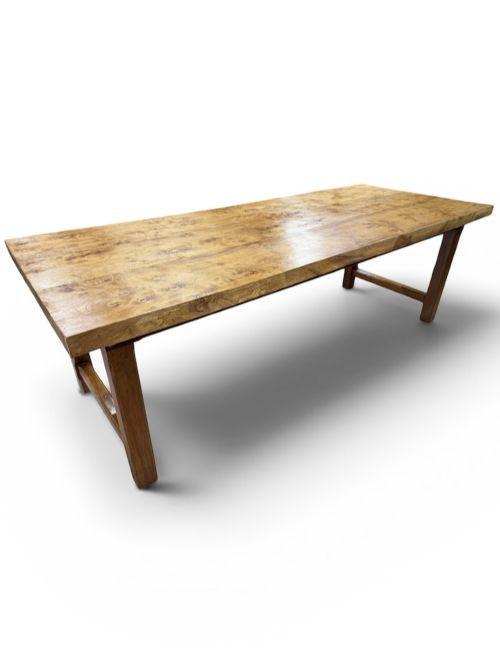
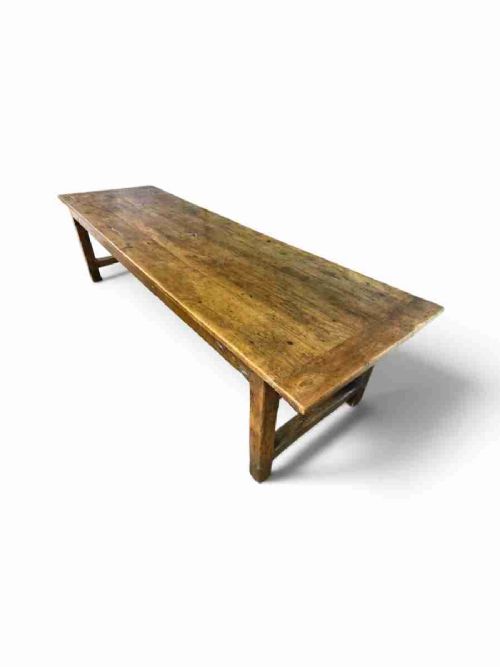
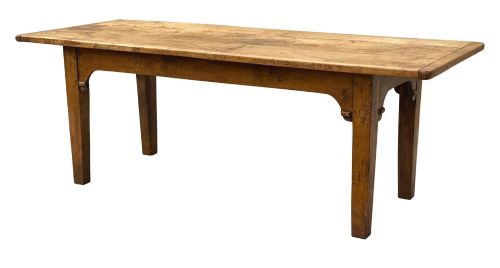
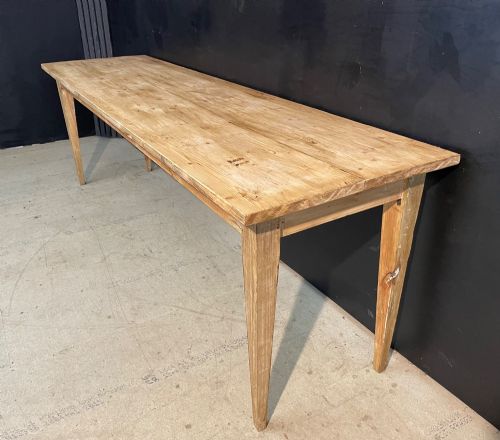
Farmhouse Refectory Dining Table
A farmhouse refectory dining table brings honest scale and centuries of utility into a modern room.
Farmhouse Refectory Dining Table
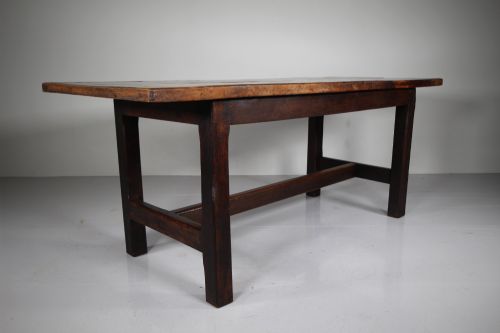
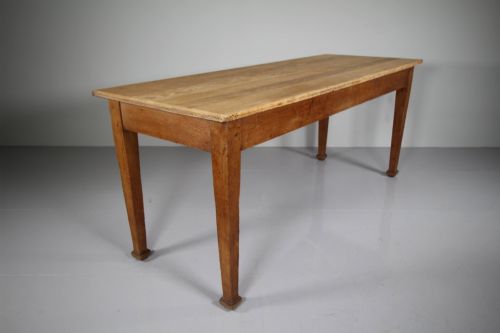
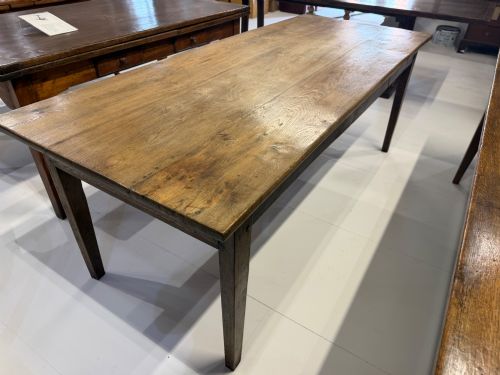
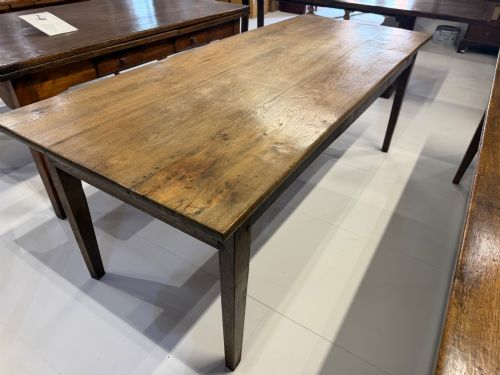
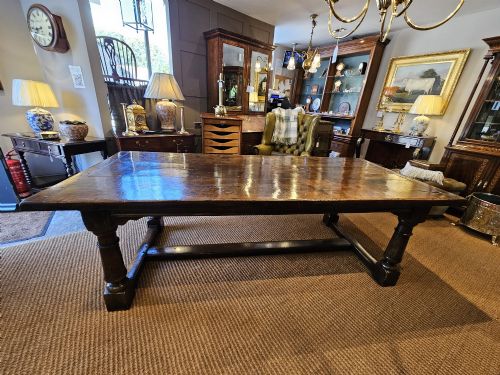
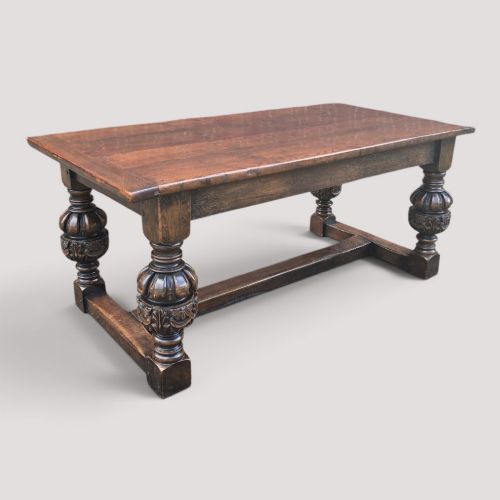
A farmhouse refectory dining table combines the long, narrow proportions of a monastic dining board with the robust practicality of country furniture. When you search for this phrase, you find heavy, functional surfaces built to seat large gatherings of people for daily meals.
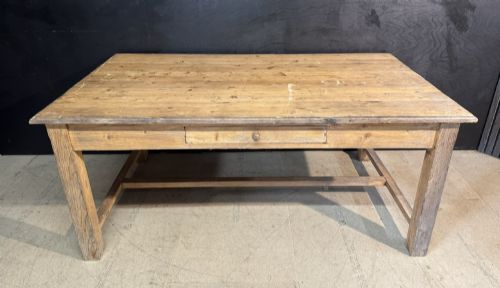
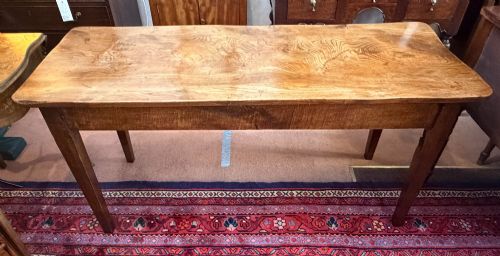
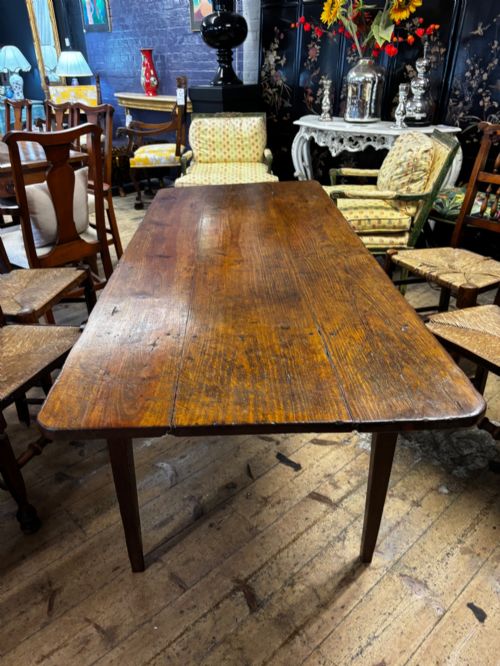
The pieces listed here span several centuries of domestic and institutional use, originating from British, French and wider European workshops. The version you are most likely to meet on this page is a nineteenth-century oak or pine example featuring simple turned or tapered legs and a generous top.
These tables served as the literal and social hearth of rural homes, schools and abbeys alike. Their enduring appeal lies in plain construction and surfaces marked by decades of honest service.
How They Were Made
Makers relied on native hardwoods and softwoods such as oak, pine, elm and fruitwoods, selecting timber for strength and local availability. Planks were joined using traditional pegged mortise and tenon joints to withstand the heavy daily strain of family life.
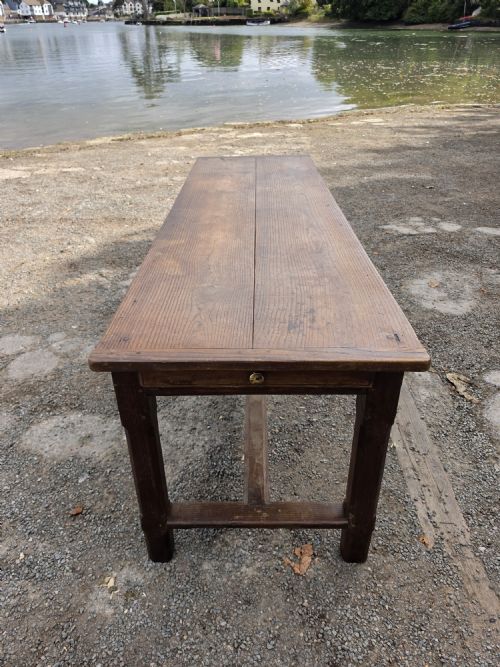
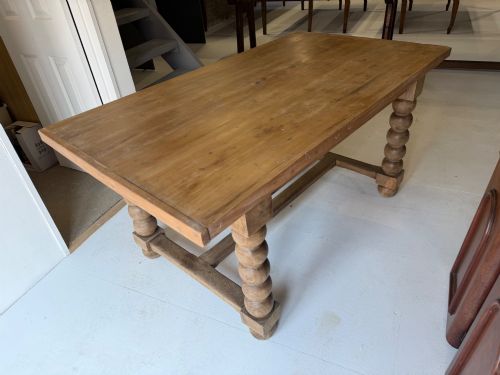
Table tops were constructed from solid boards, sometimes utilising two or three wide planks secured with sturdy cleats or breadboard ends to prevent warping. Legs were turned on a lathe or squared by hand, then braced with stretcher rails near the floor for added stability.
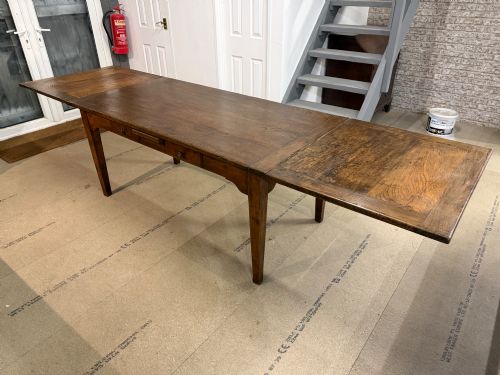
Several examples include built-in drawers underneath the top for storing small kitchen implements.
What Varies in Quality
The character of the timber dictates much of the distinction between examples, with quarter-sawn oak displaying tight medullary rays and older pine exhibiting a deep, accumulated patina. Superior pieces retain their original structural framing and unclipped height, while lesser or heavily modified items have suffered from shortened legs or replaced undercarriages.
Joinery execution separates utilitarian workshop production from finer cabinetmaking. Master carpenters integrated tight, clean joints and balanced proportions even in rustic furniture intended for hard labour.
The Farmhouse Refectory Dining Table Glossary
- Refectory table
- A long, narrow dining table historically used in monasteries and large communal halls. These forms prioritise length to accommodate numerous diners along both sides.
- Breadboard end
- A transverse piece of wood attached to the ends of a tabletop to keep the main planks flat. This technique accommodates seasonal wood expansion without splitting the surface.
- Scrub top
- A bare wooden tabletop designed to be vigorously scoured clean with water and sand. Such surfaces display a pale, smooth grain from generations of washing.
- Stretcher
- A horizontal wooden rail connecting the legs of a table for structural support. These braces often double as footrests on country dining furniture.
- Patina
- The deep sheen and surface alteration developed on wood over years of handling, polishing and exposure to light. This quality cannot be replicated by artificial ageing.
Farmhouse Refectory Dining Table: Frequently Asked Questions
How many people do these tables seat?
Most examples comfortably seat between six and twelve diners, depending on the length of the boards. The absence of bulky corner legs on refectory designs allows chairs to tuck in along the entire span.
Buyers should measure their dining space carefully, remembering to leave adequate clearance around the perimeter for pulling out seating.
Can I use an antique table every day?
These surfaces were engineered for heavy domestic labour and daily communal dining. Their sturdy construction handles regular family meals without trouble.
Routine maintenance involves using mats for hot dishes and wiping up spills promptly to protect the historic finish.
How do I tell oak from pine pieces?
Oak is a heavy hardwood displaying prominent grain patterns and rich brown tones that darken with age. Pine is a lighter softwood with a softer texture and noticeable knots.
Pine versions often carry painted finishes or lighter scrubbed tops, whereas oak examples tend to show deep wax patination.
What does a French provincial style mean?
This descriptor indicates rural furniture originating from French provinces outside Paris. These items often utilise regional timbers like fruitwood, cherry or local oak.
The aesthetic leans towards gentle curves, subtle carving and warmer wood tones compared to austere British equivalents.