
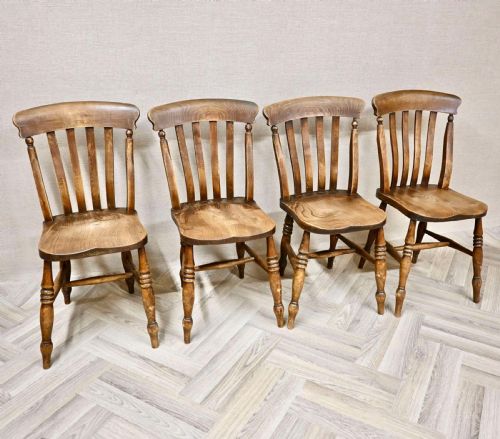
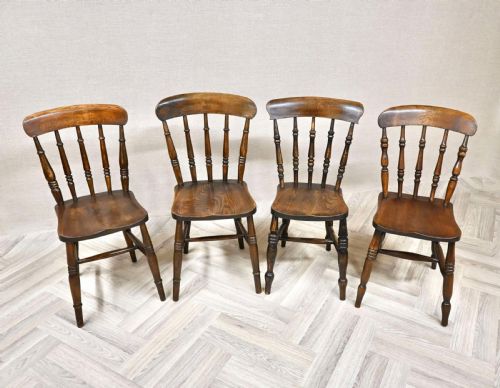
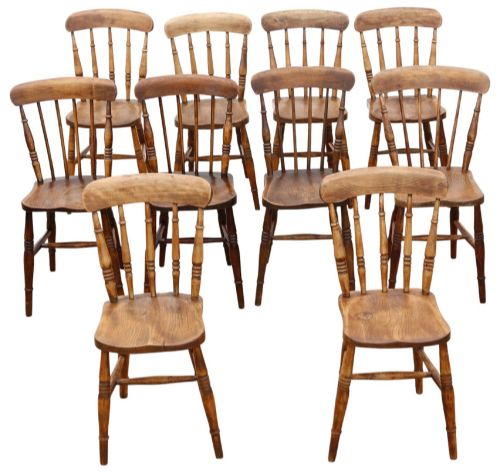
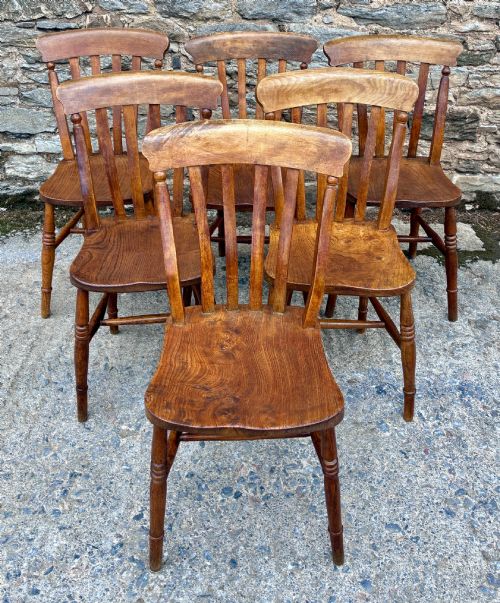
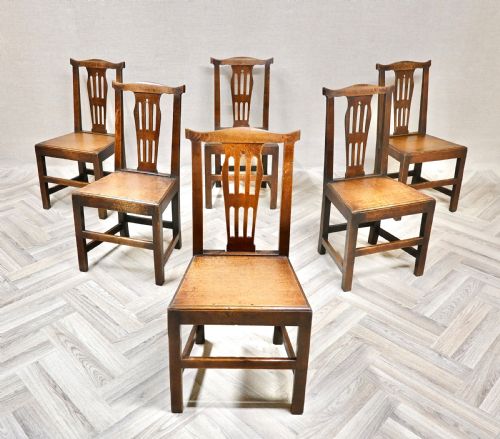
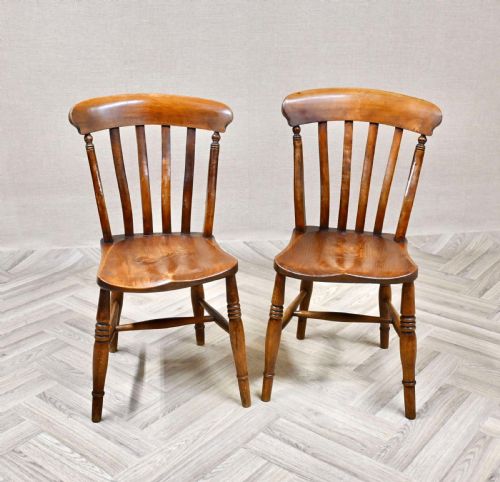
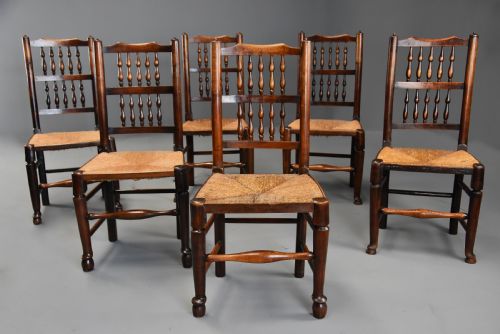
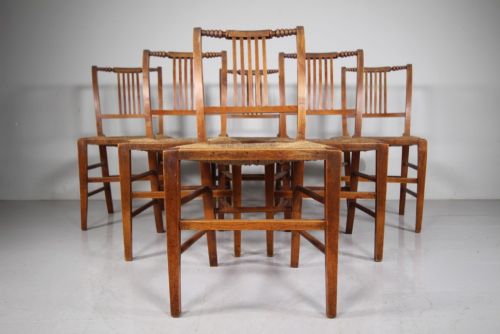
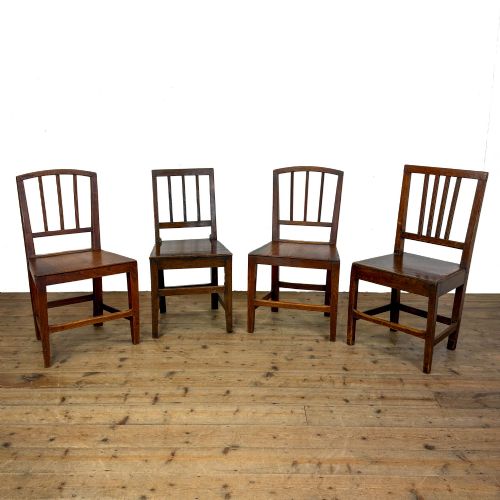
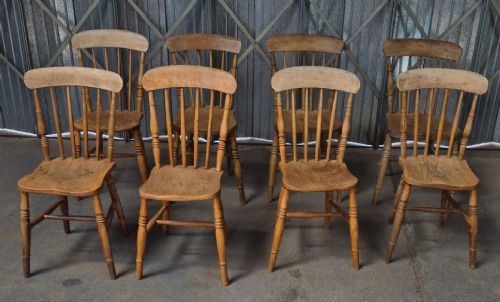
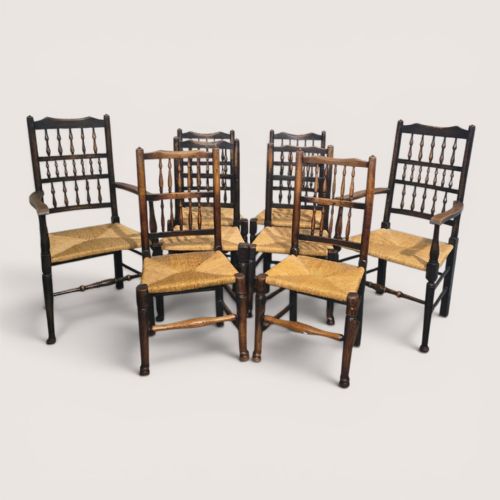
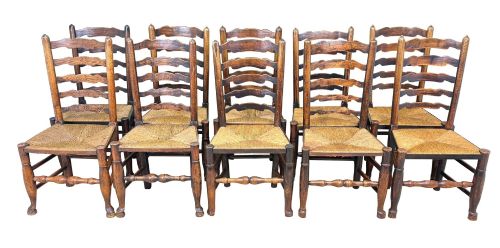
Farmhouse Kitchen Side Chairs
Farmhouse kitchen side chairs are honest country seating built for daily utility, most frequently found here in nineteenth century elm and beech.
Farmhouse Kitchen Side Chairs
When you search for farmhouse kitchen side chairs, you encounter robust wooden seating originating from country houses, cottages and vernacular workshops. These pieces span periods from the Georgian era through the Victorian years and into the early twentieth century.
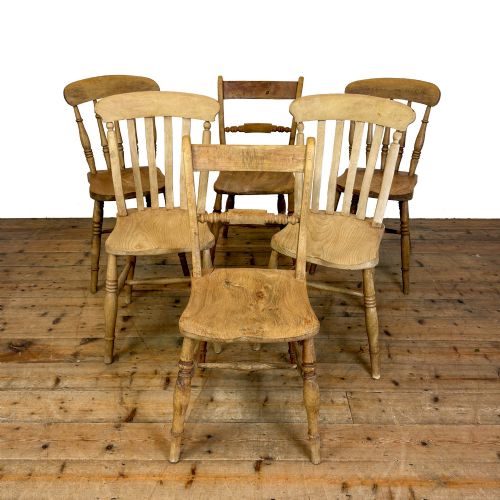
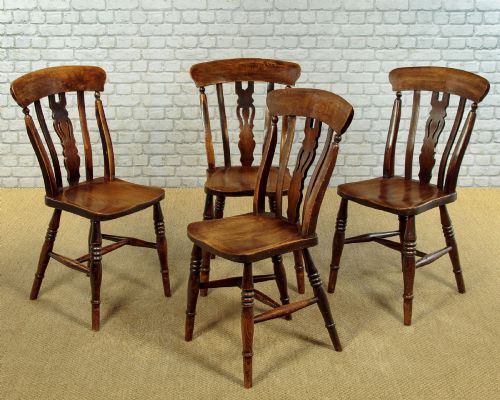
The most common examples on this page are sets of dining chairs fashioned in traditional styles such as Windsor, ladder back, lathe back and spindle back forms. They range from pairs and quartets up to large matching or harlequin sets suited for communal tables.
How they were made
Makers relied upon native hardwoods like oak, elm, ash, beech and fruitwood, often pairing bent or turned components with solid timber seats. Elm provided durable, split resistant seats, whilst ash and beech offered flexible strength for spindles and ladder backs.
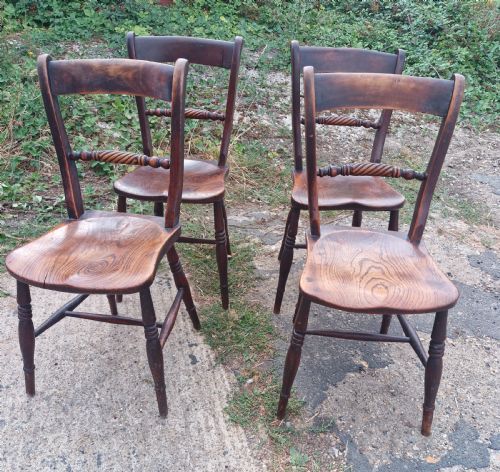
Construction techniques involved traditional joinery, including turned legs fitted into grooved seats and double stretchers added for extra rigidity under heavy daily use.
Listings feature traditional country seating spanning the Georgian period, the Victorian era, and early twentieth century decades up to nineteen thirty.
What varies in quality
Quality rests in the integrity of the timber, the depth of the natural patina accumulated through generations of use, and the harmony of matched sets. Early examples often display superior turning detail and deeper surface character.
Harlequin sets vary depending on how closely individual chairs align in height, timber grain and regional vernacular style, whereas uniform sets from single workshops maintain strict symmetry in design.
Worksop
The Farmhouse Kitchen Side Chairs Glossary
- Harlequin set
- A collection of dining chairs that share similar proportions, materials or styles whilst varying in minor details, often assembled together over time.
- Spindle back
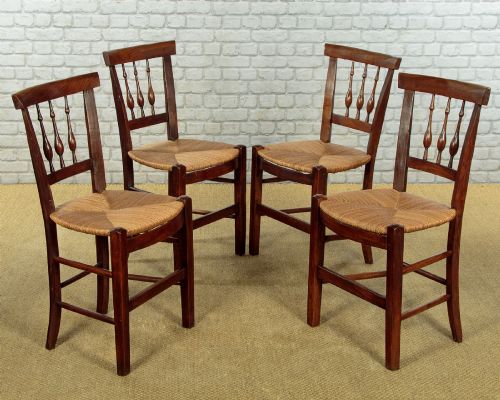
- A chair design featuring a series of thin vertical turned wooden rods supporting the backrest, common in country vernacular seating.
- Double stretcher
- An extra pair of horizontal rails connecting the legs near the floor to reinforce the frame of a wooden chair.
- Rush seat
- A woven seating surface made from dried marsh plants, traditionally used in country dining chairs for lightweight flexibility.
- Vernacular style
- Furniture built by local tradesmen using regional traditions and readily available native materials rather than adhering to formal high style pattern books.
Farmhouse Kitchen Side Chairs: Frequently Asked Questions
What is a harlequin set of chairs?
A harlequin set is a group of dining chairs that match in general period, timber and style but differ slightly in individual details. These collections were often gathered together over many years for large farmhouse tables.
They offer a gathered, authentic look rather than the rigid uniformity of a factory produced suite, whilst remaining functionally suited for daily dining.
How do I identify a Windsor chair?
A Windsor chair is characterised by a solid wooden seat into which the legs, back spindles and bow or comb rail are separately fitted. They often feature carved saddle seats and steam bent backs.
Originating in rural workshops, they utilise sturdy timbers like elm for the seat and ash or beech for the bent components.
Are rush seats durable for daily use?
Rush seats woven from natural dried marsh plants provide a resilient and flexible surface that withstands regular sitting. They have been utilised in country seating for centuries due to their practical comfort.
To maintain them, keep them away from excessive moisture and damp environments to prevent the natural fibres from weakening.
How can I tell a Victorian chair from a Georgian one?
Georgian country chairs tend to display simpler, heavier structural proportions and earlier regional ladder back or stick back designs. Victorian examples often incorporate steam bent Windsor forms or refined Thames Valley turnings.
Examining the tool marks, timber shrinkage and surface patina helps determine the approximate period of manufacture.