
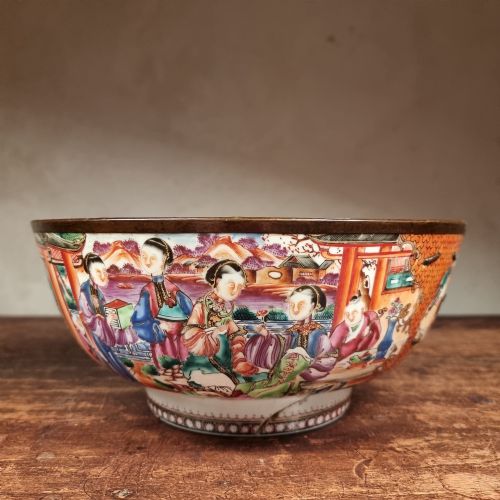
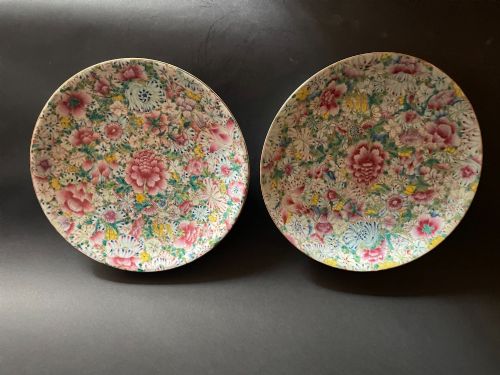
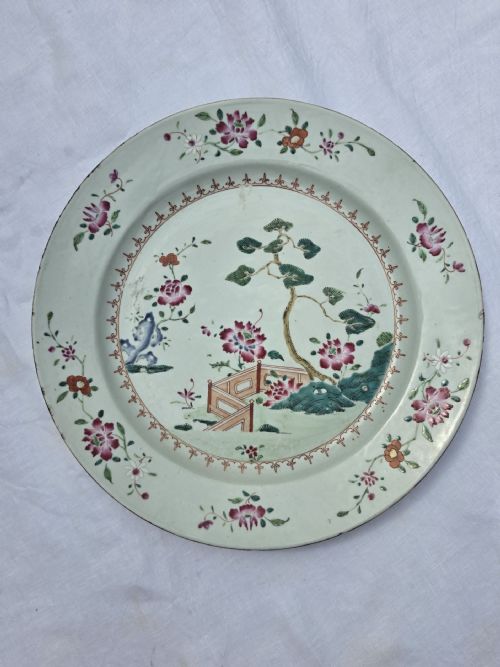


Famille Rose Porcelain Dish
A famille rose porcelain dish brings vibrant enamel palettes and intricate hand-painted detail from the eighteenth and nineteenth centuries into any interior.
Famille Rose Porcelain Dish
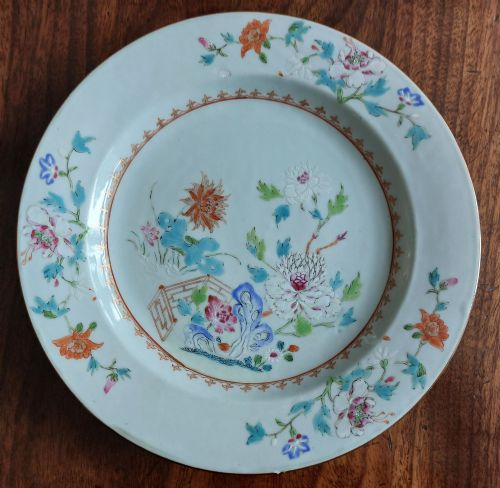
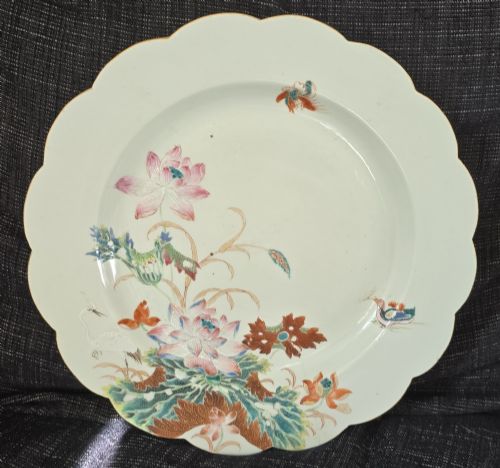
A famille rose porcelain dish encompasses plates, chargers, saucers, and trays decorated with the distinctive pink-enamelled palette that emerged during the Qing dynasty. These items span periods from the eighteenth century through the nineteenth century, including Chinese Export pieces made for Western markets and items bearing Qianlong periods or marks.
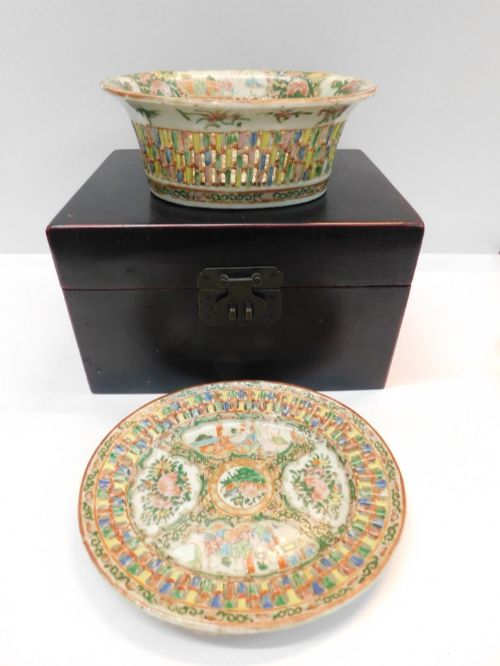
Buyers most frequently encounter nineteenth-century Canton productions and eighteenth-century export items across these listings. Forms range from simple circular plates and octagonal dishes to reticulated chestnut baskets, trefoil trays, and pedestals.
Originating primarily from Chinese kilns, these objects also connect to later Japanese Meiji and Taisho interpretations such as Kutani chargers. The diverse forms reflect both utilitarian dining uses and purely decorative display functions for domestic spaces.
Materials and Technique
Potters shaped these objects from hard-paste porcelain, forming plates, bowls, and shaped trays before applying base glazes. Artisans then utilised overglaze enamel techniques to build up intricate floral, bird, and figural scenes.
Many examples incorporate gold leaf, gilt, or gilding to highlight rims and decorative borders. Enamels were painted by hand directly onto the fired porcelain surface, often requiring secondary kiln firings to set the colours.
Listings feature hard-paste porcelain items decorated with overglaze enamel and gilt across eighteenth-century and nineteenth-century periods.
Assessing Quality
Quality in a famille rose porcelain dish rests upon the precision and complexity of the hand-painted brushwork. Superior examples display crisp detail in the floral motifs, birds, and Mandarin figures without blurring in the enamel layers.
The crispness of moulded elements, such as reticulated basketwork or lobbed edges, distinguishes finer output. Uniformity in the application of gilding and the clarity of the underlying porcelain body further separate standard wares from exceptional pieces.
The Famille Rose Porcelain Dish Glossary
- Famille rose
- A ceramic palette defined by the use of an opaque pink enamel derived from colloidal gold, introduced during the Qing dynasty. This palette allowed painters to achieve delicate tonal gradations in floral and figural compositions.
- Chinese Export
- Porcelain manufactured in China specifically for trade and export to Western markets from the seventeenth through the nineteenth centuries. These items often combined traditional Chinese forms and motifs with shapes requested by European buyers.
- Canton
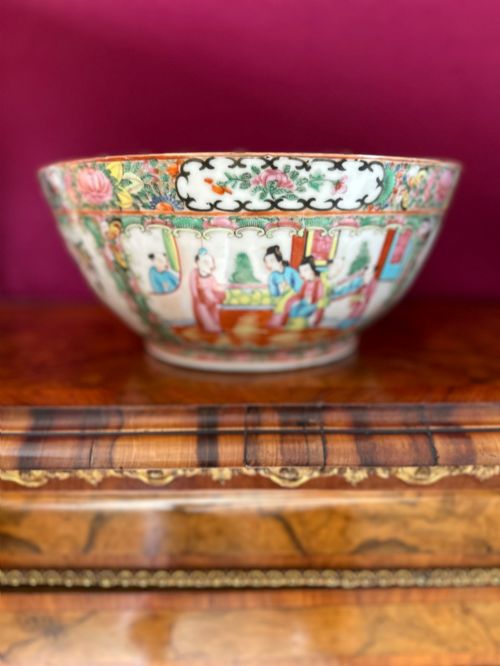
- A major trading hub in southern China associated with prolific nineteenth-century porcelain production featuring dense enamel decoration. Pieces from this region often display vibrant panels of figures surrounded by birds and flowers.
- Qianlong
- The era of the Qianlong Emperor lasting from seventeen thirty-six to seventeen ninety-five, representing a peak in Chinese ceramic artistry. Wares from this period are celebrated for technical refinement and complex polychrome schemes.
- Reticulated
- Describes ceramic work featuring pierced or openwork lattice patterns created by cutting through the clay before firing. This technique appears on specialised serving vessels like chestnut baskets and stands.
Famille Rose Porcelain Dish: Frequently Asked Questions
How do I date a famille rose dish?
Dating relies upon stylistic markers, reign marks, and the character of the porcelain body. Eighteenth-century pieces often exhibit finer potting and Qianlong period traits, while nineteenth-century Canton items display denser enamel applications.
Changes in palette brightness and motif complexity help differentiate between early export wares and later Victorian-era imports.
Were these dishes meant for food?
Many eighteenth-century export plates and services were produced for dining tables, handling hot food and daily service. Over time, frequent use caused minor wear to the delicate overglaze enamels and gilding.
Nineteenth-century decorative bowls and chargers were increasingly intended for display on walls or furniture rather than utilitarian dining.
What is the difference between Canton and Qianlong pieces?
Qianlong pieces date from the eighteenth-century imperial golden age and generally feature controlled, meticulous painting styles. Canton wares belong mainly to the nineteenth century and typically show busier, vibrant panels filled with figures and gilt highlights.
The porcelain body and enamel texture also shift between these distinct manufacturing periods.
How should I display antique porcelain safely?
Display these items using stable plate stands or secure wall mountings designed specifically for heavy ceramic chargers. Keep them away from direct sunlight to protect the stability of the overglaze enamels.
Handle pieces only by the rim or base, avoiding pressure on reticulated or pierced sections.