
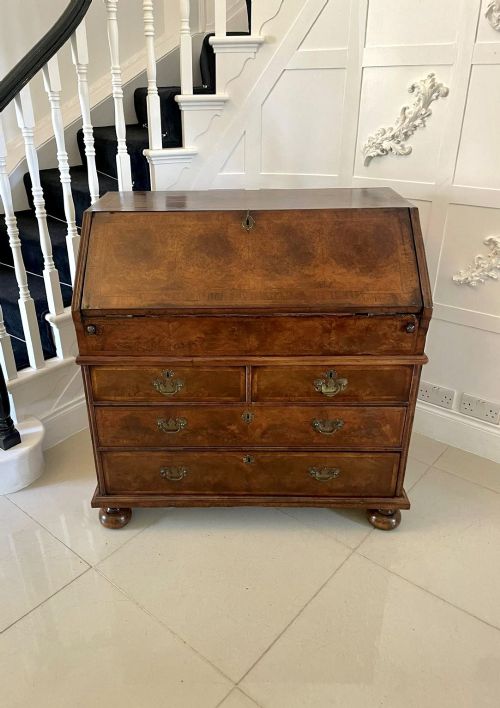
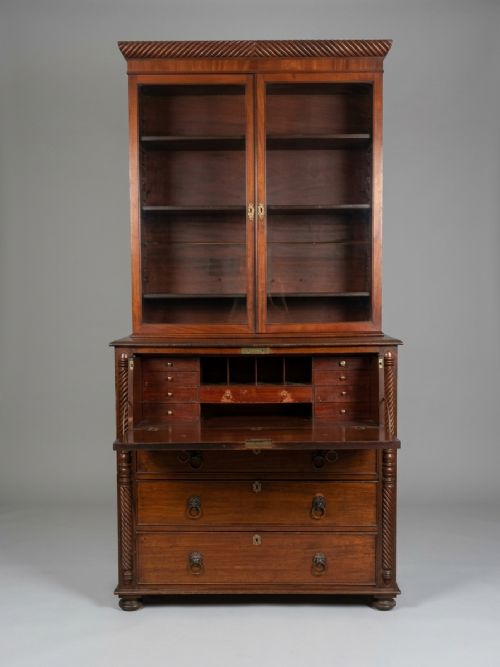
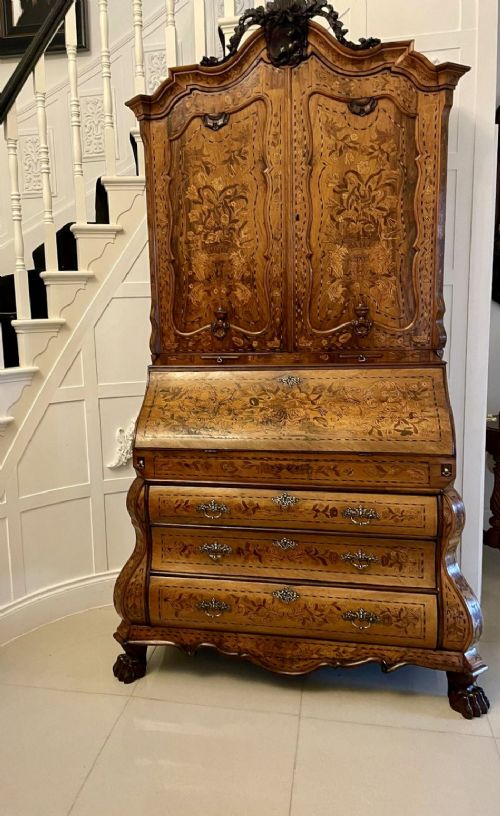
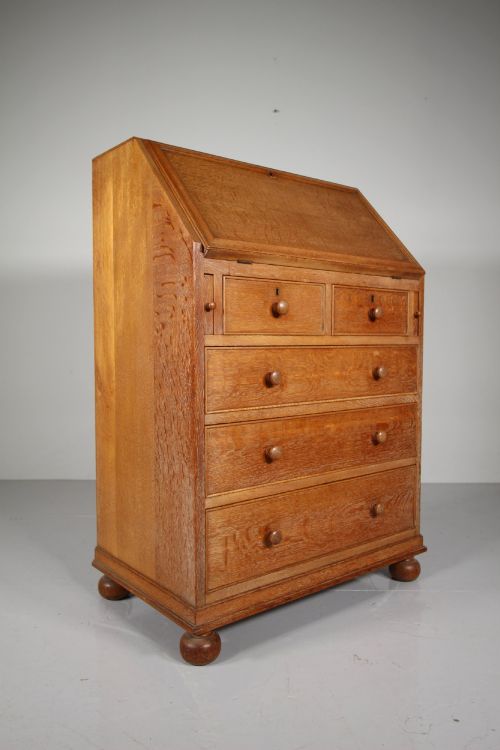


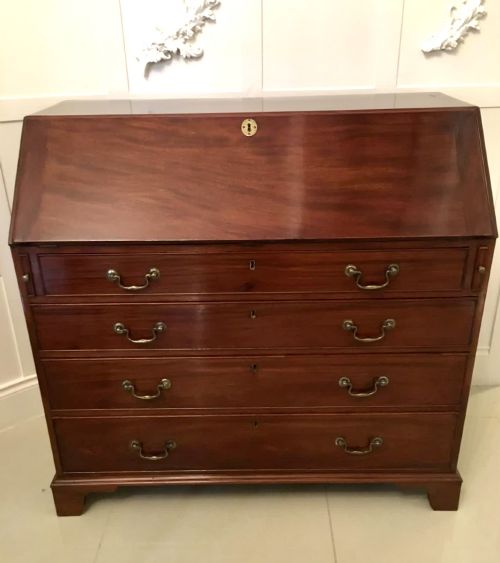
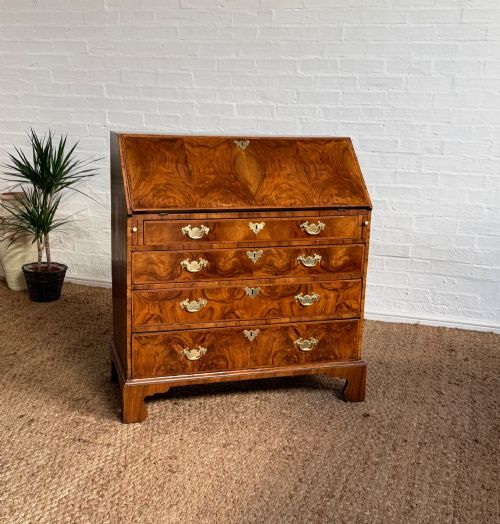
Fall Front Bureau Chest
A fall front bureau chest combines a practical writing slope with deep drawers, offering a traditional workspace that hides away cleanly.
Fall Front Bureau Chest
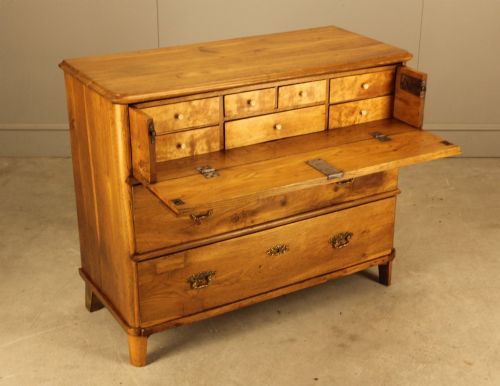
A fall front bureau chest provides a concealed writing surface that hinges downward from a vertical plane, resting horizontally for correspondence and ledger work. Below this hinged flap lie several graduated drawers for storage.
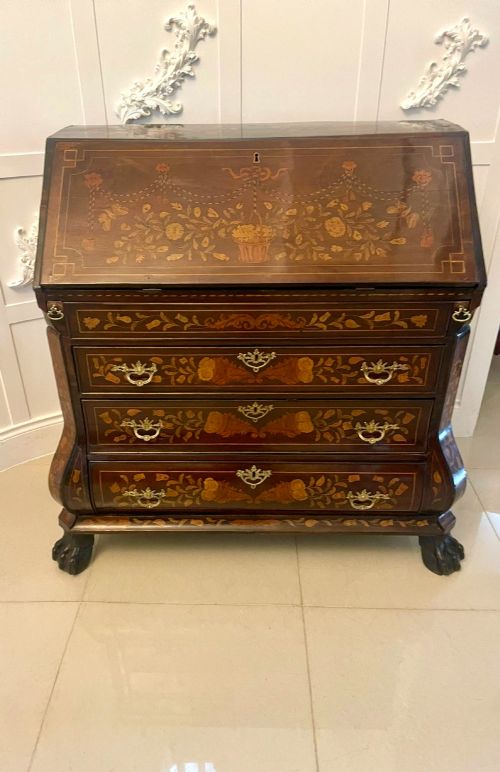
Most examples found here date from the eighteenth and nineteenth centuries, with significant representation from the Georgian period alongside later revivals. Woods such as walnut and mahogany dominate the selection, often enriched with marquetry or parquetry.
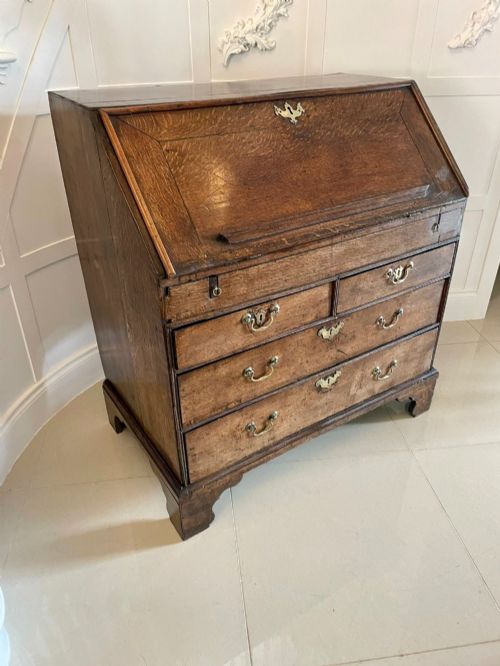
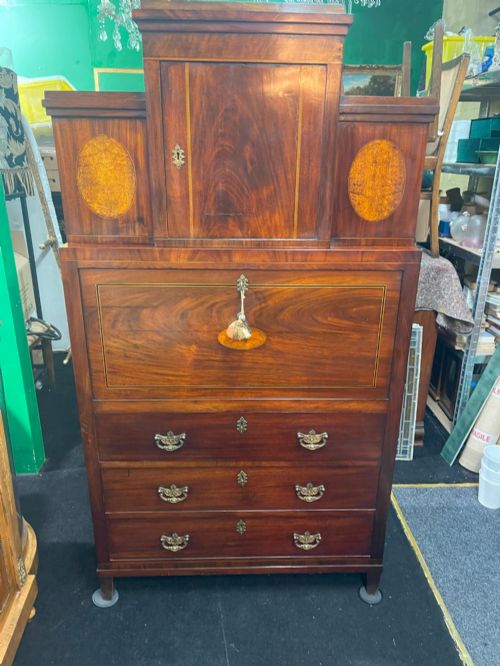
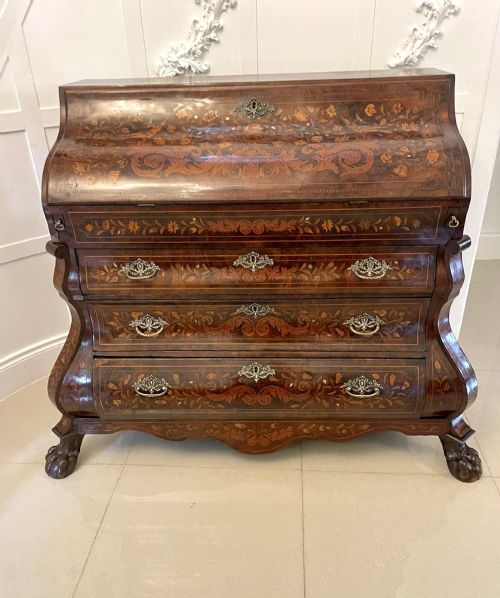
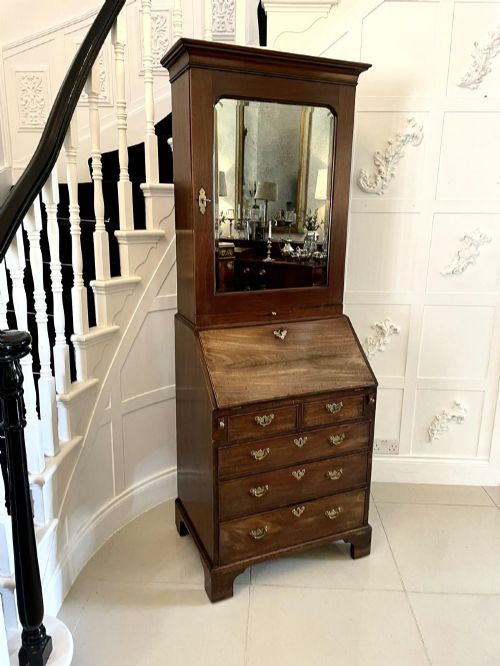
Formations range from straightforward oak and mahogany writing desks to tall bureau bookcases topped with glazed shelving. Collectors also encounter bombe shapes and writing cabinets featuring fitted interior compartments.
Materials and Construction
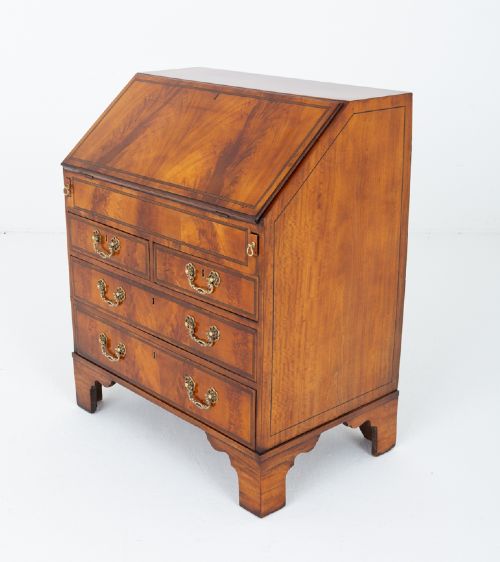
Cabinet makers utilised dense native and imported timbers, notably walnut, mahogany, and oak, often laid over secondary woods as veneers. Burr walnut and figured mahogany were chosen specifically for their decorative grain patterns.
Marquetry and parquetry techniques introduced intricate floral designs and geometric patterns using contrasting woods. Brass handles, escutcheons, and original ironwork provided functional strength and visual contrast to the polished timber surfaces.
Listings span multiple centuries, incorporating 17th-century William and Mary designs, 18th-century Georgian walnut and mahogany forms, and later 20th-century interpretations.
Judging Quality and Execution
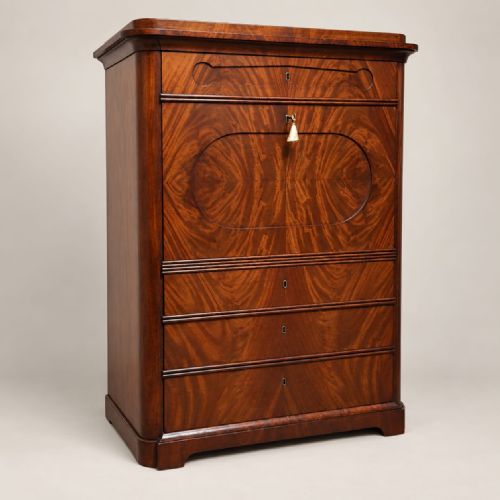
Quality rests upon the selection of timber veneers and the precision of the grain matching across the fall front and drawer fronts. Superior pieces display continuous grain patterns that flow seamlessly when the desk flap is closed.
The interior fitments dictate the grade of the piece, with complex secret drawers, pigeonholes, and leather writing surfaces marking out finer workshops. Structural integrity in the fall front hinges and drawer dovetailing determines long-term utility.
The Fall Front Bureau Chest Glossary
- Fall front
- A hinged writing flap that pulls down to create a horizontal desk surface. When closed, it conceals the inner compartments and keeps writing materials out of sight.
- Escritoire
- An alternative term for a writing cabinet or bureau. These tall pieces often feature a drop-down writing surface enclosed by a larger vertical cabinet door or flap.
- Bombe
- A swelling, outward-curved contour found on the front and sides of certain continental European furniture. This curved profile requires advanced woodworking skill to execute properly.
- Marquetry
- The art of applying decorative veneer pieces in wood, metal, or shell to form pictorial or floral patterns. Craftsmen carefully cut these thin sections to fit flush across the surface.
- Secretaire
- A specialised desk or cabinet designed for writing, frequently incorporating a fitted interior with small drawers and pigeonholes. It often forms the upper section of a tall bookcase or chest.
Fall Front Bureau Chest: Frequently Asked Questions
What is a fall front bureau chest?
A fall front bureau chest is a piece of furniture featuring a hinged writing flap that opens forward to create a flat desk surface. Below this flap are stacked drawers for storing household papers and personal items.
These pieces combine the utility of a desk with the storage capacity of a chest of drawers. They were designed for private correspondence and household accounts in period homes.
How do I date an antique bureau?
Dating relies on examining the construction methods, timber choices, and hardware styles. Early pieces often feature walnut with herringbone inlay and original ironwork, while later Georgian examples frequently utilise mahogany with brass handles.
Secondary woods inside the drawers and the style of the dovetailing also help establish the period. Consulting the specific wood types and decorative motifs provides a reliable timeline for manufacture.
Where were these pieces used in the home?
Historically, these desks stood in private parlours, libraries, or bedrooms where correspondence took place. Their enclosed writing surfaces kept sensitive papers private and tidy when visitors arrived.
Today, they function well in modern home offices or living rooms. The lockable fall front allows users to shut away laptops and paperwork at the end of the working day.
How should I care for antique walnut?
Antique walnut requires protection from direct sunlight and extreme humidity changes to prevent the timber veneers from drying out or lifting. Regular dusting with a soft, dry cloth maintains the polished finish.
Applying a quality beeswax periodically nourishes the wood and enhances its natural grain. Avoid placing hot or wet items directly on the writing surface.