

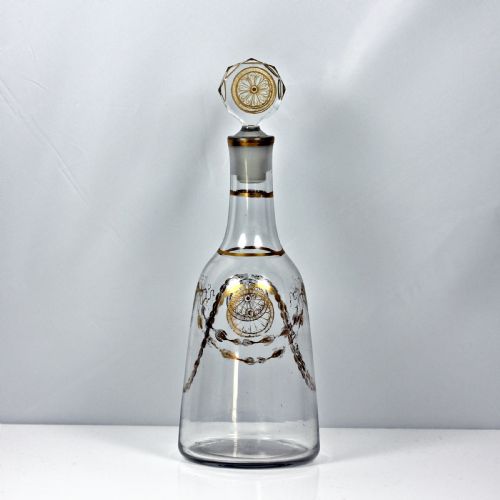


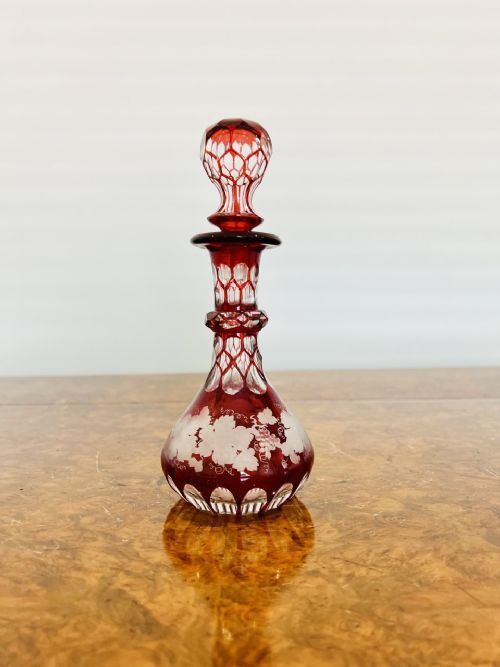


Faceted Glass Stopper Bottle
A faceted glass stopper bottle brings sparkling refraction to a dressing table or bar, offering tactile weight and brilliant cutting.
Faceted Glass Stopper Bottle
A faceted glass stopper bottle encompasses everything from sturdy spirit and whisky decanters to delicate perfume and scent bottles intended for the dressing room. Buyers searching for a faceted glass stopper bottle encounter pieces spanning the Georgian, Victorian, and Edwardian eras, alongside later Art Deco designs.
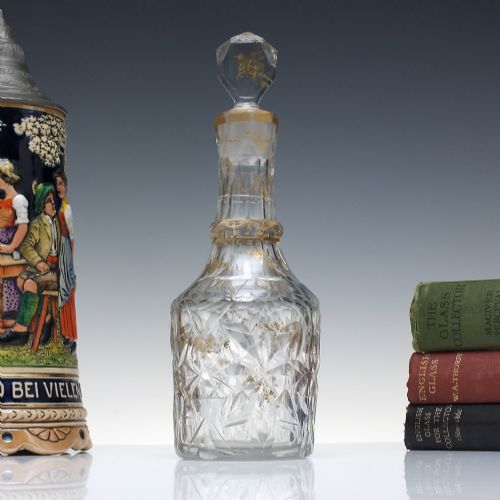
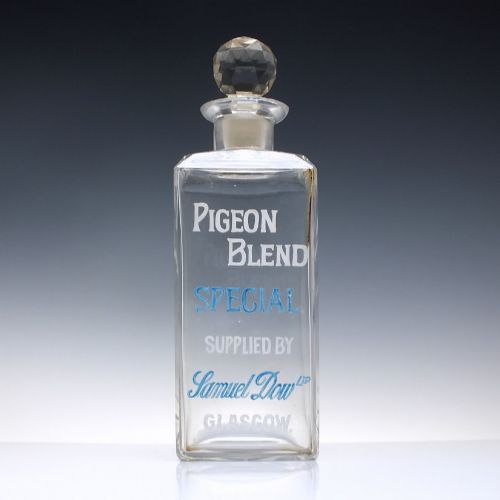
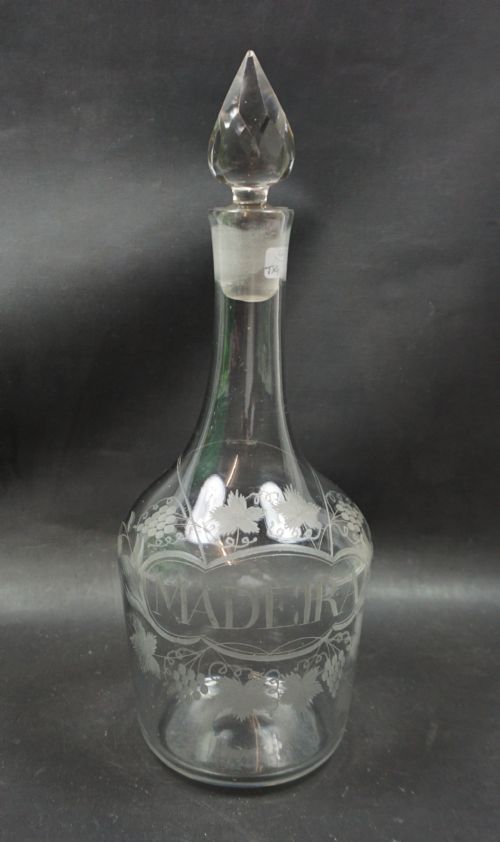
The selection on this page relies heavily on nineteenth-century and early twentieth-century examples, typically shaped as shoulder decanters, bell-shaped vessels, or sugarloaf profiles. Many incorporate matching stoppers carefully cut to catch the light from every angle.
Assessing the craftsmanship
Quality rests in the crispness of the cutting and the weight of the material, where heavier lead crystal yields sharper, more defined edges on each facet. Superior examples display symmetrical alignment between the body pattern and the matching stopper.
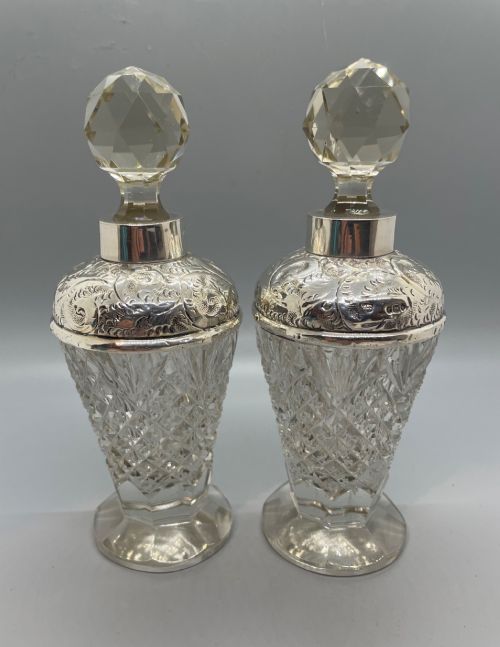
The integration of precious metals, such as hallmarked sterling silver collars or specialised enamel work by notable ateliers, elevates a piece from standard utilitarian barware to fine decorative art.
James Giles·Karl Palda·Betjemann Brothers·Hukin and Heath·Sabino
The Faceted Glass Stopper Bottle Glossary
- Lead crystal
- Glass containing a significant percentage of lead oxide, increasing density, clarity, and the refractive index that creates rainbow sparkles.
- Stopper
- A glass or metal plug designed to seal the neck of the bottle, frequently faceted en suite with the main body.
- Collar
- A metal band, often sterling silver, fitted around the neck of the bottle to reinforce the opening or secure a locking mechanism.
- Overlay
- A layer of coloured glass fused over a clear glass base before cutting, revealing the contrasting underlayer through the faceted channels.
- Sugarloaf
- A conical bottle shape reminiscent of refined sugar loaves produced during the eighteenth and nineteenth centuries.
Faceted Glass Stopper Bottle: Frequently Asked Questions
How do I clean a cloudy bottle?
Cloudiness inside old bottles usually stems from mineral deposits left by evaporated liquids over decades.
Gentle soaking with warm water and specialised cleaning beads works best, avoiding harsh abrasives that scratch the interior glass.
Are the stoppers original to the bottles?
Original stoppers were ground to fit a specific neck during production, making their individual angles and wear patterns match the vessel.
Checking that the facet alignment continues seamlessly from the shoulder onto the stopper helps confirm authenticity.
How were these bottles used historically?
Larger faceted vessels served spirits, whisky, and fortified wines at the dining table or sideboard. Smaller versions held perfumes and volatile scents on private dressing tables.
Locking variants provided security for expensive spirits or personal elixirs in communal households.
How do I date a cut glass piece?
Dating relies on stylistic shifts, pontil mark characteristics, and the integration of materials like sterling silver hallmarks or specific enamel techniques.
Georgian and Victorian pieces generally show deeper, hand-polished facets compared to later machine-finished twentieth-century production.