


Extra Long Runner
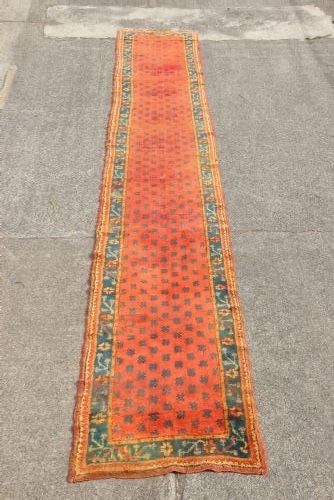
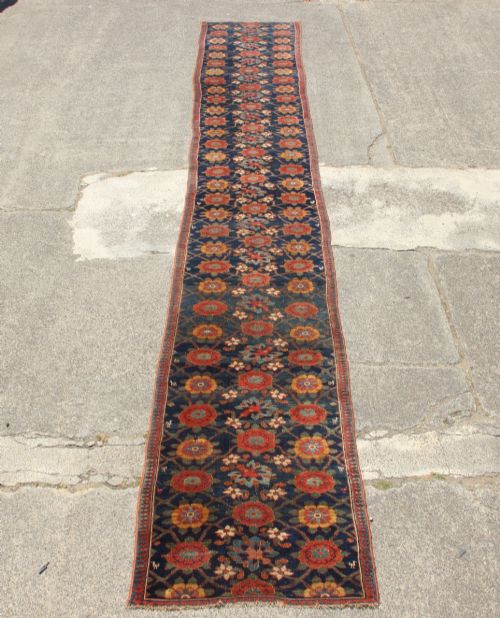
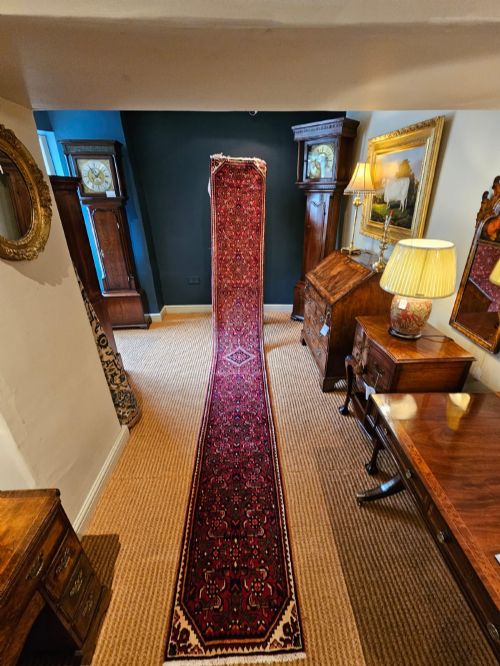
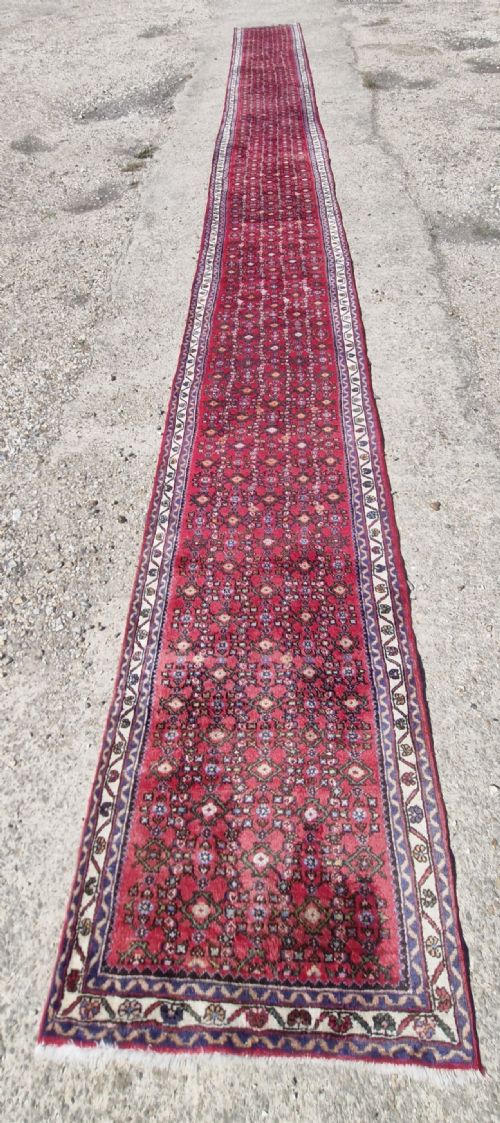
An extra long runner spans corridors and staircases with extended fields of wool and cotton, offering deep historical character underfoot.
Extra Long Runner
An extra long runner is a narrow, extended floor covering designed specifically for hallways, landings and staircases. These pieces stretch significantly in length while maintaining a restricted width to fit narrow architectural spaces.
The selections available here include traditional Persian, Kurdish tribal, Moroccan Berber and Ottoman styles, spanning dates from the mid-nineteenth century through the mid-twentieth century. Format dimensions frequently exceed four metres, with certain examples reaching immense proportions.
Shoppers encounter diverse regional aesthetics, ranging from geometric Heriz and Malyor weaves to flatwoven Kilim structures and dense pile carpets. Wool and cotton form the foundational materials across every listed period and origin.
What varies in quality
Knot density and structural tightness dictate the longevity and crispness of the design across these extended formats. Finer weaves preserve intricate tribal and traditional Persian motifs with greater clarity along the entire length.
Condition and pile retention influence the structural integrity of pieces that have endured decades of heavy corridor use. Uniform wear and solid edge bindings separate resilient examples from those requiring extensive conservation.
Listings feature wool and cotton runners spanning the eighteen-fifties to the nineteen-sixties, incorporating traditional Persian, Kurdish tribal and Moroccan Berber styles.
The Extra Long Runner Glossary
- Kilim
- A flatwoven rug or runner produced without a pile by tightly interweaving warp and weft strands. These pieces offer a flat, durable surface ideal for high-traffic corridors.
- Heriz
- A style of Persian carpet originating from the Northwest region, known for bold geometric medallions and robust structural wool. Runners in this style present striking angular symmetry.
- Mina Khani
- A repeating floral lattice pattern traditionally found on Persian carpets and runners. The motif connects stylized blossoms with delicate stems across a uniform field.
- Kelleh
- A large format Persian carpet or runner of grand proportions, longer than a standard rug but wider than a typical hallway runner. These substantial pieces anchor spacious rooms or wide galleries.
Extra Long Runner: Frequently Asked Questions
Where should I place an extra long runner?
These extended pieces suit long hallways, grand staircases and expansive landings where standard rugs fall short. Their narrow proportions frame corridors effectively without overwhelming the surrounding architecture.
Measuring your hallway precisely ensures the runner leaves an equal margin of exposed flooring on all sides, enhancing the visual flow of the space.
How do I maintain wool hallway runners?
Regular gentle vacuuming without a aggressive rotating brush protects the wool pile and removes trapped dust particles. Rotating the runner periodically distributes foot traffic evenly across the length of the piece.
Professional cleaning tailored to antique textiles preserves the natural lanolin in the wool and prevents dye bleeding over years of use.
How do I date an antique runner?
Examining the materials, dye types and weave structures reveals clues about the era of production. Natural dyes and hand-spun wool generally point towards nineteenth and early twentieth-century origins.
Comparing stylistic motifs such as Kurdish tribal symbols or traditional Persian room layouts against documented examples helps narrow down the decade of manufacture.
Are these runners suitable for stairs?
Sturdy wool constructions and dense foundations provide the durability required for installation on staircases. Long formats accommodate multiple steps while maintaining continuous pattern flow up the flight.
Securing the runner with appropriate underlay prevents slipping and cushions the textile against the sharp edges of wooden steps.