



Extra Long Oriental Runner
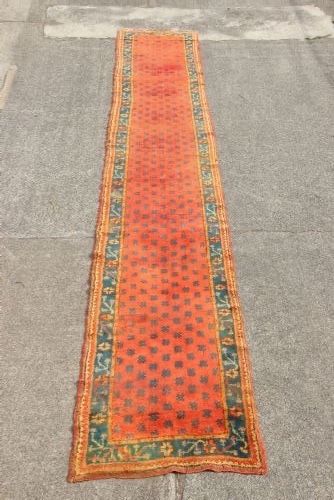
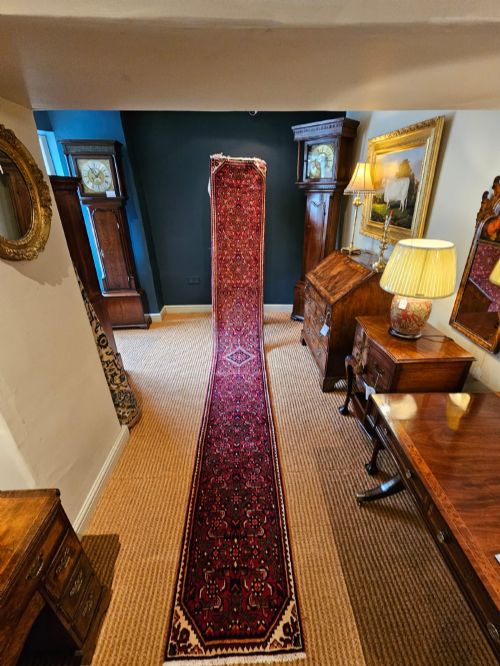
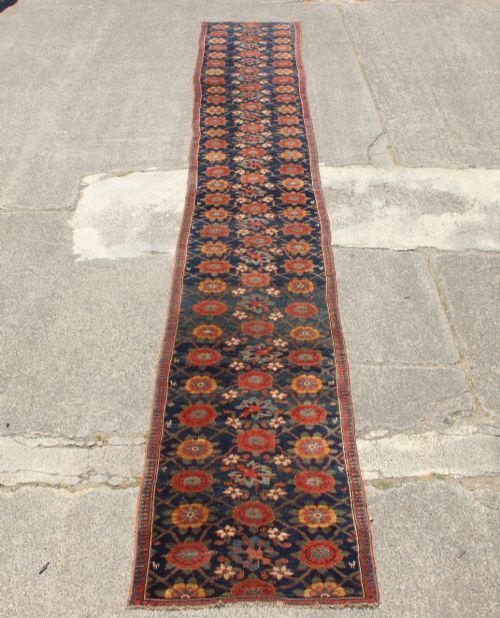
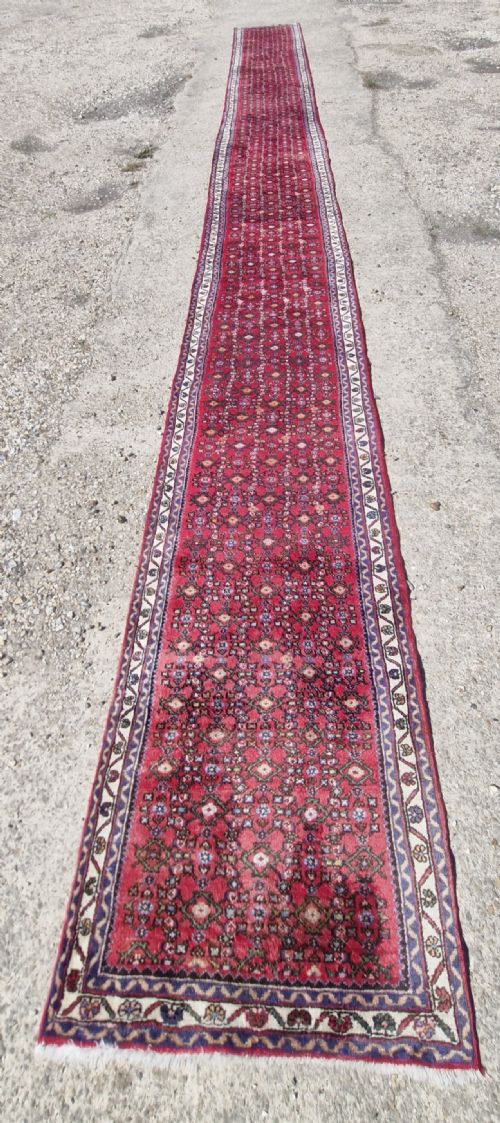
An extra long oriental runner brings narrow, extended warmth to a hallway with traditional wool and cotton woven designs.
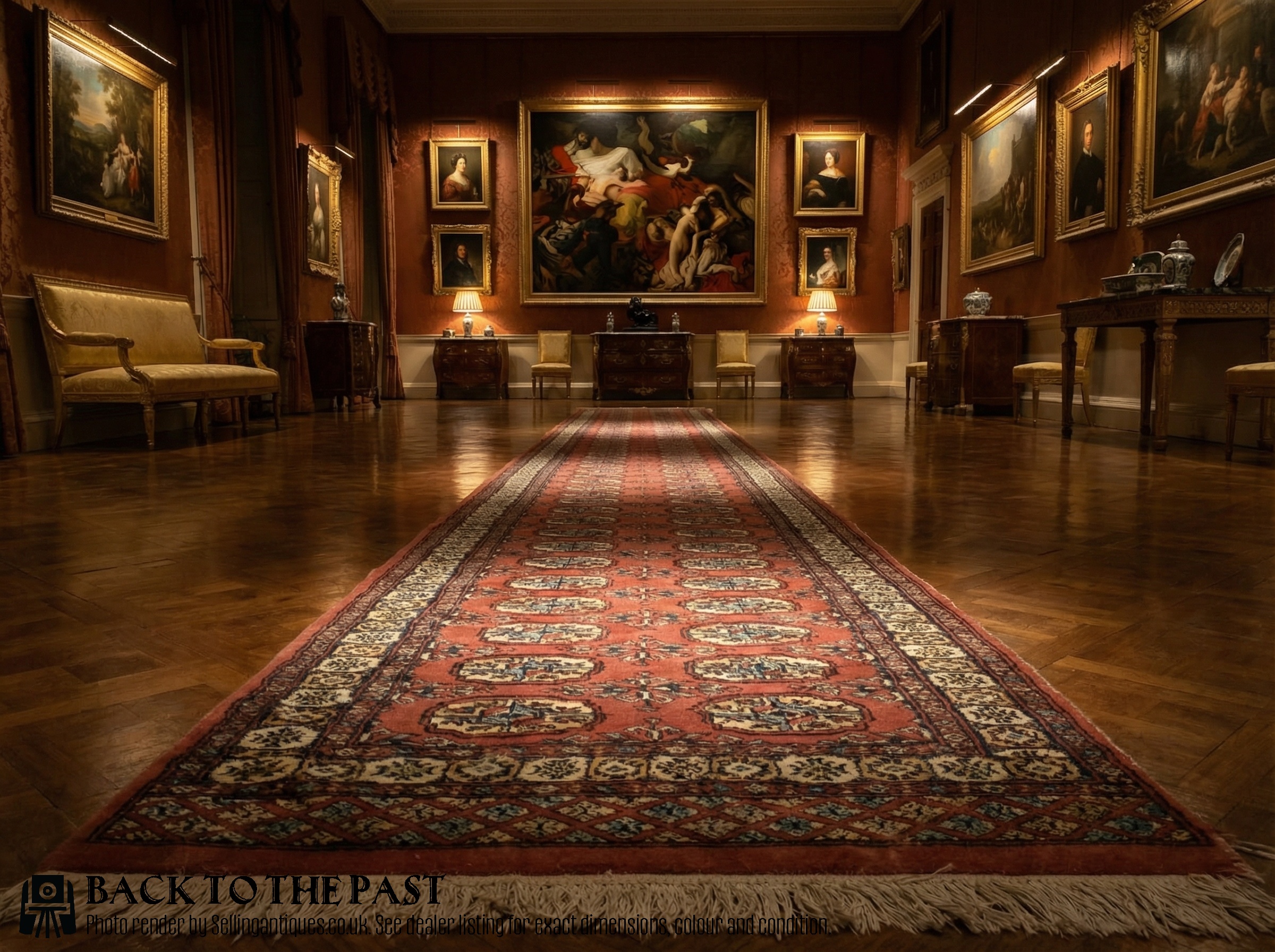
Extra Long Oriental Runner
An extra long oriental runner spans narrow formats suited to corridors, halls, and staircases, drawing the eye down extended floor spaces. These pieces span production years from the mid-nineteenth century through the mid-twentieth century, showing considerable variation in length.
The styles encountered on this page encompass traditional Persian, Kurdish tribal, Persian Malayer, Persian Heriz, Ottoman, and traditional tribal designs. Most examples maintain narrow, elongated proportions, frequently exceeding four metres in length.
Origins stretch across Turkish Oushak, Konya, Kurdish regions, and various Persian weaving centres, offering distinct regional palettes and geometric or floral motifs. Buyers find formats ranging from standard hall lengths to exceptional thirty-two foot configurations.
Materials and construction
These runners rely on wool foundations and pile, often paired with cotton for structural stability in the warp and weft. Natural fibres provide the durability required for heavy foot traffic in long hallways and landings.
Weaving techniques include knotted pile constructions alongside flatwoven kilim methods, depending on whether the piece originates from a workshop or a tribal camp. Hand-knotted examples build up dense surfaces that support intricate Mina Khani and geometric medallion patterns.
Extra Long Oriental Runner Retail Price Guide 2026
Typical asking prices for extra long oriental runner among the pieces listed under this phrase on Sellingantiques today, from the lower quarter to the upper quarter. They describe what is for sale here now, not the wider market.
One extraordinary hall runner reaches an astonishing thirty-two feet in length, demanding an exceptionally long corridor to display its full glory.
Assessing quality in extended runners
Quality rests in the precision of the knotting and the crispness of the drawn motifs along extreme lengths. Master weavers maintain consistent width and straight borders across massive dimensions without structural warping.
The choice of wool and the depth of the pile dictate how well the runner withstands decades of corridor use. Finer wool selections retain saturated dye colours and sharp pattern definition even as the surface ages.
The Extra Long Oriental Runner Glossary
- Runner
- A long, narrow carpet format specifically proportioned for corridors, staircases, and hallways. These pieces measure significantly longer than their width.
- Kilim
- A flatwoven textile produced without a pile by tightly interweaving warp and weft strands. These pieces offer a flat, durable surface with sharp geometric patterns.
- Warp
- The stationary vertical threads stretched onto a loom that form the structural skeleton of the rug. Fringe ends typically reveal these foundational threads.
- Weft
- The horizontal threads passed back and forth through the warp to bind the knots in place. This material secures the structure of the woven textile.
- Pile
- The upright cut or looped yarn surface that forms the soft texture of a knotted rug. Pile height varies according to regional weaving traditions and intended floor use.
Extra Long Oriental Runner: Frequently Asked Questions
Where do I put an extra long runner?
These extended pieces suit long hallways, wide corridors, and sweeping staircases where standard rugs fall short. Their narrow proportions anchor transit spaces and add warmth to bare floorboards.
Measure your floor space carefully, accounting for door clearance and skirting boards before selecting a length exceeding four metres.
How do I clean an antique wool runner?
Gentle surface brushing and regular low-suction vacuuming without the beater bar help remove embedded grit from the wool pile. Professional antique textile cleaning is recommended for deep washing.
Avoid harsh chemical treatments or excessive water immersion, which can damage natural dyes and weaken cotton foundations.
What is a Mina Khani design?
Mina Khani is a traditional all-over floral pattern featuring repeating rosettes linked by delicate curved vines. This classic motif creates a balanced, continuous visual rhythm down narrow formats.
Weavers across Persian and Kurdish regions utilised this layout to maintain symmetry across extended runner lengths.
Are flatwoven runners durable for hallways?
Flatwoven kilim runners provide a sturdy, low-profile surface that handles heavy foot traffic without crushing a deep pile. Their dense weave sits flat against floorboards and fits easily beneath low doors.
Using a quality underlay prevents slipping and cushions the textile against hard subfloors.