
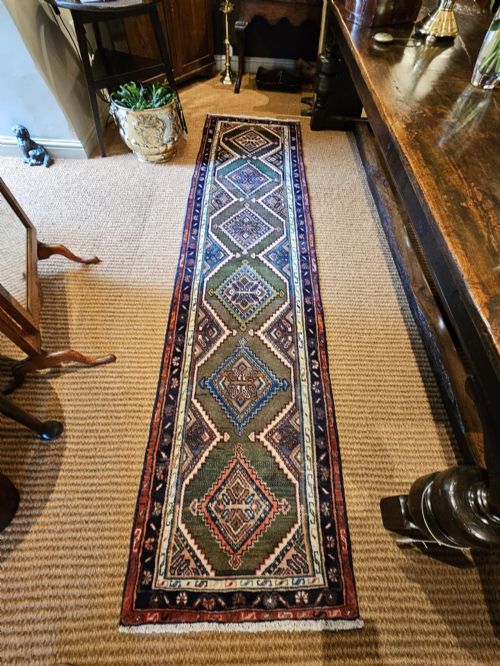
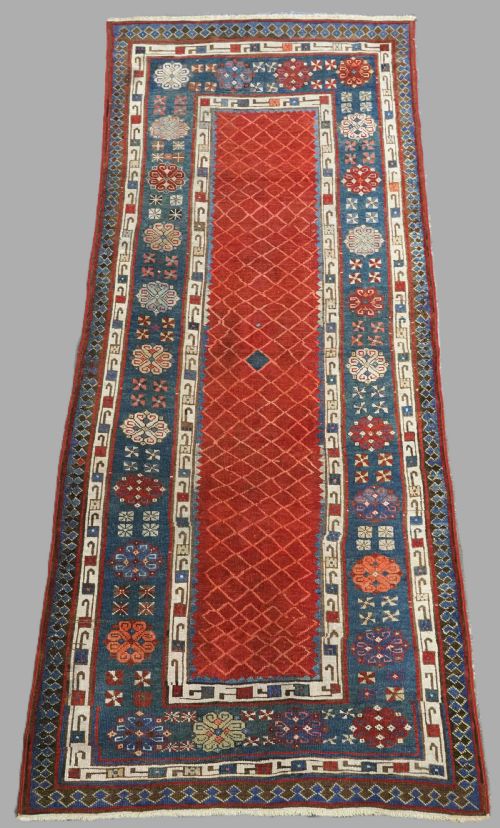
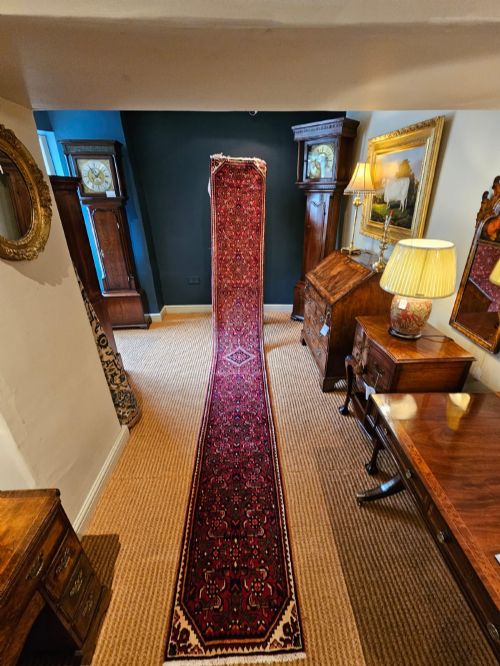
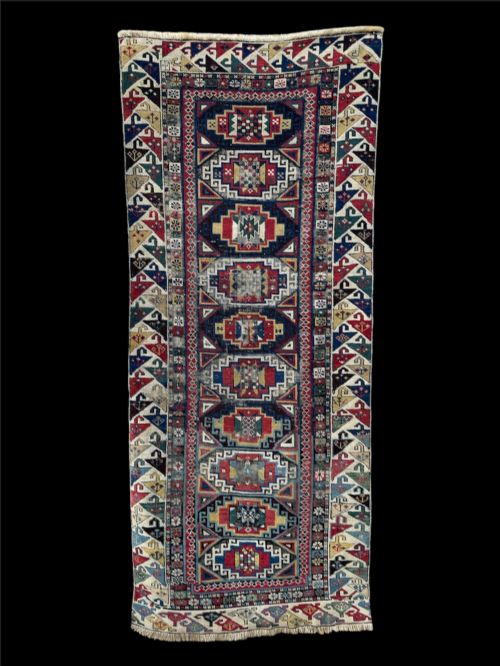
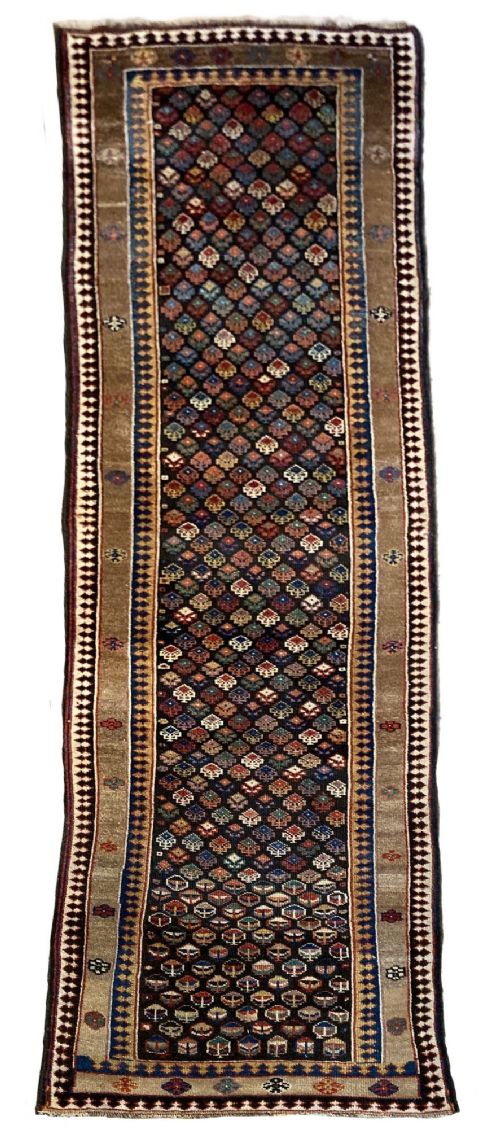


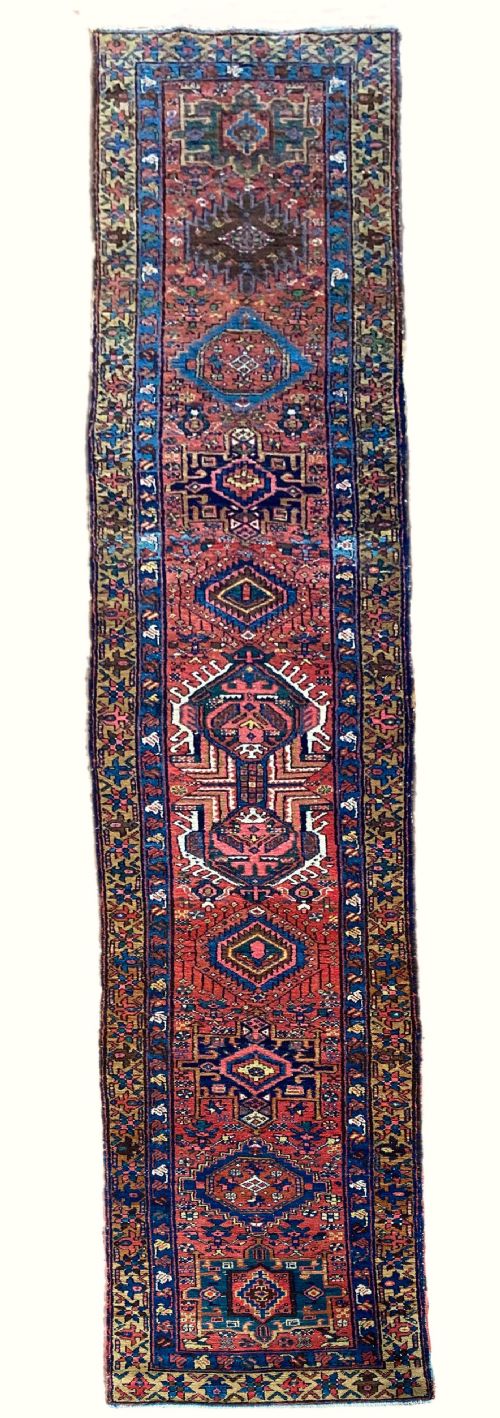

Long Passage Carpet
A long passage carpet provides the ideal foundation for hallways and galleries, uniting generous length with intricate traditional patterns.
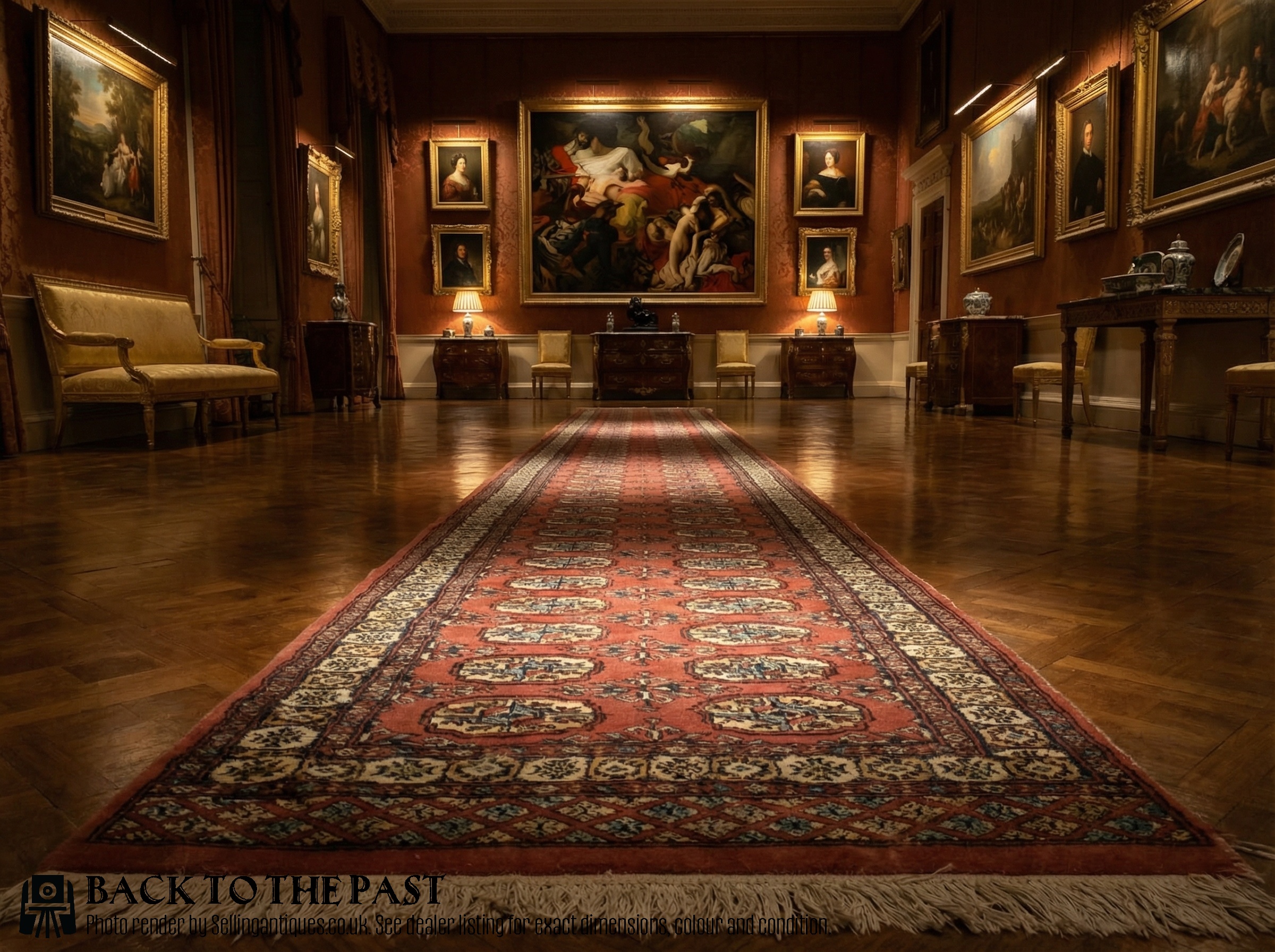
Long Passage Carpet
A long passage carpet encompasses narrow, elongated floor coverings designed specifically for corridors, staircases and expansive hallways. These textiles originate predominantly from Persian and Caucasian weaving traditions, spanning from the late nineteenth century into the early twentieth century.
The pieces available here lean heavily toward traditional runners and gallery carpets, including specific regional types like Heriz, Bidjar, Kurdish and Caucasian weaves. Buyers encounter considerable variation in length, with certain examples stretching to substantial proportions suitable for grand entrances.
Most entries combine dense pile formations with narrow rectangular dimensions, reflecting their original purpose of withstanding heavy foot traffic in domestic spaces. The aesthetic relies on repeating motifs, lattice designs and geometric medallions that draw the eye along the length of the corridor.
How they were made
Weavers constructed these carpets using natural wool for the pile, dyed with traditional substances that yield rich, grounded tones over decades of ageing. Cotton typically served as the foundational warp and weft substrate, providing the structural stability required for heavy runners.
The manual knotting technique applied by tribal and village workshops ensures dense durability, allowing the textiles to endure extended placement in busy hallways. Natural variations in hand-spun wool and vegetable-derived dyes account for the subtle shifts in shade observed across each length.
The listings span periods from the nineteenth century through the 1930s, utilising natural wool and cotton across diverse regional styles.
What varies in quality
Knot density and structural tightness dictate the longevity and crispness of the design, with finer weaves maintaining sharper geometric definition. The consistency of the hand-spun wool and the depth of the dye saturation separate standard utility runners from exceptional gallery pieces.
Proportional balance across extreme lengths influences desirability, as maintaining a straight, uniform width over several metres requires considerable weaving skill. The integrity of the foundational cotton warp and the preservation of the original side selvedges also mark the distinction between average survivals and superior examples.
The Long Passage Carpet Glossary
- Runner
- A long, narrow carpet format specifically proportioned for corridors, hallways and staircases. These pieces measure significantly longer than they are wide.
- Warp
- The stationary vertical threads stretched onto a loom that form the structural skeleton of the carpet. Wool or cotton strings support the entire tension of the weave.
- Weft
- Horizontal threads passed alternately over and under the warp strings to bind the knotted rows together. This technique locks the pile firmly into position.
- Boteh
- A traditional almond-shaped or paisley motif representing a floral spray or cypress tree. This pattern appears frequently across Persian and Caucasian textile designs.
- Selvedge
- The reinforced edge finish on the sides of a carpet that prevents the weave from unraveling. Original bindings indicate careful preservation of the textile.
Long Passage Carpet: Frequently Asked Questions
Where should I place a long passage carpet?
These narrow textiles suit high-traffic corridors, entrance halls and straight staircases where length defines the spatial geometry.
Positioning them away from direct, prolonged moisture helps protect the natural wool fibres and traditional dyes from unnecessary degradation.
How do I care for an antique runner?
Regular gentle vacuuming without a rotating brush roll removes trapped grit from the wool pile without straining the historic cotton foundation.
Professional specialist cleaning remains essential every few years to maintain the lustre of the natural dyes and preserve the structure.
Are these carpets suitable for heavy foot traffic?
Traditional village and tribal runners were originally built to endure daily domestic movement in busy passageways.
Using a quality underlay beneath the carpet prevents slipping while absorbing impact, which significantly extends the working life of the textile.
How do I distinguish Persian from Caucasian runners?
Persian examples often display curvilinear floral fields, intricate medallions and softer wool textures associated with regional workshops.
Caucasian runners typically feature bolder geometric lattices, sharper angular motifs and more saturated primary colour palettes derived from local traditions.