




Exterior Wall Lantern
An exterior wall lantern brings period character and practical illumination to outside spaces, drawing on designs from Victorian coaching lamps to industrial streetlights.
Exterior Wall Lantern
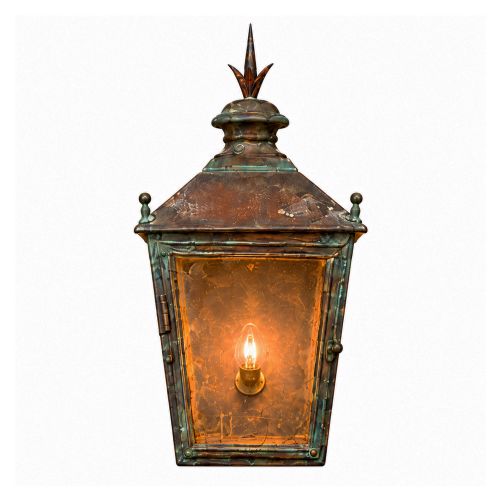
An exterior wall lantern spans practical outdoor lighting forms, ranging from coach-house carriage lamps to large street and porch lanterns. When searching for an exterior wall lantern, buyers encounter robust fixtures designed to withstand the elements while providing decorative illumination.
The pieces on this page draw from periods across the nineteenth and twentieth centuries, including Victorian, Edwardian, and Art Deco eras. Styles span industrial designs, French empire influences, and neo-classical copper constructions mounted on brackets or swan neck supports.
Materials and Construction
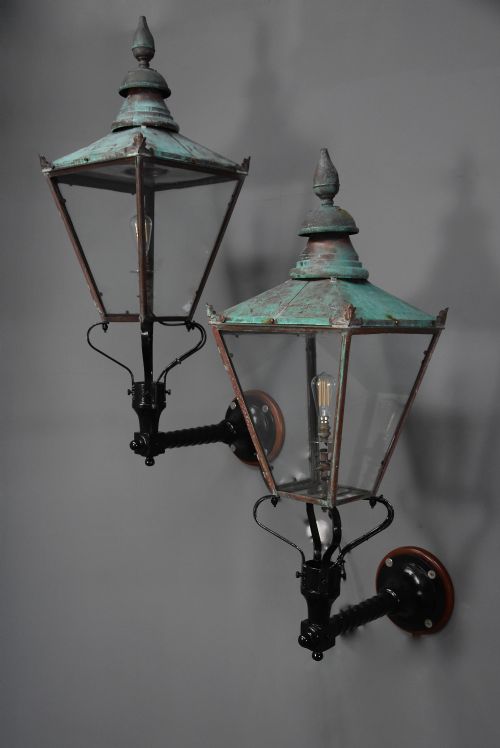
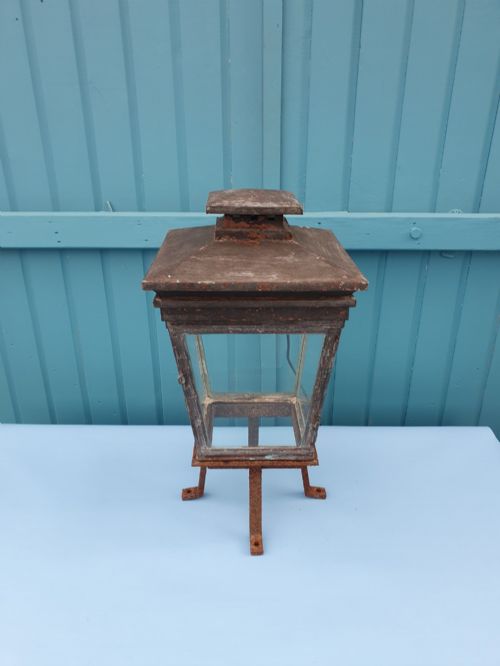
Makers constructed these lanterns using durable metals such as copper, brass, cast iron, and wrought iron to ensure weather resistance outdoors. Many copper examples develop a verdigris patina over decades of exposure to the elements.
Glazing typically involves clear or frosted glass panes secured within metal frames, and several historical pieces show conversions from original gas lighting to electrical fittings.
Exterior Wall Lantern Retail Price Guide 2026
Typical asking prices for exterior wall lantern among the pieces listed under this phrase on Sellingantiques today, from the lower quarter to the upper quarter. They describe what is for sale here now, not the wider market.
Several heavy street lanterns began their working lives lighting gaslit Victorian thoroughfares before finding new life beside modern front doors.
Assessing Quality and Design
Quality in these fixtures rests on the weight of the metalwork, the complexity of the bracket design, and the integrity of the original construction. Substantial cast components and hand-formed copper or brass indicate superior manufacturing standards.
The presence of matching pairs, sophisticated spiral twist brackets, or signed maker details separates standard utility lighting from exceptional decorative examples.
REVO Leicester·Revo Tipton
The Exterior Wall Lantern Glossary
- Coach-house style
- A design mimicking the traditional hanging lamps once used outside carriage houses and stables. These fixtures often feature multi-panel glass and prominent mounting brackets.
- Verdigris
- A green patina that forms naturally on copper and brass surfaces through long-term exposure to weather. This oxidation layer protects the underlying metal and adds historical depth.
- Swan neck
- A curved metal mounting arm resembling a swan's neck, commonly used to project street and wall lanterns outward from a building facade.
- Half lantern
- A flat-backed lighting fixture designed to sit flush against an exterior wall. This form projects outward by half its full width, making it suitable for narrower porches.
Exterior Wall Lantern: Frequently Asked Questions
How do I install an antique wall lantern?
Most historical exterior lights require professional electrical installation to ensure proper mounting and weather sealing against exterior walls.
Wiring within these older fixtures has usually been updated for modern circuits, but brackets must be secured to bear the weight of cast iron or heavy copper bodies.
Can these outdoor lamps be used outside?
These pieces were originally built for exterior use on coaches, porches, and street fronts, making them inherently suited for outdoor placement.
However, buyers should check the current weatherproofing and IP rating of the internal lamp holders before exposing them to unsheltered wet conditions.
What is the difference between a carriage lamp and a street lantern?
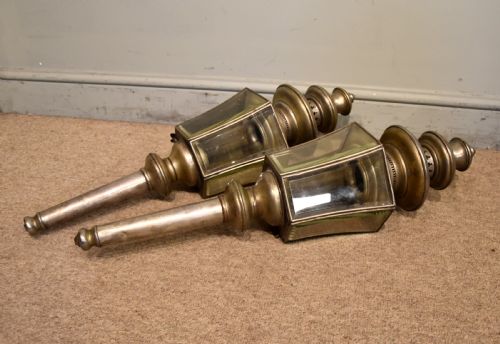
Carriage lamps were traditionally designed to mount beside the driver's seat on horse-drawn vehicles, resulting in more compact, tapered forms with side glass panels.
Street and porch lanterns are generally larger, octagonal, or square structures built to illuminate wider building entrances and public thoroughfares.
How do I date an exterior wall lantern?
Dating relies on identifying the prevailing architectural style, metalworking techniques, and mounting hardware associated with specific decades.
Victorian and Edwardian examples often feature heavier cast iron or brass details, while 1920s and 1930s pieces lean towards industrial Revo designs and cleaner geometric shapes.