

Extending Table with Leaves
An extending table with leaves provides the flexible surface needed for large dining rooms and changing gatherings.
Extending Table with Leaves
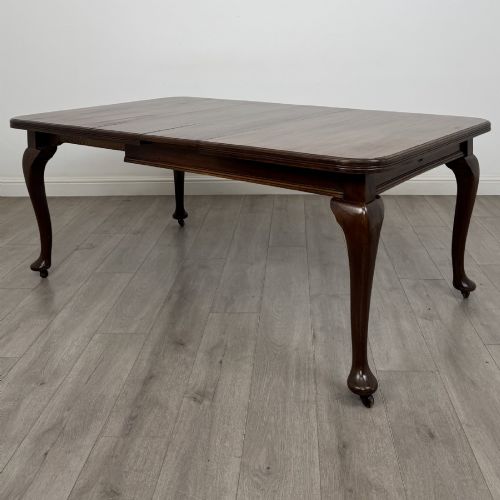
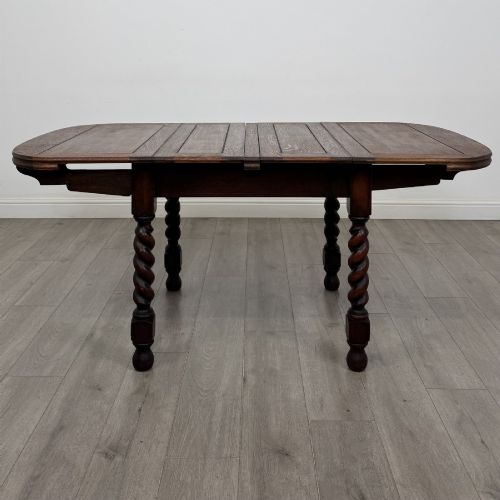
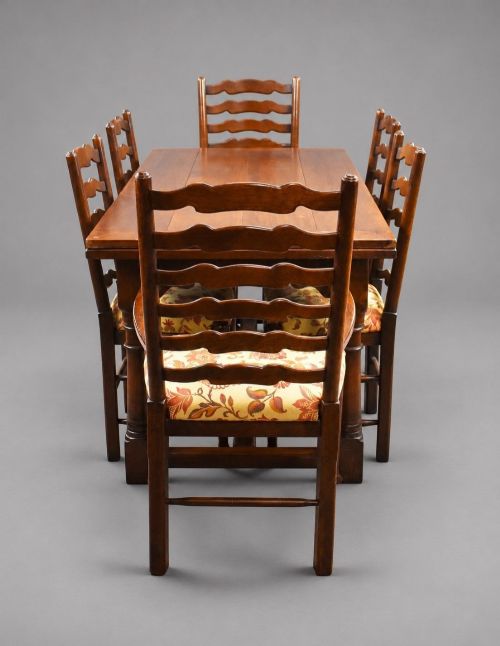
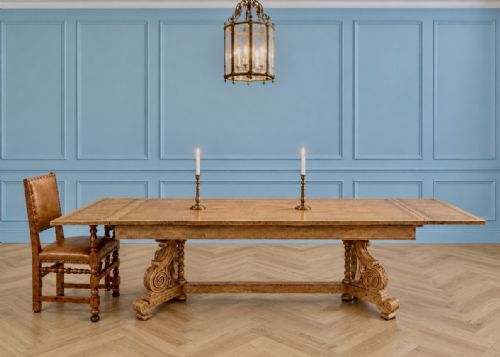
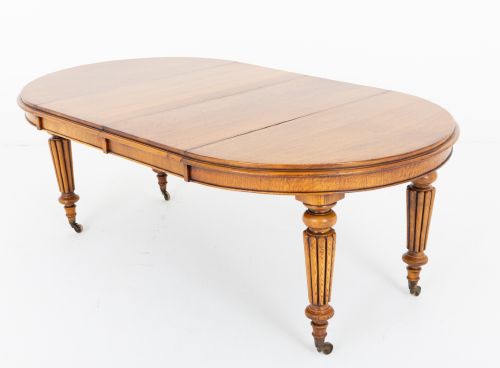
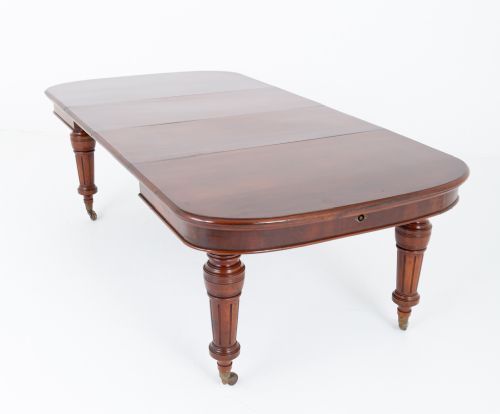
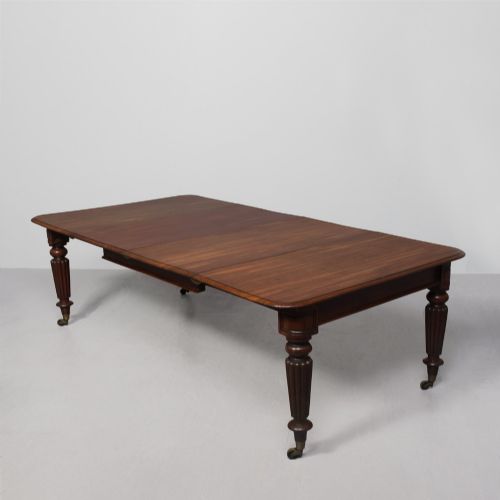
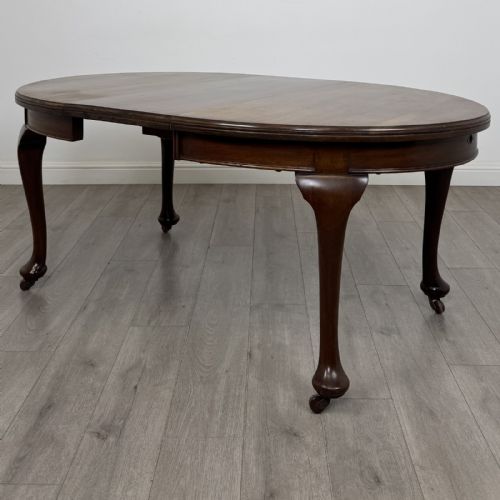
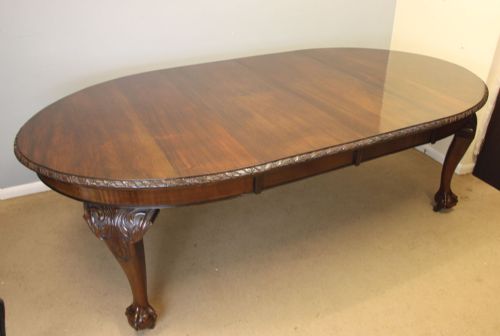
An extending table with leaves is a functional dining surface designed to expand using removable panels or internal mechanisms. The examples gathered here span periods from the Georgian and Regency eras through the Victorian period and into the twentieth century, reflecting varied social demands for expandable furniture.
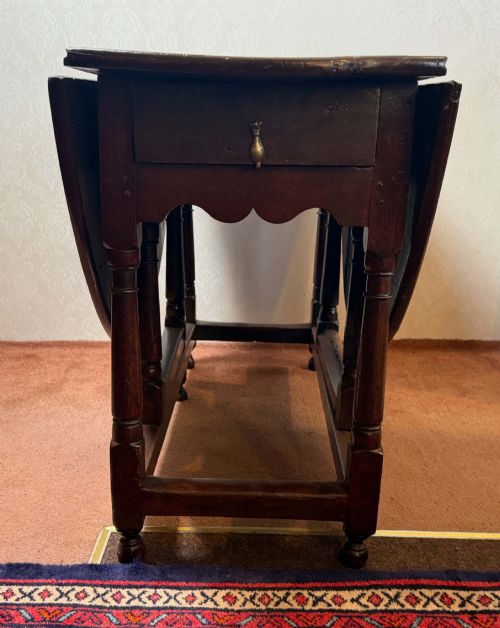
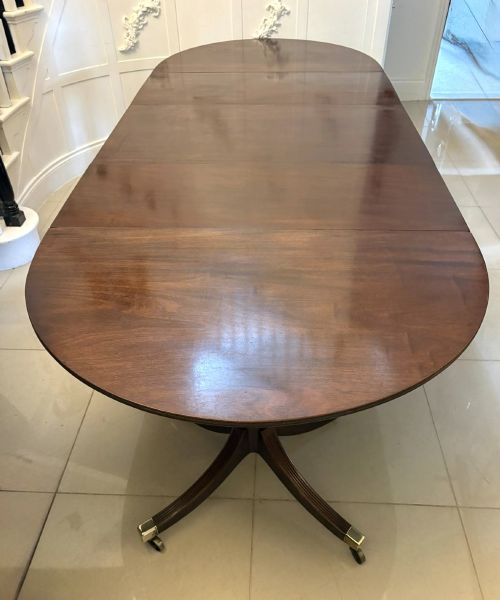
The materials and construction reflect the dominant cabinet-making traditions of their respective centuries, employing sturdy timbers and supportive pedestals or legs. Buyers will find both traditional pedestal arrangements and refectory or gateleg forms equipped with leaves.
Materials and construction
Cabinet makers relied heavily on mahogany, oak, and walnut, often selecting figured varieties for visible surfaces and leaves. Secondary timbers provided internal framing, whilst brass fixtures aided mechanical movement in pedestal and pull-out designs.
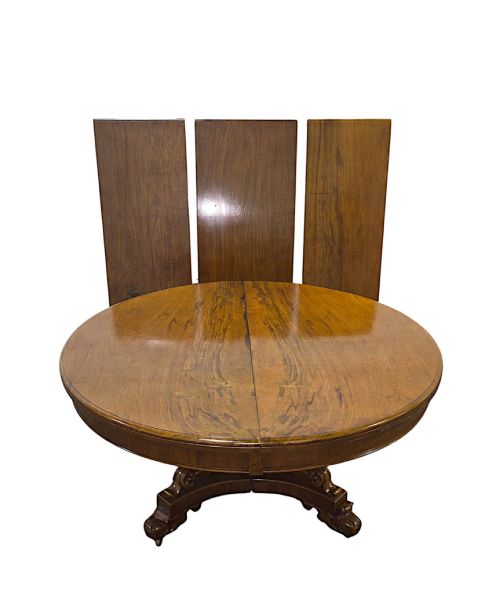
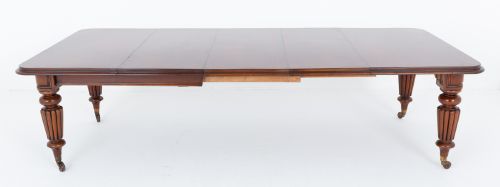
Construction techniques combined traditional joinery with ingenious extension mechanisms, allowing heavy timber tops to glide apart smoothly. Removable leaves were engineered to align flush with the main table surface when inserted.
Extending Table with Leaves Retail Price Guide 2026
Typical asking prices for extending table with leaves among the pieces listed under this phrase on Sellingantiques today, from the lower quarter to the upper quarter. They describe what is for sale here now, not the wider market.
Listings feature mahogany, oak, walnut, rosewood, satinwood, cherry, and brass across Georgian, Regency, Victorian, and twentieth-century periods.
Assessing quality in extending tables
Quality reveals itself in the selection of timber, particularly the grain matching between the main table and its accompanying leaves. Superior examples display careful timber selection and robust pillar or leg supports that remain stable at full extension.
The refinement of the mechanism dictates the ease of daily use, distinguishing finely engineered workshop pieces from simpler utility tables. Hand-carved details, reeded legs, and original leaves further separate standard production from exceptional craftsmanship.
William and Gibton
The Extending Table with Leaves Glossary
- Leaf
- A removable or folding board used to increase the surface area of a table. Leaves are stored separately when not in use or stored within the table mechanism.
- D-End
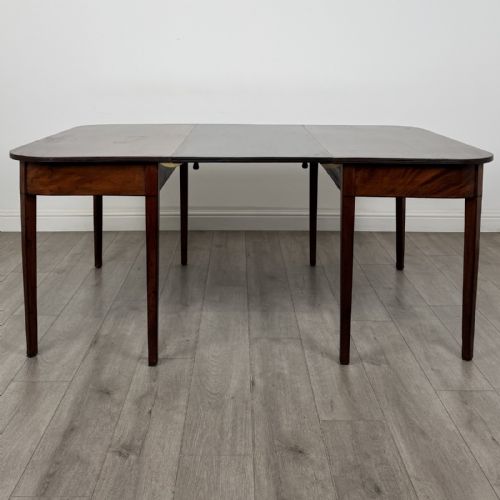
- A table end shaped like a capital letter D, often found in modular dining tables where two semicircular ends flank a central section.
- Pillar
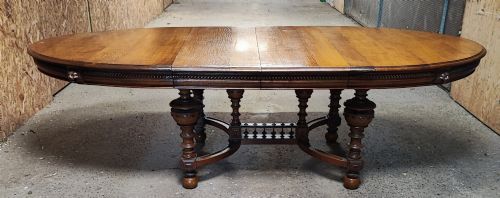
- A central vertical support column, often resting on carved legs, used to hold up heavy dining table tops instead of traditional corner legs.
- Pedestal
- The base structure of a pillar table, frequently comprising a central column supported by multiple curved legs.
- Gateleg
- A table with hinged legs that swing out like a gate to support drop-down leaves.
- Reeded
- A decorative moulding consisting of parallel convex strips resembling inverted fluting.
Extending Table with Leaves: Frequently Asked Questions
How do extending leaves work?
Extending leaves operate either by pulling the main table sections apart on a sliding wooden or metal runner to drop in loose panels, or by folding out internal sections.
Traditional pillar tables require physical insertion of extra leaves into the centre, whilst pull-out and draw leaf formats utilise hidden mechanisms beneath the top.
How do I seat twenty people?
Accommodating large gatherings requires monumental multi-pedestal tables equipped with three to six extra leaves. These longer formats distribute weight evenly across multiple pillar supports to maintain stability along the entire span.
Georgian and Victorian cabinet makers built these grand dining tables specifically to handle numerous guests by expanding well beyond their standard closed lengths.
Are leaves original to the table?
Original leaves match the primary timber grain, thickness, and fading pattern of the main table top. Makers constructed leaves alongside the table to ensure uniform ageing and consistent wood selection.
Replacement leaves often exhibit minor discrepancies in colour or finish, as timber ages differently depending on light exposure and atmospheric conditions.
How do I care for mahogany?
Mahogany surfaces respond best to regular dusting with a soft cloth and occasional application of appropriate beeswax to nourish the timber. Direct sunlight and extreme temperature fluctuations should be avoided to prevent wood warping or fading.
Careful handling of heavy leaves during insertion prevents accidental impact damage to the polished edges and surrounding joinery.