


Extending Table Leaves
Extending table leaves provide the vital extra span needed for grand dining, bridging formal Georgian mahogany and sturdy oak refectory designs.
Extending Table Leaves
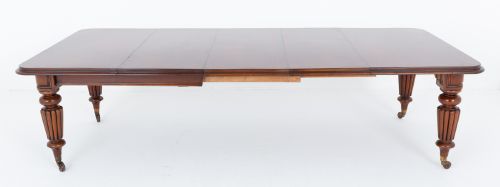
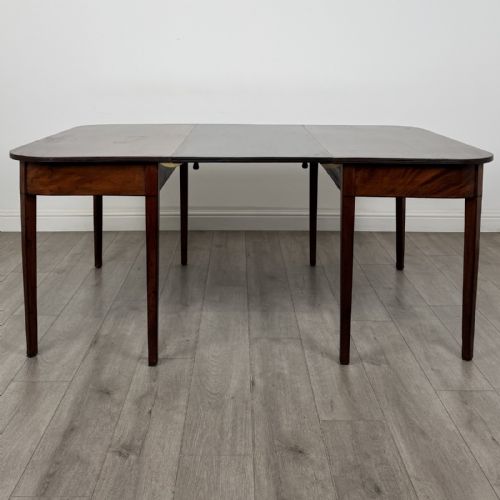
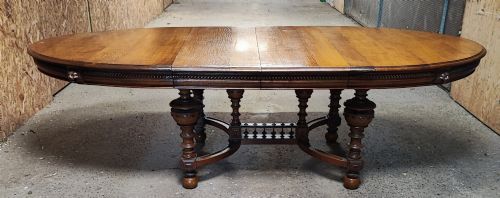
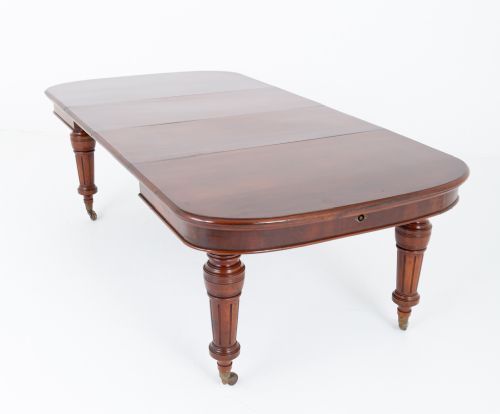
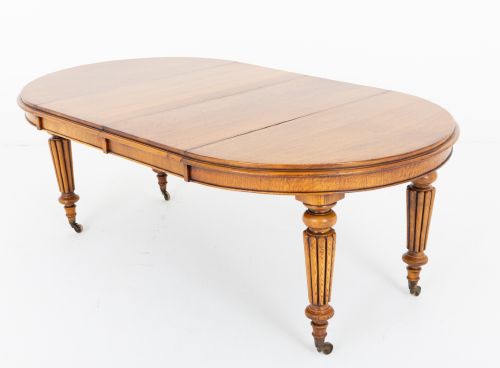
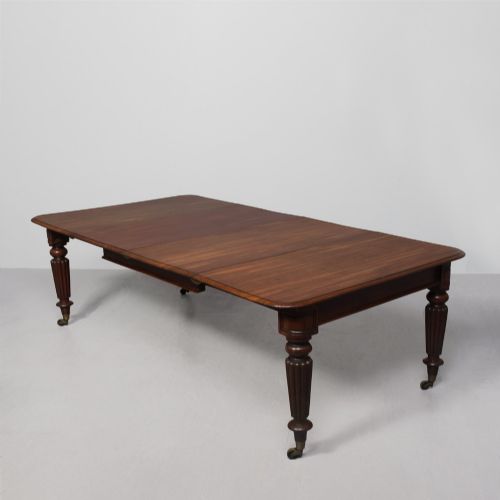
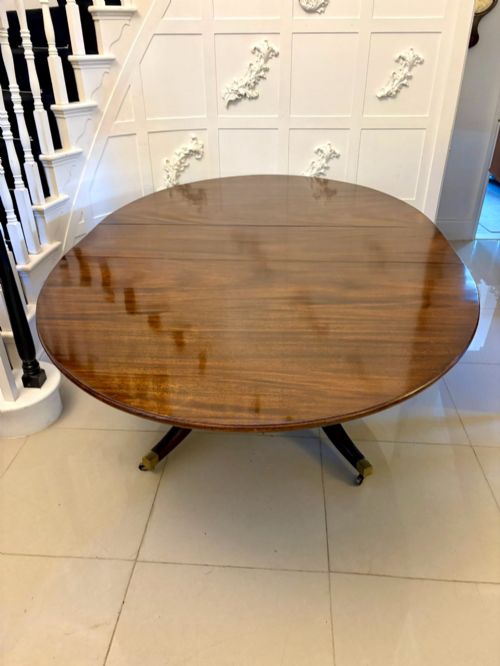
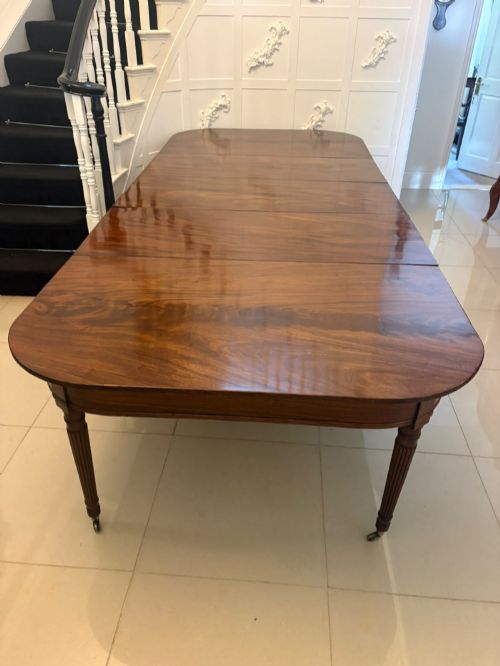
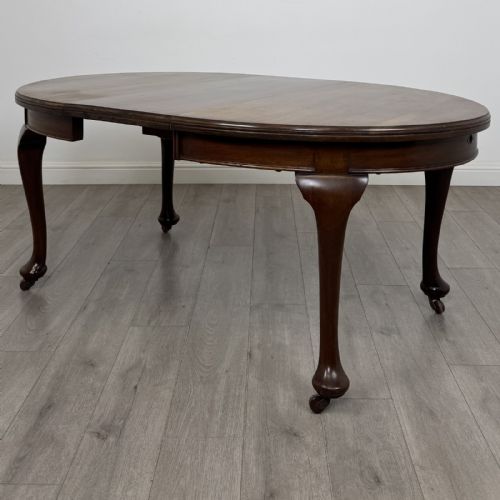
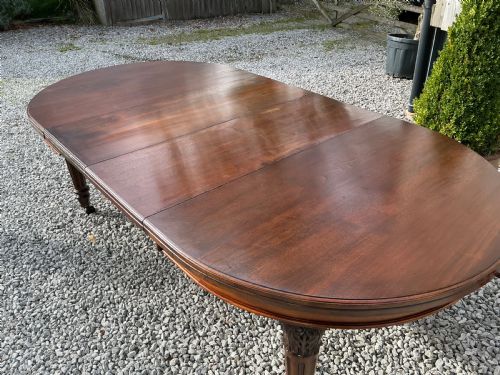
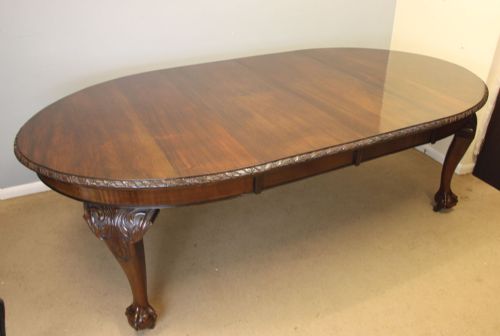
Extending table leaves are the functional components and complete dining tables found across Georgian, Regency, Victorian, and later periods. The selection on this page primarily spans mahogany pillar tables and oak draw leaf or refectory forms designed to expand for larger gatherings.
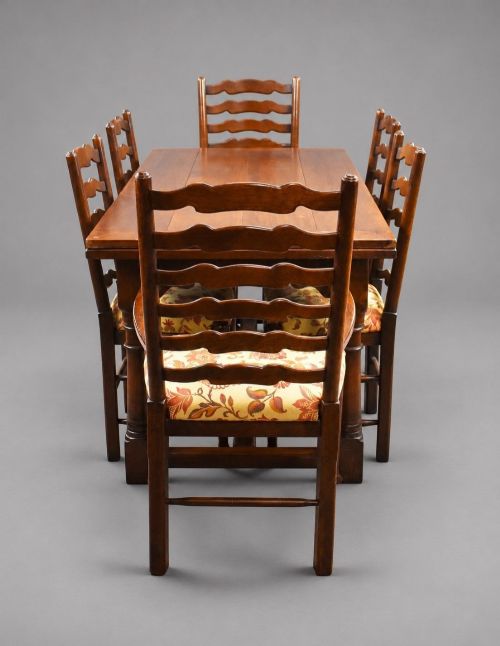
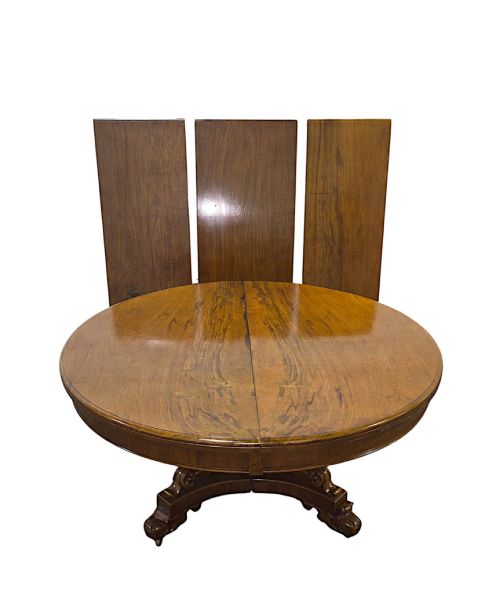
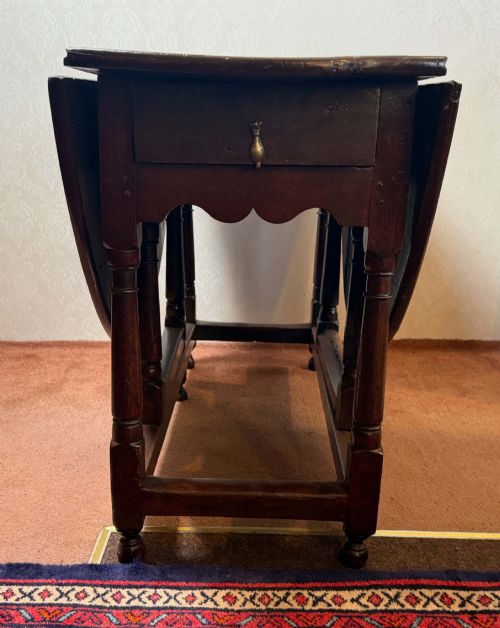
Makers utilised various mechanisms, from drop leaves and removable centre boards to draw leaves that slide smoothly from beneath the main top. These dining tables range from compact farmhouse styles to extensive banquet tables seating up to twenty-four guests.
How they were made
Cabinetmakers worked predominantly in solid mahogany, oak, and fruitwood, often selecting figured timbers for visible surfaces. Brass fittings and hardware frequently reinforced the mechanisms that allow these tables to extend smoothly.
Construction methods relied on sturdy pedestal pillars, reeded legs, and internal runners that supported additional leaves securely. Wood inlay and polished finishes highlighted the natural grain of the materials used.
Extending Table Leaves Retail Price Guide 2026
Typical asking prices for extending table leaves among the pieces listed under this phrase on Sellingantiques today, from the lower quarter to the upper quarter. They describe what is for sale here now, not the wider market.
What varies in quality
The degree of refinement in the timber selection and the precision of the extending mechanism distinguish finer examples from standard utility pieces. Superior dining tables maintain a seamless match in grain and colour across all added leaves when fully expanded.
Original components and well-preserved structural integrity elevate an antique above items with later replacements. The subtlety of the joinery and the restraint of the design reflect the original maker's skill.
The Extending Table Leaves Glossary
- Draw leaf
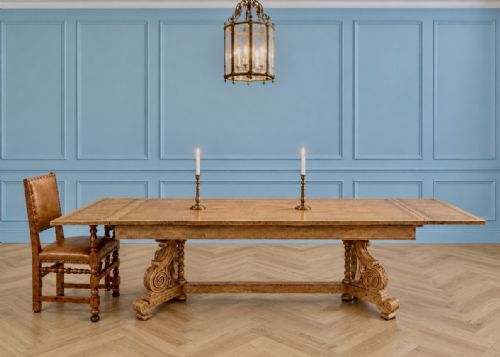
- A table design featuring leaves stored beneath the main top that pull out to extend the surface. This mechanism allows for quick adjustment without removing separate boards.
- D-end
- A table end shaped like a semi-circle, popular in Georgian and Regency dining furniture. These ends often detach or separate when middle leaves are inserted.
- Refectory table
- A long, narrow table traditionally used for communal dining, constructed in oak or fruitwood. Many period examples incorporate draw leaf systems for added versatility.
- Pedestal table
- A table supported by one or more central columns rather than corner legs. Multiple pedestals often support large extending banquet tables.
- Reeded leg
- A leg decorated with parallel convex mouldings carved into the wood. This detail appears frequently on Regency and nineteenth-century mahogany dining tables.
Extending Table Leaves: Frequently Asked Questions
How do draw leaf tables work?
Draw leaf tables utilise hidden panels stored directly beneath the main surface. These leaves slide out smoothly to increase table length when dining space is required.
When not in use, the leaves tuck neatly back under the main top to save space. This system keeps the mechanism self-contained within the table structure.
How many leaves can a table take?
The number of leaves depends entirely on the frame size and pedestal support system. Smaller tables accommodate a single leaf, while large banquet tables accept three or more.
Multiple pillars provide the structural stability required for tables holding several extra leaves. Checking the runners and support legs reveals how much weight the table can safely bear.
How do I match old mahogany?
Mahogany naturally darkens and develops a deep patina over decades of exposure to light and air. Matching timber requires finding pieces with similar grain patterns and applying appropriate traditional finishes.
Older furniture often uses Cuban or Honduras mahogany, which displays distinct reddish-brown tones. Restoration specialists blend stains carefully to bridge the visual gap between original tops and extra leaves.
Where were these tables made?
These dining tables originate from workshops across Britain, Ireland, and continental Europe. Regional preferences influenced the choice of timber, such as oak in farmhouse contexts and mahogany in formal urban settings.
Irish and English cabinetmakers produced many of the fine D-end and pedestal examples seen today. French provincial makers favoured fruitwood for their regional draw leaf designs.