


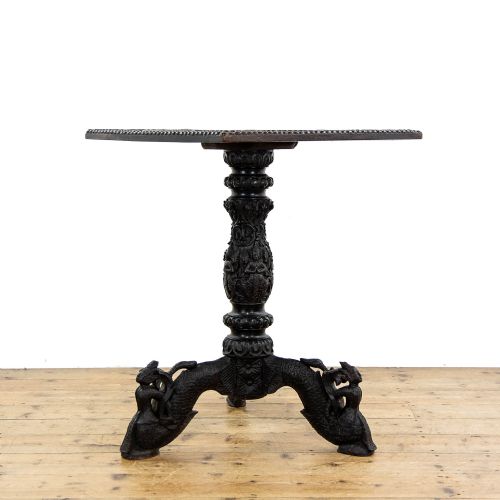


Exotic Wood Occasional Table
An exotic wood occasional table brings rich grain and distinct period character to a room, offering a small surface designed for practical placement anywhere.
Exotic Wood Occasional Table
When you search for an exotic wood occasional table, you encounter small side tables, centre tables, and occasional tables fashioned from timber that stands apart from standard oak or walnut. These pieces span the eighteenth, nineteenth, and early twentieth centuries, reflecting diverse global workshops and domestic British tastes.
The versions most commonly met on this page date from the nineteenth century, including specific styles such as Victorian, Regency, and George III examples. Alongside these traditional forms appear Anglo-Indian, Anglo-Burmese, Moorish Revival, and Chinese Export interpretations.
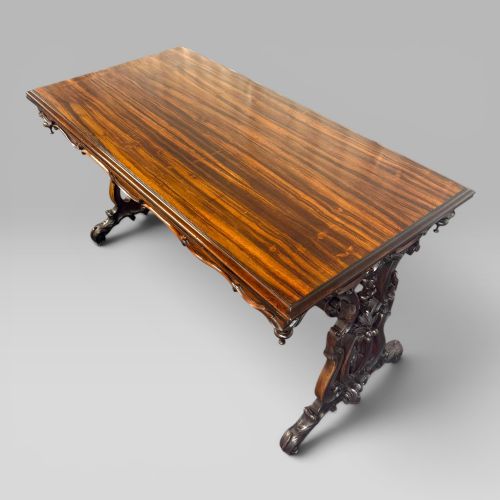
Makers utilised woods like rosewood, mahogany, zebrawood, padauk, palm wood, and ebony, frequently combining them into intricate specimen wood surfaces. The forms range from simple occasional tables to heavily carved side and centre tables.
How they were made
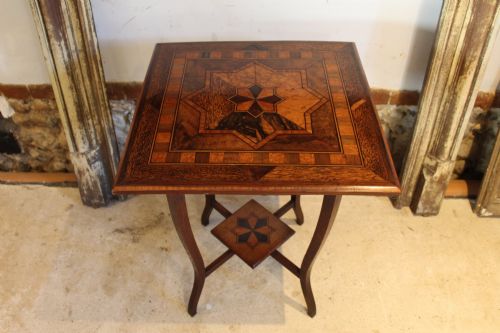
Cabinet makers built these tables using dense timbers such as rosewood, padauk, and mahogany, often pairing them with contrasting specimen woods. Surfaces display marquetry and inlay techniques that arrange different grains and colours into geometric or pictorial patterns.
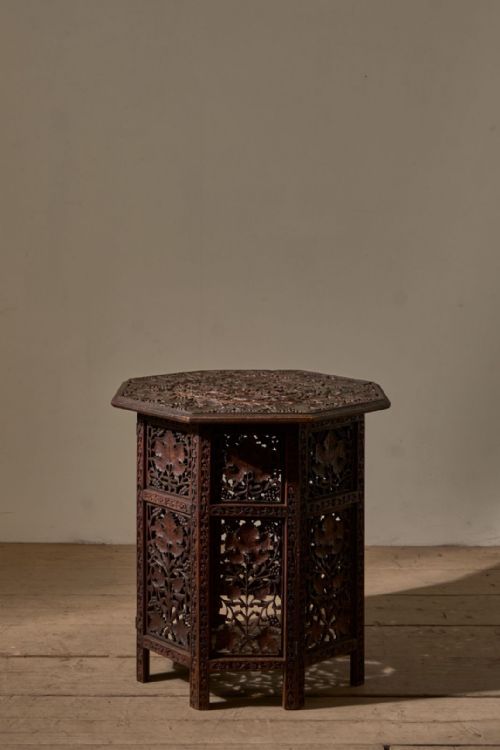
Many examples incorporate elaborate hand carving, particularly in Anglo-Indian, Ceylonese, and Burmese pieces where frames feature deep relief work and leaf designs. Other workshops relied on the natural figuring of zebrawood and palm wood to create visual impact without excessive carving.
Several tables on offer wear their travels proudly, having crossed oceans as colonial cargo before finding a quiet corner to hold afternoon tea.
What varies in quality
The standard of an exotic wood occasional table depends upon the precision of its construction and the complexity of its timber selection. Tables featuring meticulous specimen wood marquetry or exceptionally crisp hand carving occupy the upper end of the range.
Quality also rests on the preservation of the timber's natural grain and colour. Pieces that maintain their original surface depth and structure without clumsy repairs demonstrate superior original craftsmanship.
The Exotic Wood Occasional Table Glossary
- Specimen wood
- Timber selected for its decorative grain, colour, or exotic origin. Cabinet makers grouped multiple varieties together to showcase contrasting natural hues.
- Marquetry
- The art of applying small pieces of veneer to a structure to form decorative patterns. This technique allowed makers to create detailed surface designs.
- Occasional table
- A small, movable table designed for periodic use around a room. These versatile pieces served multiple functions in domestic interiors.
- Centre table
- A freestanding table meant to be viewed from all sides, traditionally placed in the middle of a room. These are often larger and more finished than side tables.
- Padauk
- A heavy, durable tropical hardwood with a reddish-orange hue that darkens with age. It was favoured by colonial workshops for carved furniture.
Exotic Wood Occasional Table: Frequently Asked Questions
What is an exotic wood occasional table?
An exotic wood occasional table is a small, movable piece of furniture constructed from non-native timbers such as rosewood, padauk, or zebrawood. These tables served various domestic functions and often reflect nineteenth-century global trade.
They appear in forms ranging from simple side tables to heavily carved centre tables.
How do I date a nineteenth-century table?
Dating relies on observing construction methods, timber choices, and stylistic influences present in the piece. Pieces from this era often show specific regional traits, such as Anglo-Indian relief carving or Victorian rosewood framing.
Comparing the joinery and decorative motifs to documented examples helps establish the period.
Where were Anglo-Indian tables made?
Anglo-Indian tables were produced in workshops across the Indian subcontinent for both local British residents and export to Europe. These pieces combined traditional British furniture forms with local carving techniques and native timbers.
Craftsmen utilised regional woods like padauk and ebony to execute intricate leaf and floral designs.
How do I care for exotic wood furniture?
Care involves keeping the timber away from direct sunlight and maintaining stable room humidity to prevent splitting. Gentle dusting with a dry cloth preserves the polished surface without stripping the natural oils.
Avoid placing damp items directly on the antique wood.
What distinguishes Chinese Export furniture?
Chinese Export furniture combines traditional European forms with Chinese decorative arts and native materials. Workshops tailored these pieces to foreign tastes while employing local woodworking traditions.
They frequently display distinct carving styles and timber selections associated with eighteenth and nineteenth-century trade.