



European Genre Scene Art
European genre scene art depicts everyday life in oils, offering a window into past domestic and social moments.
European Genre Scene Art
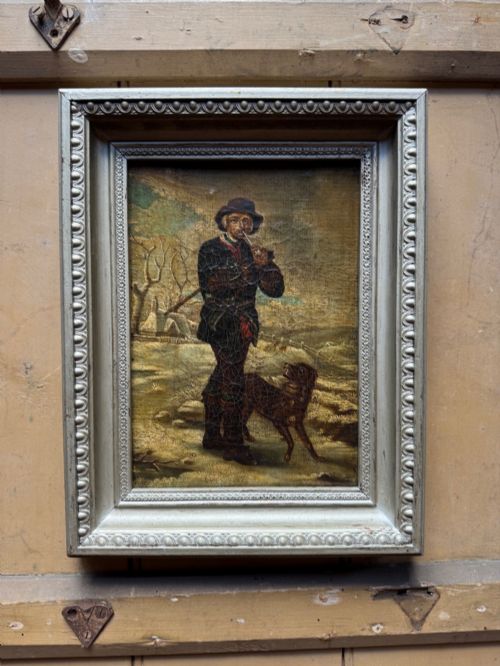
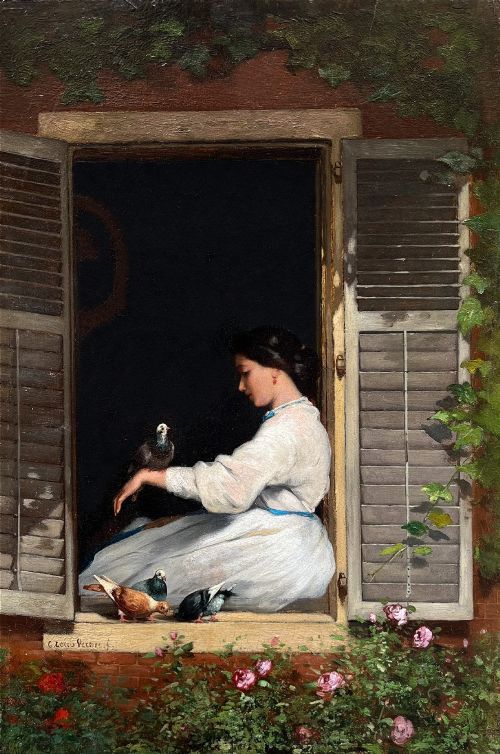
European genre scene art captures ordinary human moments, often focusing on domestic life, portraits of peasants, or figures engaged in daily activities. These oil paintings range across the nineteenth century, including specific dates such as eighteen sixty, eighteen eighty, and nineteen thirty.
The works appear in several forms, such as oil on canvas, oil on board, and even oils on tin. Buyers encounter framed paintings, wall art, and fine art painting formats within nineteenth century realism, academic, and continental styles.
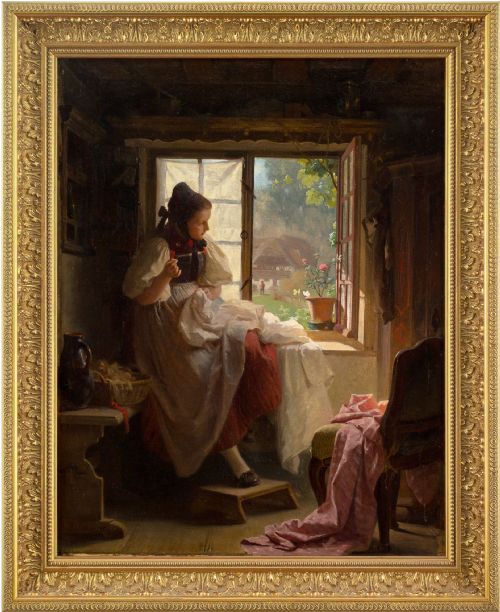
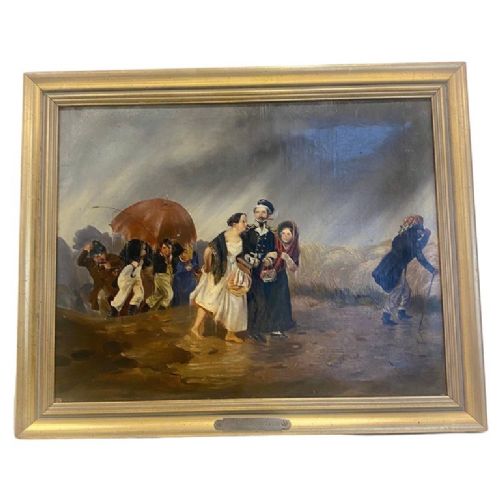
Common subjects include a girl sewing by a window, a startled boy tapping a barrel, peasant scenes, and walking in the rain. Such pieces bring historical narrative directly into a room through traditional painting techniques.
How they were made
Artists painted primarily with oil paint on stretched canvas or rigid wooden boards and tin panels. These oil paintings utilised preparatory grounds and gesso layers before the application of pigments.
Finished works found their homes within decorative surrounds, frequently housed inside gilt wood frames ornamented with gold leaf. The physical construction combines traditional canvas stretching, joinery for wooden boards, and gilded framing.
Styles represented include academic realism and continental genre painting, framed in gold leaf and gessoed wood.
What varies in quality
Quality rests on the precision of brushwork and the expressive handling of the oil paint across the canvas or board. Works described as finely painted display greater detail in human expression and interior settings.
The preservation of the original gilt wood frame and the stability of the support material influence the overall integrity of the piece. Signed works by recognised nineteenth century painters carry distinct documentation compared to unsigned continental school items.
Max Kaltenmoser·Louis Charles Verwee·R. Palnay·Joseph Emmanuel Weiser·Wilhelm Alexander Meyerheim
The European Genre Scene Art Glossary
- Oil on canvas
- A painting medium where pigments suspended in oil are applied to a woven fabric stretched across a wooden frame. This method allows for subtle blending and rich colour depth.
- Oil on board
- A technique where artists apply oil paint directly to a rigid wooden panel or board. This surface offers a firm support distinct from flexible woven fabrics.
- Gilt wood frame
- A wooden structure coated with gold leaf or metallic powder to ornament the border of a picture. These frames provide structural support and aesthetic contrast to the painting within.
- Nineteenth century realism
- An artistic approach focusing on everyday subjects and accurate portrayals of contemporary life without idealisation. It underpins many genre paintings of the period.
- Gesso
- A plaster mixture applied as a smooth base on panels or frames before painting or gilding. It creates a durable surface for fine artistic work.
European Genre Scene Art: Frequently Asked Questions
What subjects appear in these paintings?
The artworks depict ordinary people engaged in daily routines, such as a girl sewing by a window, peasant women with children, or figures walking in the rain.
Other scenes show humorous or narrative moments like a startled boy tapping a barrel or traditional domestic interiors.
What materials are used for these supports?
Painters utilised oil paint applied to canvas, rigid wooden boards, or metal tin panels. These varied surfaces were then mounted inside traditional wooden frames.
Many surviving pieces retain their original gilt wood frames embellished with gold leaf over gesso.
How do these pieces fit into a home?
These framed paintings suit traditional or eclectic wall displays, functioning as focal points in living rooms, studies, or hallways. Their narrative subjects invite close viewing and conversation.
Placing them away from direct sunlight protects the oil pigments and the integrity of the gilded frames.
How can I tell the period of a piece?
Evidence points primarily to the nineteenth century, with specific dates noted around eighteen sixty, eighteen eighty, and into nineteen thirty. Stylistic markers include nineteenth century realism, academic approaches, and continental school traditions.
Signatures, framing styles, and the composition of the support materials also help establish the era.