




Victorian Era Genre Scene
These pieces for a victorian era genre scene capture everyday life in paint, offering a direct window into nineteenth-century domestic and public moments.
Victorian Era Genre Scene
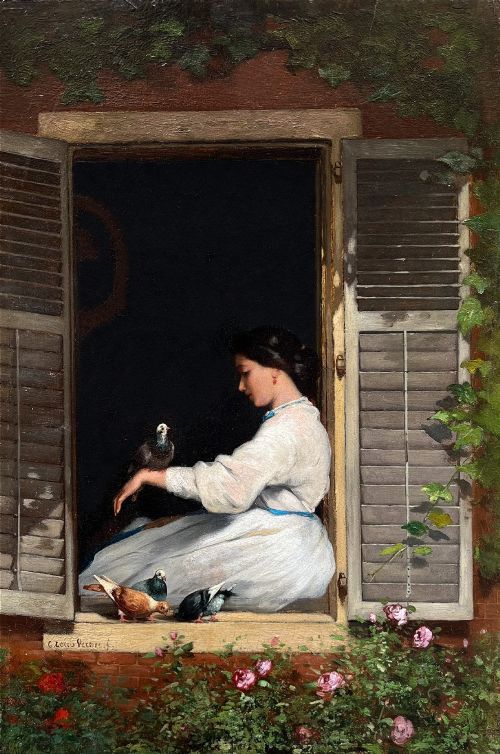
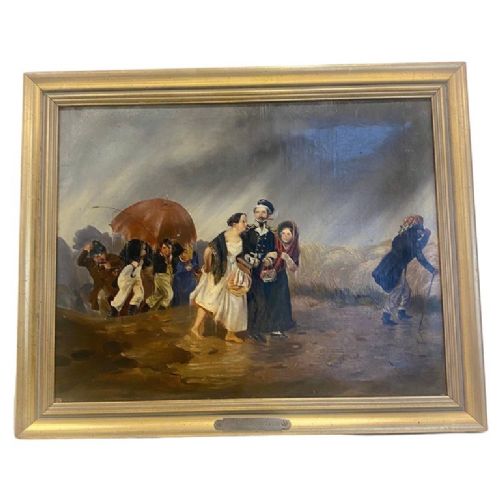
A victorian era genre scene depicts everyday subjects and human narratives, moving away from grand historical or mythological themes to focus on relatable moments. The works gathered here show figures engaged in ordinary activities, often framed within domestic interiors, streets or rural landscapes.
The pieces on this page stem from the nineteenth century, with specific dates clustering through the 1870s, 1880s and 1890s. Buyers will predominantly encounter oil paintings on canvas alongside framed watercolours, reflecting the primary formats produced during this period.
Geographic origins span French, Italian and German schools, showing how continental artists approached realism and academic painting. Painters such as Pompeo Massani, Federico Andreotti and Paul Viry anchor these traditions with distinct regional character.
Materials and technique
Paintings are executed in oil on canvas or watercolour on paper, utilising traditional pigments and binders layered to build depth and light. Canvases are stretched over wooden frames and often housed in ornate gilt wood and gesso frames enriched with gold leaf.
Techniques range from French academic precision to the looser observations of nineteenth-century realism. Artists balanced careful draftsmanship with expressive brushwork to render fabrics, expressions and atmospheric conditions.
A startled boy tapping a barrel unexpectedly brings nineteenth-century mischief straight into the drawing room.
What separates the better examples
Quality rests in the subtlety of facial expression, anatomical proportion and the handling of light across textiles and interiors. Stronger compositions draw the viewer into the narrative without relying on excessive sentimentality.
The preservation of the original canvas and the integrity of the giltwood and gesso frame influence the overall presence of the work. Skilled cleaning reveals the original palette, whereas heavy overpainting obscures the artist's touch.
Louis Charles Verwee·Léon Joseph Voirin·Paul Viry·Federico Andreotti·Pompeo Massani·Leon Girardet·Wilhelm Alexander Meyerheim·Francesco Bergamini·Geisler Munchen
The Victorian Era Genre Scene Glossary
- Genre painting
- The depiction of aspects of everyday life by portraying ordinary people engaged in common activities. Such works document social habits and domestic interiors.
- Academic realism
- A style combining the careful observation of real life with the high standards of finish taught by European art academies. It prioritises precise draftsmanship and balanced composition.
- Giltwood
- Wood that has been coated with a thin layer of gold leaf or gold paint. Frames of this material define nineteenth-century presentations.
- Gesso
- A plaster-like mixture used as a base for paint or moulded into decorative reliefs on wooden frames. It provides a smooth surface for gilding.
- Watercolour
- A paint consisting of colour suspended in a water-soluble binder, typically worked on paper. This medium allows for luminous, transparent washes.
Victorian Era Genre Scene: Frequently Asked Questions
What defines a genre painting?
A genre painting shows scenes from everyday life rather than heroic or religious subjects. It focuses on ordinary people in realistic or domestic settings.
These works provide visual records of nineteenth-century dress, architecture and social customs.
How do I identify the period?
Periods are identified through costume, painting technique, framing styles and signatures or dates left by the artist. Nineteenth-century works often favour structured realism and specific academic conventions.
Examining the reverse of the canvas can reveal old exhibition labels, stamps or dealer marks that help confirm the date.
Where should I hang these paintings?
These works suit traditional living spaces, studies or hallways where lighting can be controlled to prevent direct glare on the canvas. Pairing them with period interior elements enhances their visual context.
Keep them away from direct heat sources and strong sunlight to protect the oil paint and gilt frames over time.
Are watercolours as durable as oils?
Watercolours are more sensitive to light and moisture than oil paintings on canvas. They require protective glazing and acid-free mounting to remain stable.
When properly framed and kept out of direct sunlight, nineteenth-century watercolours retain their delicate tones for generations.