


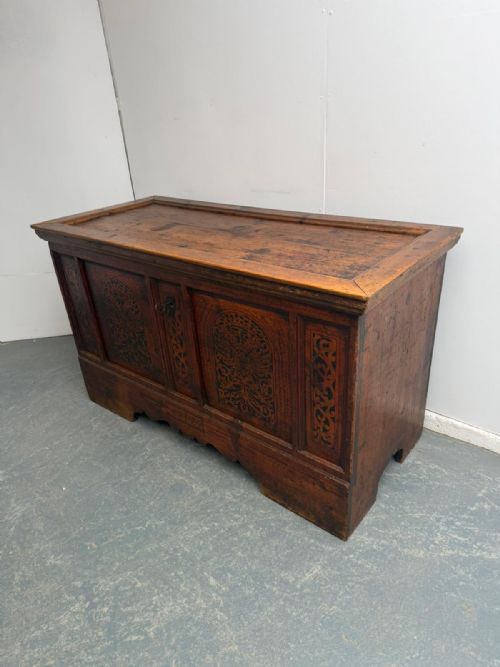


European Folk Art Chest
These european folk art chest pieces are painted pine storage boxes carrying centuries of regional decorative traditions into modern interiors.
European Folk Art Chest
When you search for european folk art chests, you encounter robust storage furniture originating from various continental regions including Hungary, Austria and Romania. These pieces primarily take the form of coffers, trunks, marriage chests and occasional chests of drawers.
The items listed on this page span the Georgian, Regency and Victorian eras alongside specific years such as 1860, 1890 and 1910. The most common forms you meet are painted pine marriage trunks and coffer boxes featuring hand-painted floral motifs.
Makers utilised local timbers and applied vibrant pigments to create functional items that doubled as dowry gifts. Central European folk art styles dominate the selection, showing distinct regional painting techniques on pine carcasses.
How they were made
The construction of these chests relies on solid pine planks joined with traditional methods to form sturdy coffers, trunks and cupboards. Artisans then applied foundational layers of paint and pigment to create colourful surfaces.
Hand painting forms the defining decorative technique across the pieces, with floral patterns and regional motifs applied directly to the timber. Iron hardware such as hinges and locks provides structural reinforcement and security.
European Folk Art Chest Retail Price Guide 2026
Typical asking prices for european folk art chest among the pieces listed under this phrase on Sellingantiques today, from the lower quarter to the upper quarter. They describe what is for sale here now, not the wider market.
A green Georgian cupboard manages to combine three drawers, one door and an amazingly painted surface all at once.
What varies in quality
Quality in these painted pieces rests upon the survival and execution of the original pigment and decorative scheme. Examples retain crisp, undisturbed floral details and vibrant colours applied during their period of origin.
The structural integrity of the pine timber and the retention of original iron fittings distinguish finer examples. Pieces with documented regional provenance, such as specific Hungarian or Austrian traditions, demonstrate higher artistic merit.
The European Folk Art Chest Glossary
- Coffer
- A heavy wooden box used for storage, typically hinged at the top and fitted with iron hardware.
- Marriage chest
- A painted trunk commissioned or gifted to mark a wedding, frequently decorated with symbolic floral motifs.
- Dowry chest
- A storage box intended to hold household linens and valuables brought by a bride to her marriage.
- Pigment
- The raw colouring material mixed with a binder to create the painted surface decoration on folk art furniture.
- Pine
- A soft timber widely utilised across European regions for constructing domestic storage furniture.
European Folk Art Chest: Frequently Asked Questions
What is a european folk art chest?
A european folk art chest is a painted wooden storage box or coffer created within specific regional craft traditions. These pieces often feature hand-painted floral motifs and served practical household functions.
They encompass marriage trunks, blanket boxes and commodes originating from places like Hungary, Austria and Romania during the eighteenth, nineteenth and early twentieth centuries.
How were these chests used originally?
Originally, these trunks and coffers stored valuable textiles, clothing and household goods in domestic interiors. Many functioned as marriage or dowry chests given to brides.
Over time, their robust pine construction and decorative painted surfaces made them central pieces of functional furniture within rural homes.
What materials are used in folk art chests?
The primary material is solid pine, which provided a stable and accessible timber for regional carpenters. Artisans applied various paints and pigments directly to the wood.
Iron hardware, including hinges, brackets and latches, appears frequently to reinforce the joints and secure the lids of trunks and coffers.
How do you date a painted pine chest?
Dating relies on construction methods, ironwork styles and the specific characteristics of the painted decoration. Evidence from specific periods like the Georgian and Victorian eras helps establish a timeline.
Stylistic markers within Central European folk art traditions further assist in identifying whether a piece belongs to the nineteenth or early twentieth century.
Where did european folk art chests originate?
These pieces originate from various regions across Europe, with distinct styles developing in Hungary, Austria, Romania and wider Central Europe. Each area fostered unique painting traditions.
Local workshops adapted traditional motifs, resulting in recognizable regional aesthetics applied to standard furniture forms like coffers and commodes.