


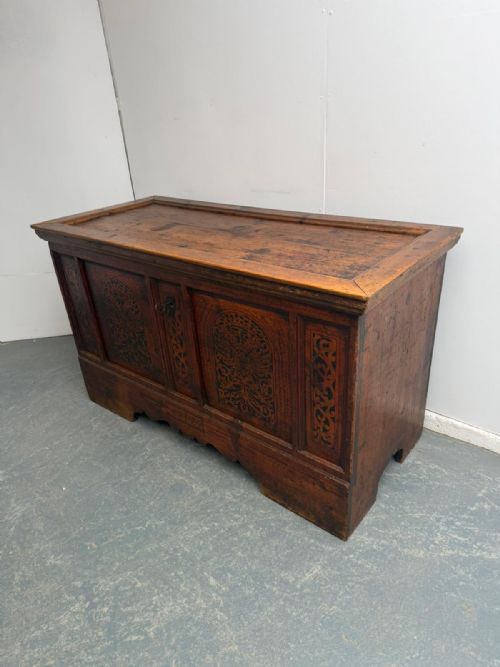


Antique Hungarian Trunk
An antique hungarian trunk brings vibrant folk art tradition and robust pine construction directly into your interior.
Antique Hungarian Trunk
An antique hungarian trunk encompasses painted pine chests, coffers, blanket boxes, and mule chests spanning the Georgian, Regency, Victorian, and nineteen-ten periods. These storage pieces originate from Central Europe and display distinct continental folk art traditions.
Buyers on this page most frequently encounter pine small boxes and large coffer boxes finished with original paintwork. Forms range from compact cute small boxes to massive coffer boxes and large mule chests.
Materials and construction methods
Makers constructed these storage items primarily from solid pine timber, assembling robust box and coffer forms designed for practical household use. Iron and brass hardware such as hinges and locks provide structural reinforcement and functional security.
Surfaces receive layers of paint, often featuring floral motifs that define the regional folk art aesthetic. This combination of timber joinery and hand-applied pigment creates the enduring painted finish characteristic of the tradition.
Some small boxes remain small enough to tuck under an arm, yet loud enough with floral paint to command an entire room.
Assessing quality and character
Quality rests in the preservation of the original paint surface and the clarity of the floral decoration. Pieces retaining their early pigment layers display a richer connection to their folk art origins than later repainted examples.
Proportion and scale also distinguish individual items, from modest small boxes to massive mule chests. The integrity of the pine construction and the survival of period iron or brass fittings complete the assessment.
The Antique Hungarian Trunk Glossary
- Mule chest
- A storage chest that incorporates one or more drawers beneath the main lift-top compartment. This form bridges the traditional coffer and the modern chest of drawers.
- Folk art
- Artistic work created within a traditional culture by self-taught or local artisans. These pieces reflect regional decorative styles rather than academic design canons.
- Pine
- A softwood timber commonly used in historical furniture making across Central Europe. It provides a stable base for decorative painted finishes.
Antique Hungarian Trunk: Frequently Asked Questions
What were hungarian trunks used for?
These pieces served primarily for storing household textiles, blankets, and personal valuables in domestic settings. Their sturdy construction allowed them to double as seating or tables within traditional homes.
Over generations, families utilised these painted chests to transport and protect dowries and cherished belongings. Today, they function as practical living room or bedroom storage that doubles as a decorative focal point.
How do I date a painted trunk?
Dating relies on examining the construction joints, timber characteristics, and the chemical composition of the paint layers. Georgian and Regency examples display different proportions and joinery methods compared to Victorian or nineteen-ten pieces.
Hardware such as iron hinges and brass fixtures also offers clues to the period of manufacture. Stylistic shifts in the floral folk art painting help narrow down the era in which the piece was decorated.
Are these trunks entirely original?
Many examples retain their original painted surfaces and hardware applied by regional artisans. Evaluating the wear patterns on the pine and the pigment helps determine the level of historical preservation.
Some pieces may show signs of traditional maintenance or surface preservation carried out over their long lifespan. Buyers should examine the relationship between the wood substrate and the decorative paint layers.
How do I clean a painted finish?
Care for the painted surface requires gentle dusting with a dry, soft cloth to prevent abrasion. Avoid modern chemical solvents, commercial waxes, or excess moisture that could lift the historic pigment from the pine.
Maintaining a stable indoor humidity protects both the underlying timber and the fragile folk art decoration. Professional conservators can advise on specialist treatments if deeper cleaning becomes necessary.