



Etched Wine Decanter
An etched wine decanter brings nineteenth-century dining tables to life through delicate floral patterns and heavy crystal bodies.
Etched Wine Decanter
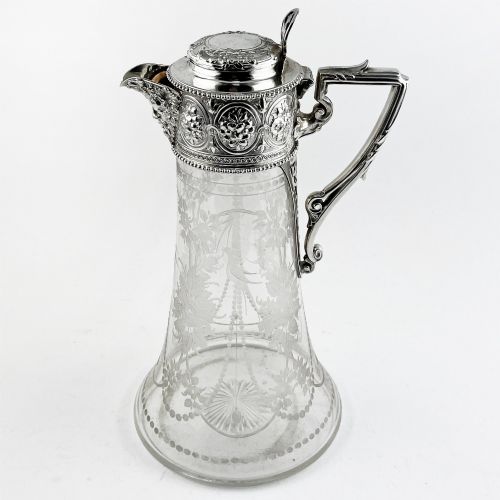
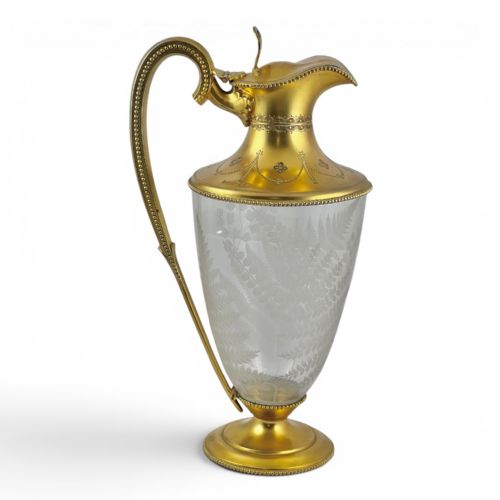
An etched wine decanter combines functional glassware with ornamental surface decoration, often taking the form of claret jugs, ewers, and tall vessels. These pieces emerge predominantly from the Victorian and Edwardian eras, spanning several decades of table service design. The selection includes clear vessels alongside coloured crystal variations in ruby, cranberry, and green.
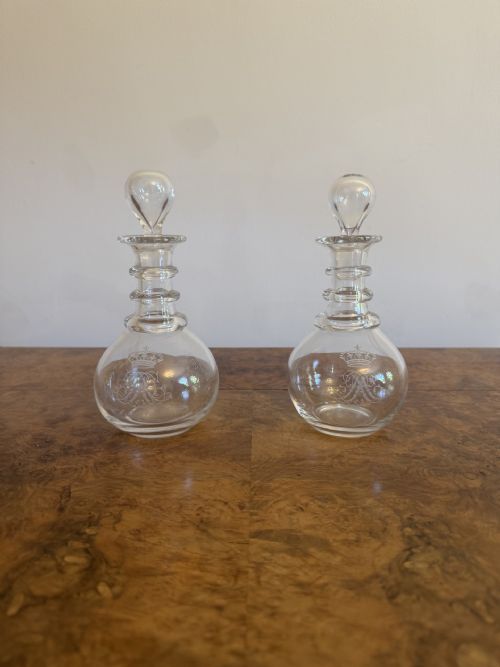
The dominant forms on this page stem from the nineteenth century, featuring silver-plated mounts or solid silver collars alongside engraved glass bodies. Buyers will find pairs of decanters as well as single statement pieces designed for serving wine, hock, or claret. Origin points extend across Britain, France, Germany, and Bohemia, showing distinct regional tastes in metalwork and glass tinting.
Materials and construction methods
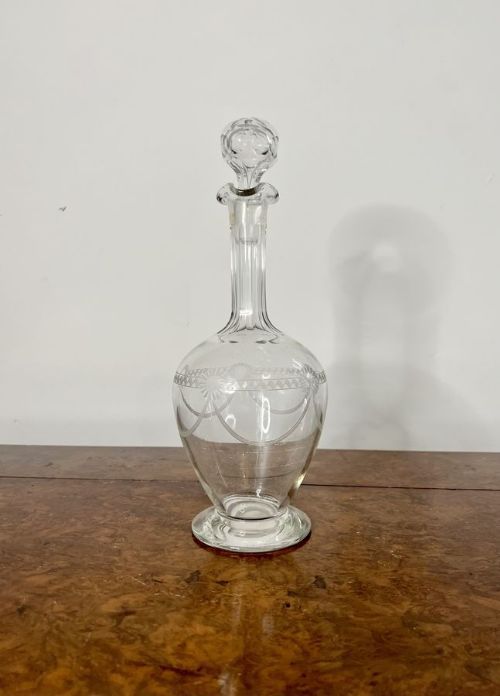
The foundation of each piece rests on lead crystal or clear glass, sometimes overlaid with coloured glass layers before undergoing cutting and surface decoration. Artisans shaped the vessels by blowing glass into moulds or free-blowing, then applied wheel-cutting or acid-etching techniques to create botanical motifs such as grapes and vines. These glass bodies were paired with cast and chased silver or silver-plated mounts, secured around the necks and lips.
Metal components such as hinged lids, handles, and collars incorporated silver gilt, sterling silver, or plated base metals, often marked with maker stamps or regional hallmarks. The integration of metal mounts required precise fitting to the glass necks, sometimes using cork or rubber gaskets concealed beneath the silver collars. Wrought iron frameworks also appear on continental pieces, fusing industrial metalwork with delicate glass vessels.
Victorian households loved grape and vine motifs so much they poured wine from decanters decorated with the very fruit that made it.
Distinctions in craftsmanship and design
The hierarchy of quality rests upon the depth and clarity of the glass etching and the weight of the metal mounts. Finer examples display crisp, hand-engraved botanical detailing rather than shallow surface acid-bites, paired with substantial silver-plated or sterling mounts that bear maker signatures. The integration between the handle, collar, and glass body separates standard production items from workshop masterworks.
Colour saturation and glass layering also dictate the grade of a vessel, particularly in Bohemian and Victorian hock decanters where contrasting glass hues meet. Pieces originating from known makers or silversmith firms exhibit superior balance, heavier crystal content, and more intricate casting on the spouts and hinged lids. The survival of matching stoppers further elevates the integrity of the piece.
Asprey and Co. Ltd·Elkington·Orfèvrerie Produx Saint Hilaire
The Etched Wine Decanter Glossary
- Claret jug
- A specialised pouring vessel designed specifically for serving red Bordeaux wine at the dining table. These typically feature a handle and a hinged metal lid.
- Silver gilt
- Sterling silver that has been coated with a thin layer of gold, providing a rich two-tone appearance inside or outside the mount.
- Overlay glass
- A technique where a layer of coloured glass is fused over a clear glass body, allowing artisans to cut through the outer layer to create contrasting patterns.
- Acid-etching
- A method of decorating glass by applying acid to eat away exposed areas, leaving a frosted or recessed design behind.
- Hock decanter
- A tall, slender vessel traditionally used for serving German white wines, often characterised by coloured crystal bodies.
Etched Wine Decanter: Frequently Asked Questions
How do I clean an old decanter safely?
Fill the vessel with warm water and mild detergent, avoiding harsh abrasives that might scratch the interior glass.
Allow it to air dry completely on a draining mat without inserting cloths that could become trapped inside the narrow neck.
Were these vessels used exclusively for wine?
Most pieces served wine, claret, or hock during formal dining rituals in the nineteenth century.
Some variations also functioned as spirit ewers or water dispensers depending on the size and shape of the spout.
How can I date a Victorian glass decanter?
Examine the style of the metal mounts, hallmarks on the silver, and the depth of the glass cutting.
Victorian pieces often feature registration marks or maker stamps that narrow down the production decade.
Do original stoppers matter for value?
Matching stoppers that show identical glass colour and cut patterns are essential for completeness.
Replacements disrupt the silhouette and historical integrity of the piece on display.